Get Full Government Meeting Transcripts, Videos, & Alerts Forever!
Get email alerts on the Commercial Development Loan Program topic
No spam. Unsubscribe anytime.
CRA staff present proposed Commercial Development Loan Program; board raises benchmarks and equity questions
Summary
CRA staff proposed a consolidated Commercial Development Loan Program to prioritize commercial and mixed-use development, expand adaptive-reuse incentives citywide, cap loans at $2 million, and link interest-rate reductions to livability benchmarks.
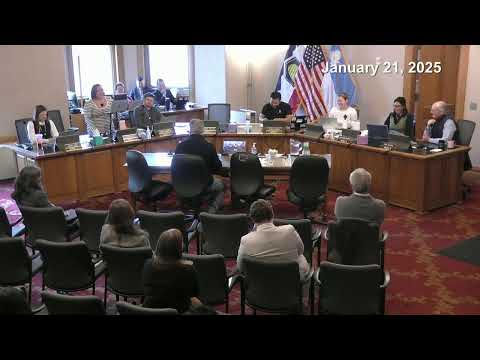
CRA staff presented an informational update Jan. 21 on a proposed Commercial Development Loan Program, or CDLP, intended to consolidate and replace the agency's existing commercial loan policy and the Granary District adaptive-reuse incentive.
Christina Harold, project manager, said the CDLP would focus on commercial and mixed-use developments that align with CRA mission priorities. Key proposed features include a $2 million maximum loan per project; requirement that projects break ground within 12–15 months; a minimum of two qualifying “livability benchmarks”; expansion of adaptive reuse incentives citywide (currently limited to the Granary District); and administrative interest-rate reductions tied to benchmarks with a 3% floor. Staff said eligible project costs could include construction hard costs and, on a case-by-case basis, acquisition, remediation, infrastructure, or demolition.
Staff proposed folding the Granary District adaptive-reuse incentive into the CDLP and making forgivable loans of up to $200,000 available for adaptive reuse projects across CRA project areas. The presenters said the $200,000 figure is the same amount used in the Granary program historically and acknowledged it may be insufficient for some projects.
Board members widely supported several staff proposals while pressing for clarifications. Board member Dugan and others supported allowing tenants and ground lessees (with property-owner approval) to apply, which staff said would broaden eligible applicants but also increase loan risk. Board members pressed staff to define “local independent business,” with staff proposing local = originated in Utah and independent = non-franchise (separate ownership). Members asked whether multi-location local firms would qualify and requested clear documentation requirements.
Several members questioned the adaptive-reuse forgiveness structure. Board member Pietro suggested tying forgivable amounts to project cost (for example, a percentage of construction cost with a ceiling) rather than a flat $200,000; others agreed the Granary program’s amount is often insufficient for larger rehabs. Staff said they would return with more detailed options.
Board members debated program timing and application review: some supported first-come, first-served for small-business timing needs; staff and others suggested quarterly review windows to protect limited funds and allow cross-project comparisons. Staff proposed reinstating a finance-committee approval path for loans $500,000 or less to speed approvals; larger loans would come to the full board.
Staff also flagged program budget limits and the risk that many loans or large forgiveness awards could deplete the loan fund. Members encouraged staff to compare lessons learned from past ARPA business programs, consider equity criteria (BIPOC-, women-, or veteran-owned businesses), and propose more detailed administrative guidelines for livability benchmarks, weighting for public benefits, and how rate reductions would be calculated.
No formal vote was taken; the item was presented for discussion and staff feedback. Staff said they will refine definitions, benchmarks, and financing formulas and return with additional detail ahead of budget season.