Get Full Government Meeting Transcripts, Videos, & Alerts Forever!
Get email alerts on the Utilities topic
No spam. Unsubscribe anytime.
Public utilities previews rate study that would raise water, wastewater and stormwater charges; affordability analysis included
Summary
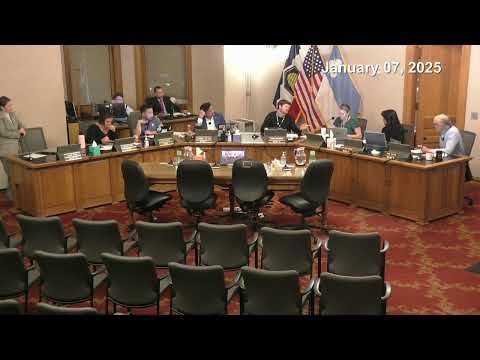
Public Utilities presented a comprehensive water, wastewater and stormwater rate study to the council on Jan. 7, proposing multi-year rate adjustments to cover capital needs, and included affordability metrics and outreach plans; staff said the study will feed the FY2026 budget process and public engagement is planned.
Salt Lake City\'s Public Utilities Department presented a comprehensive rate study at the Jan. 7 council work session recommending multi-year adjustments to water, wastewater and stormwater rates to cover rising capital and operating costs, including major generational infrastructure projects.
The study, prepared by FCS Group and reviewed in public sessions with a 30-member rate advisory committee, took three steps: determine revenue requirements, allocate costs of service among customer classes, and design rates to meet objectives including affordability and conservation. City staff told the council the study will inform Public Utilities\' FY2026 budget and that the temporary rate-stabilization charge introduced in 2024 would not remain under the final proposed rate design.
Highlights in the proposed designs include a restructured residential water tier with smaller low-use blocks (0–5 CCF and 6–10 CCF) and year-round tiering to reduce dependence on summertime irrigation sales; simplified nonresidential seasonal uniform rates; and consolidation of wastewater customer classes into residential, multifamily and nonresidential groups with simplified volumetric charges and new pollutant surcharges for ammonia and phosphorus. Stormwater rates would increase modestly (roughly 7% in 2026 under the proposal) and the department proposed phasing maximum on-site credit levels for private stormwater improvements from 70% down to 25% over three years to better reflect city cost savings.
Public Utilities staff stressed the driver behind the increases: large capital investments and a need for revenue sufficiency to support treatment-plant and system rehabilitation, some of which are generational projects beginning construction and increasing near-term debt service and cash-funded capital outlays. The department also presented EPA-style affordability indicators: bills measured against median household income remained within a \"low burden\" range, but bills measured against the lowest-income quintile reached a \"medium burden\" range, prompting staff to highlight outreach and customer-assistance programs as part of implementation.
No final rates were adopted; the department said it will pursue public engagement during the budget process and return with formal rate ordinances through the council\'s budget hearings.