Get Full Government Meeting Transcripts, Videos, & Alerts Forever!
Get email alerts on the Legislation topic
No spam. Unsubscribe anytime.
City briefs council on state and federal legislative agendas; immigration and housing flagged as priorities
Summary
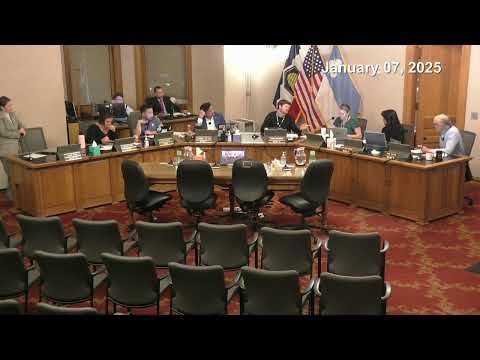
City lobby staff and a Washington consultant briefed the Salt Lake City Council Jan. 7 on state and federal policy priorities, highlighting housing and homelessness at the state level and expected federal changes on immigration, budget and energy policy.
City legislative staff briefed the Salt Lake City Council on state and federal agendas at the Jan. 7 work session, flagging housing and homelessness, energy and local control at the state level and forecasting major federal changes tied to the incoming Trump–Vance administration.
Angela Price, director of legislative affairs, laid out the city\'s state priorities for the 2025 session: support for Olympic-related and transportation projects, a continued focus on housing and homelessness, water resources and watershed protection, energy and air-quality policy, and protection of local control over land use and related authorities. Price said the city is tracking bills on homeownership programs for \"legacy cities\" and anticipated bills to change mitigation fund contributions and regulations for existing homeless resource centers; she identified Representative Albrecht (sic in transcript) as having introduced related mitigation funding legislation.
Federal lobbyist Jennifer Covino delivered a Washington briefing, outlining several expected federal actions after inauguration: the confirmation of cabinet nominees, a continuing resolution in place through mid-March and an expected major reconciliation package later in spring. Covino said federal priorities could include immigration enforcement changes, reinstatement of some grant compliance requirements for cities, potential restrictions on eligibility for certain federal funds for jurisdictions deemed \"sanctuary\" jurisdictions, and scrutiny of clean-energy tax credits. She noted potential opportunities such as expansion or modernization of low-income housing tax credits (LIHTC) and advised cities to continue seeking IRA and Bipartisan Infrastructure Law resources while monitoring regulatory rollbacks and grant conditions.
Council members asked how quickly federal immigration enforcement changes might reach local operations; Covino and Price advised that executive actions and regulatory changes could be implemented quickly, while major statutory changes would likely take longer and might use reconciliation procedures in Congress.
No formal council action was taken. City lobby staff said they will return with more detailed analyses on bills of interest and suggested regular briefings during the legislative session.