Get Full Government Meeting Transcripts, Videos, & Alerts Forever!
Get email alerts on the Board Governance topic
No spam. Unsubscribe anytime.
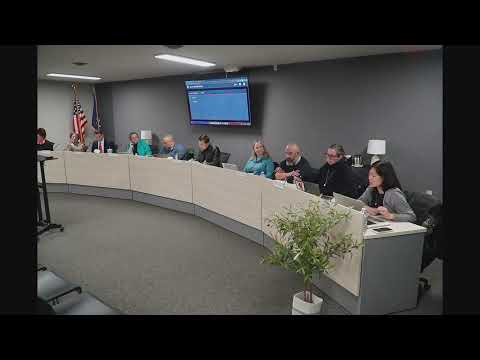
West Lafayette school board debates member communication norms, agrees on clearer information flow
Summary
Board members spent an extended working-session discussing how questions and requests should flow to the superintendent, including a proposal to copy the board president and superintendent on routine queries and a push for public handling of major budget or staffing decisions.
West Lafayette Com School Corp board members opened a lengthy discussion on internal communication norms and how information should flow between trustees and the superintendent.
Board President Amy (Board President) began the conversation by saying she had taken trainings and wanted the board to agree to clearer norms. "A strong board president understands that he or she should be a conduit for the necessary information flow between the superintendent and the board," she said, arguing that individual requests to the superintendent can pull him away from district work.
The discussion focused on three practical areas: routine questions about items in the board packet, project-level research requests that could consume central-office time, and how to handle urgent decisions or potential budget cuts. Several trustees proposed a middle ground in which routine queries would include both the board president and Dr. Sean Greiner, the superintendent, so the president could triage issues but trustees would retain direct access. "Can we all agree to copy both the board president and the superintendent on those kinds of questions?" George (Board Member) asked. That idea received support from multiple members as a trial approach.
Trustees also emphasized limits on out-of-meeting decision-making. Rachel (Board Member) argued that substantive decisions such as budget cuts should be handled in a public meeting: "If there is a cut decision in particular... that's a reason to call an emergency board meeting and we need to do that publicly because cuts also have consequences." Several members said that when a request to central office would require many staff hours, the superintendent should surface that estimate and the board should decide whether the work is a priority.
Concerns about tone and trust in written communications were a persistent theme. David (Board Member) asked trustees to "assume best intentions" and avoid personal criticism in public or email. Several members said they had changed how they ask questions after seeing long, opinionated replies from colleagues that made it harder for members to get straightforward information from the superintendent.
The group discussed timing expectations for questions that arrive close to the Friday notes deadline and whether Friday-note responses are required immediately. Several trustees and the superintendent suggested allowing extra time for central-office staff to prepare full responses. Board members proposed trialing the new email flow for a quarter or through June and agreed to report back.
Board members said they favored transparency for public inquiries: if a resident emails a single trustee, the trustee should forward the request to the full board (with personal details redacted as appropriate) so the entire board can see and respond collectively.
The conversation ended with several informal agreements rather than a formal policy vote: trustees will try copying both the board president and the superintendent on routine questions; the superintendent will flag any request that would consume substantial staff time; and major decisions (for example budget cuts) should be discussed publicly in a board meeting rather than resolved by email. The board chair said she would make suggested norms available and proposed a trial period to see whether the new process reduces ad-hoc one‑on‑one requests to the superintendent.
Members expressed a broader intent to improve civility, reduce public speculation about colleagues, and build a culture where members support rather than publicly criticize one another.