Get Full Government Meeting Transcripts, Videos, & Alerts Forever!
Get email alerts on the Criminal Justice Academy Investigations topic
No spam. Unsubscribe anytime.
Criminal Justice Academy seeks authority to investigate false certification claims; committee corrects evidentiary wording
Summary
The House subcommittee considered proposed Criminal Justice Academy rule changes that would let the academy investigate officers who willfully provide false information on certification paperwork and corrected a standard-of-proof phrase in academy regulations. The panel approved moving the items forward.
The House Regulations and Administrative Procedures subcommittee on education heard two items from the Criminal Justice Academy that would change how the academy handles certification-misconduct matters and clarify the evidentiary standard used in academy proceedings.
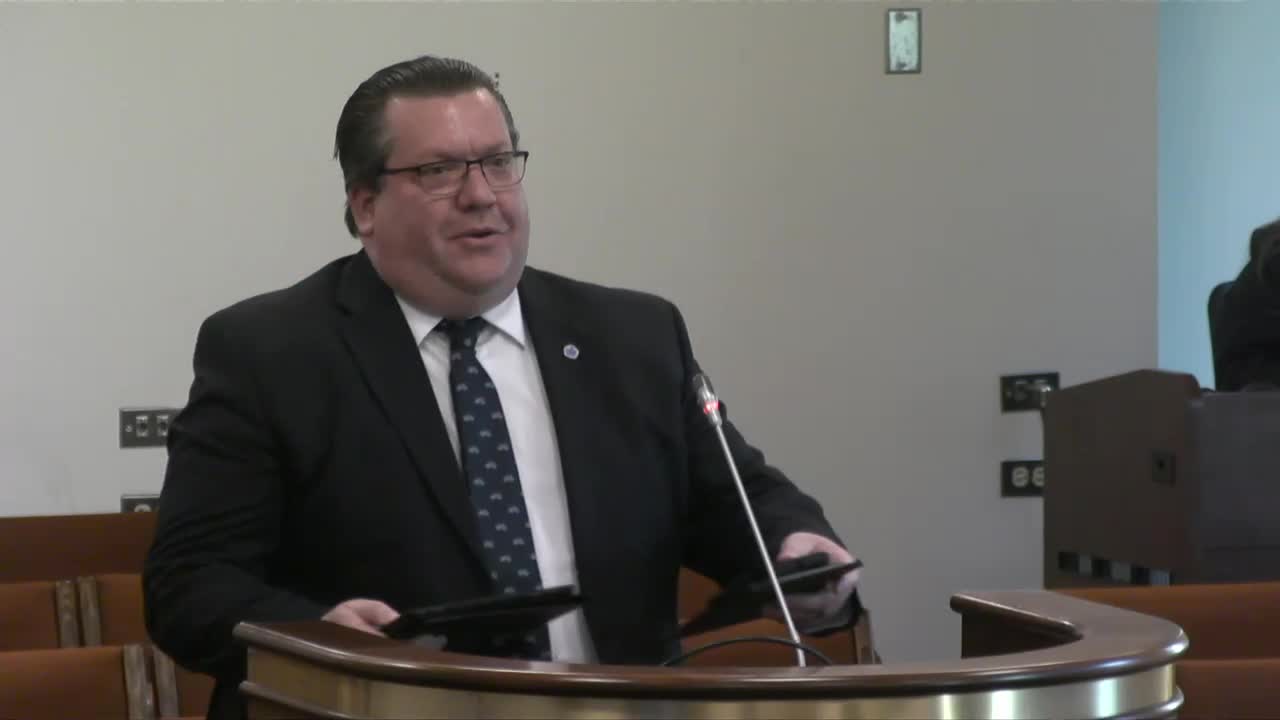
Jimmy Fennell, general counsel for the Criminal Justice Academy, said document 5302 would add regulatory authority to investigate officers who "willfully provide material or false information" to the academy. "We would like to close that absurdity," Fennell said, explaining the academy can now identify false information but lacks a clear mechanism to investigate when an agency does not forward separation or certification paperwork. He described the proposed procedure: the academy would notify the officer, and if the individual requested a contested-case hearing, an academy attorney would prosecute the matter before a hearing officer selected from the Law Enforcement Training Council.
Members asked why the proposed rule uses the word "may" rather than "shall" when describing the academy's ability to investigate. Fennell said the academy receives roughly 15–20 reports a month and has one investigator; he described the provision as giving the academy discretion to initiate investigations while preserving the council's oversight and the agency director's prosecutorial authority.
The committee approved moving document 5302.
The subcommittee also considered document 5304, a narrow wording change that replaces the phrase "substantial evidence" with "preponderance of the evidence" in the academy's regulations. Fennell said the prior update had slipped through with the wrong phrase and asked the committee to correct the record; the committee voted to move the change to the full committee.
Why it matters: The change in investigative authority would give the Criminal Justice Academy a clearer path to investigate and prosecute certification misconduct when sending agencies do not act, and the evidentiary correction aligns the academy's rules with its intended standard for decision-making.
Ending: Both Criminal Justice Academy items were approved by the subcommittee for further consideration and will be considered by the full committee. The academy agreed to follow up with the director about longer-term statutory edits that might more permanently resolve gaps in investigative authority.