Get Full Government Meeting Transcripts, Videos, & Alerts Forever!
Get email alerts on the Housing topic
No spam. Unsubscribe anytime.
Tri-city housing reports: consultants find gaps in supply, persistent affordability and recommend targeted actions
Summary
Points Consulting and Mosaic presented a housing needs assessment and an analysis of impediments to fair housing for Moline and partner cities; consultants recommended a mix of targeted CDBG-funded programs, land-bank acceleration, community land trust strategies and zoning/permit reforms to expand affordable and diverse housing supply.
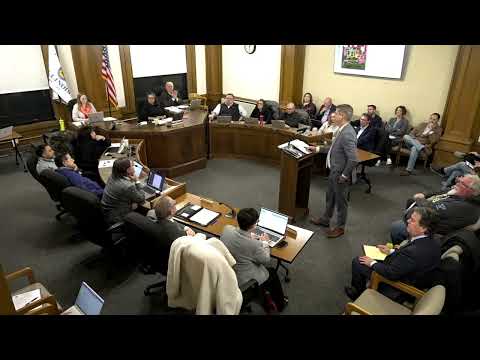
City staff and consultants presented two HUD-required reports Tuesday that will feed the city’s next five-year Consolidated Plan: a housing needs assessment by Points Consulting and an Analysis of Impediments to Fair Housing Choice conducted with Mosaic Community Planning. The council was not asked for action; staff said final reports would be posted for a 30-day public comment period and returned to council for the consolidated-plan schedule.
Why it matters: As a CDBG entitlement jurisdiction, Moline must show HUD how it will target community development resources. Consultants identified supply gaps, concentrated areas of housing problems, and barriers that disproportionately affect households of color and other underserved populations. Their recommendations are intended to inform how the city allocates CDBG and other housing dollars over the coming five years.
Key findings and recommendations: - Two complementary studies: Points Consulting delivered a housing needs assessment (supply-demand balance, permit trends, and community survey) and Mosaic delivered an Analysis of Impediments (mapping segregation, poverty, school proficiency, access to opportunity, and housing problems). Staff said both reports will be finalized and posted for public comment before the consolidated plan is drafted. - Demand and supply: Points presented two population-forecast scenarios: a status-quo model that implies limited net housing demand and an optimistic model that shows substantially higher demand (consultants cited a status-quo housing shortfall under 1,100 units vs. an optimistic demand up to about 4,400 units over the forecast horizon). The optimistic scenario assumed stronger economic development than the status quo. - Affordability and filtering: Consultants described “filtering” — higher-income households moving to new construction and older housing becoming available to lower-income households — as an important mechanism but cautioned that filtering does not alone meet local affordability needs. Survey responses (706 respondents) suggested community appetite for a mix of housing types, including higher-density and missing-middle units. - Vacant-property and land-bank work: Points reported active vacant-property work in Moline (the city created a vacant-property list in 2020; out of 463 identified, consultants said 319 were no longer vacant as of their data collection because of demolition, sale or rehabilitation). They recommended accelerating land-bank transfer using certified-judgment procedures and using acquisition/demolition/rehab funds to repurpose vacant properties. - Programs to consider: Recommendations included community land trusts, nonprofit “step-up” rehabilitation programs that incentivize donors through tax deductions, IHDA mortgage assistance programs (forgivable/deferred/repayable products), and encouraging higher-density, low-maintenance units in business districts (zoning changes to allow mixed-use and smaller unit minimums in B2/B3 and R5 zones were cited as levers). - Fair housing findings: Mosaic’s analysis mapped racial/ethnic concentrations, poverty and opportunity indicators. The report found disparities in housing problems: roughly 25% of white households faced one or more housing problems (affordability, overcrowding or substandard conditions) vs. higher rates among Black and Hispanic households (40% and 34% respectively in the consultant’s table). Mosaic recommended funding priorities, landlord outreach for voucher acceptance, and targeted fair-housing education for limited-English-proficiency communities.
Next steps and timing: Staff said consultants will finalize the reports within ~30 days, the city will publish the documents for a 30-day public comment period and then incorporate the analyses into the consolidated plan once HUD’s funding formulas are released (staff said the consolidated plan timeline depends on congressional action to finalize allocations). Staff indicated they expect to return to council with consolidated-plan recommendations in March; no council action was requested Tuesday.
Ending: Councilmembers and staff discussed zoning, “missing middle” strategies such as duplex conversions and accessory dwelling units, and community reinvestment tools. Staff said the reports are intended to guide CDBG allocations (rehab, demolition, homebuyer assistance) and other local housing policy work in the coming year.