Get Full Government Meeting Transcripts, Videos, & Alerts Forever!
Get email alerts on the Real Estate Development topic
No spam. Unsubscribe anytime.
Mount Holly tables financing decision for downtown parcels, orders Phase I environmental study
Summary
Council kept public hearing open, directed staff to obtain a Phase I environmental site assessment and delayed action on a proposed installment-purchase financing for multiple East Central Avenue parcels tied to a Veterans Park expansion.
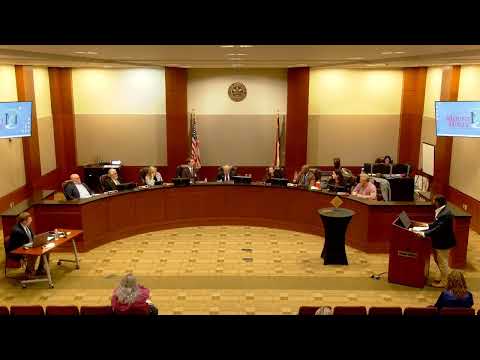
Mount Holly City Council on the evening of its February 2025 meeting voted to table formal action on whether the city should enter an installment-purchase contract to finance acquisition of multiple downtown parcels and directed staff to obtain a Phase I environmental site assessment.
The action keeps the public hearing open and moves the item to the council’s February 20 work session for further consideration. The properties in question are tied to a proposed Veterans Park expansion; the city is under contract to acquire parcels on East Central Avenue with a stated purchase price of $3,143,000 and an outstanding balance after deposits of approximately $2,893,000, city staff said.
City staff described one financing option presented earlier that would amortize the acquisition over two years at about a 6% interest rate, producing roughly $173,580 in interest costs. City staff also said the contract-examination period is set to end March 2, and closings could follow in March if council takes no additional action.
City Manager Blanton introduced the public hearing and walked the council through the timeline and options. "The examination period will end March 2 without any formal action of council," he said, noting the city remains under contract for the properties and is continuing due diligence. He told council the city had issued an RFP and an RFQ; the RFP produced no responses and the RFQ produced one response that did not match the renderings the city had originally sought.
Public commenters pressed the council to order an environmental review before any purchase. "They're standard practice for commercial properties. They're not expensive. They provide liability protection under federal law," resident Rodney Williams said, arguing that without a Phase I the city could forfeit access to federal cleanup programs and assume cleanup liability for contaminants he recalled from a past automotive supply use on the site.
Other speakers raised traffic, parking and school impacts and questioned whether the project economics still match original plans. Gary Brinkley said the plan’s profitability assumptions had changed, noting staff comments that about 250 units would now be needed for a project to reach financial viability compared with 138 units in the original plan. Bob Hendricks urged the council to treat a prior public vote that rejected a related measure as binding and to delay action until the environmental results were available.
After public comment, Councilmember Shoemaker moved — with a second from Councilmember Meadows — to table the matter, keep the public hearing open and place the item on the February 20 work session agenda. The motion passed on a council voice vote.
Council also asked whether staff could procure a Phase I environmental study immediately. Blanton confirmed a contractor was ready and capable of completing a Phase I within about two weeks if authorized; he provided an estimated cost of $2,250 based on a quote from Excel Civil and Environmental Associates. "It will be $2,250 based on the estimate that was provided by Excel Civil and Environmental Associates," Blanton said.
The council’s action does not change that the city holds the contracts and that the examination period runs to March 2; staff told council that, absent further council direction, the city will proceed to closing per the contract schedule. The council’s tabling of financing leaves the question of whether to enter into an installment-purchase contract for the acquisitions unresolved pending receipt of the Phase I and discussion at the retreat.
The city cited advantages for acquisition including increased downtown taxable value and potential increased foot traffic for merchants; staff also listed disadvantages including the purchase price, lack of a development agreement, parking concerns and a gap in projected development costs compared with earlier plans.
The council provided direction to staff to obtain the Phase I study and to present results and financing options at the February 20 retreat so council members can revisit the matter with the environmental findings available.