Get Full Government Meeting Transcripts, Videos, & Alerts Forever!
Get email alerts on the Education Policy Oversight topic
No spam. Unsubscribe anytime.
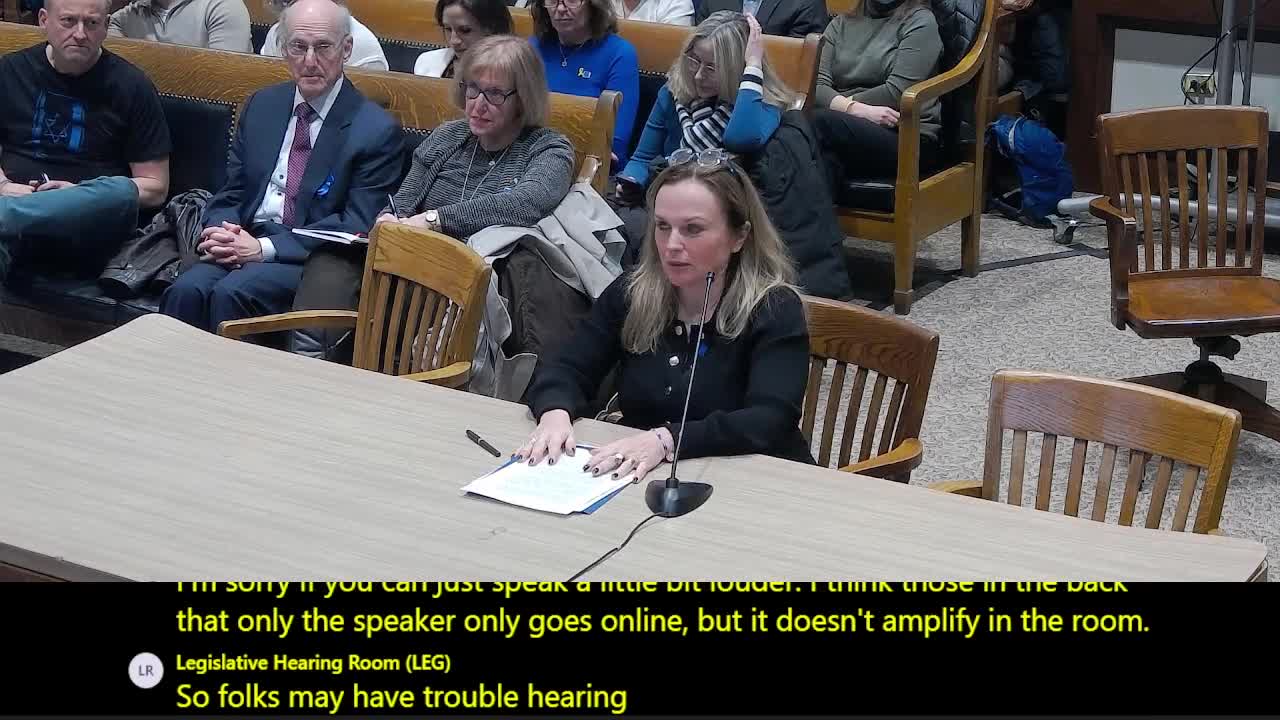
Board of Education chair urges clearer statewide guidance on bullying and curriculum oversight after hearing
Summary
Catherine Craven, former chair and current member of the Massachusetts Board of Education, told the Special Commission that the board and DESE lack direct control over local curriculum choices and that rising reports of bullying and hostile school climates for Jewish students require better monitoring and guidance.
Catherine Craven, former chair of the Massachusetts Board of Education, told the Special Commission on Combatting Antisemitism that the state board does not prescribe local curriculum and that its oversight is limited to frameworks, professional development, and federally required monitoring of bullying policies.
"Currently, Department of Education and the Board of Education do not prescribe any curriculum for any district," Craven said, describing the board's role as providing frameworks and guidance rather than classroom materials. She told commissioners the department lacks a comprehensive, statewide view of how local districts implement frameworks and whether offensive or biased materials have been used in classrooms.
Craven said the board has received reports that Jewish students are being bullied at record levels since Oct. 7, and that some students have changed schools or stopped attending because of hostile school cultures. "No student can learn effectively in a culture of fear," she said, and urged clearer guidance from the Commonwealth on distinguishing hate speech from protected expression while preserving students' constitutional rights.
Commissioners and witnesses spent part of the hearing exploring what state actors can and should do to support districts: improved reporting channels for incidents (beyond anecdote), targeted professional development for teachers, and pilot programs that would allow testing of interventions such as restorative justice, rapid incident response, and intercommunal collaboration.
Craven said that DESE collects district bullying plans every two years and that the board will monitor the department's progress on best practices. But she also acknowledged implementation challenges and varying local capacity for professional development. "In certain districts... they would love to take on a new curriculum but can't afford to at this time because of professional development," she said.
Several commissioners asked whether teacher professional development offered by unions or advocacy organizations could count toward state PD credits; Craven said the board and department do not have approval rights over union‑offered programs and that there is limited state visibility into which outside webinars teachers attend.
Craven advocated pilot programs, targeted technical assistance and consistent reporting mechanisms as practical next steps. She said the board will continue to monitor and facilitate supports for districts, and that the commission's work will inform whether the Commonwealth should consider stronger guidance or accountability tools.
"We need to reject the false paradigm that providing a safe space for Jews and Israeli Americans in our schools requires us to compromise the rights of other students," Craven said, adding that any propagation of bias through publicly funded schools is inconsistent with the state’s educational mission.