Get Full Government Meeting Transcripts, Videos, & Alerts Forever!
Get email alerts on the Roads And Infrastructure topic
No spam. Unsubscribe anytime.
Highway director: Marshall County roads improved but funding squeeze looms
Summary
Highway Department reported multi‑year PASER improvements, a drop in failed‑road miles, and operational gains from chip seals and recycled asphalt — but staff warned of a potential cash shortfall next year and urged council and commissioners to consider supplemental funding or levy adjustments if state grants change.
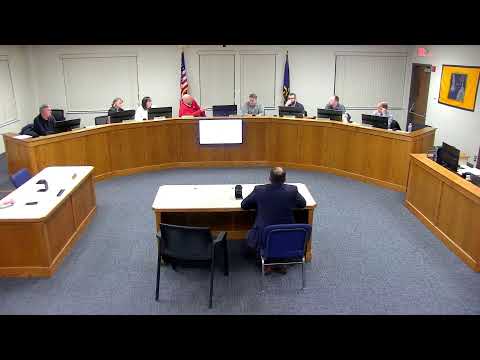
Jason Peters, Marshall County highway director, told the joint work session the county has steadily improved road conditions since PASER (Pavement Surface Evaluation and Rating) scores were first compiled in 2015 and that the county has reduced the portion of roads rated "failed." Peters said the county’s PASER metrics improved from about 85% failed in 2015 to roughly 24.8% failed miles in the most recent rating cycle.
Peters summarized 2023 project work as including 61 single seals, 33 triple seals, about 1.5 miles of paving and more than 14 miles surfaced with recycled asphalt rejuvenator. “We were one of the very first counties... to actually do the PASER ratings,” Peters said, describing why the county adopted an asset‑management approach early.
Despite the progress, Peters warned that highway fund cash balances could fall sharply under current revenue assumptions. Using 2023–24 budget and projected 2025 revenues, Peters said the highway fund (MBH/MVH as discussed) could begin next year with a cash balance near $350,000 — a level he described as “well under what we can really function at.” Peters and commissioners discussed options to protect the program, including temporary transfers from the general or rainy‑day funds, reallocating levy amounts into the MVH fund, or seeking alternative revenue sources.
Commissioners and councilors discussed policy choices they can make now, and Peters asked for guidance and an additional $2 million as an example scenario to accelerate paving this year. Officials asked Peters to bring a budget plan showing how an additional $2 million would be spent and what mileage gains it would produce. Participants also discussed state‑level proposals that could change Community Crossings grant matching requirements and wheel‑tax linkage; Peters and others warned that a new wheel tax requirement could be tied to grant eligibility and that losing Community Crossings matching funds could reduce the county’s paving capacity by roughly $1.5 million annually.
Participants discussed technical tradeoffs between hot‑mix paving and chip seal/rejuvenator treatments, noting changes in asphalt mix design and supply distances affect per‑ton costs. Peters said recent changes in mix softness have increased per‑ton prices by about $4–$5 and that local contractors sometimes source asphalt from South Bend or Warsaw.
Ending: Commissioners asked the highway director to return with specific dollar‑for‑mile proposals and a prioritized list of projects; they also asked staff to model options for temporarily using county reserves or reallocating levies if state legislation reduces expected revenues.