Get Full Government Meeting Transcripts, Videos, & Alerts Forever!
Get email alerts on the Growth Management topic
No spam. Unsubscribe anytime.
Conservation groups propose transferable development rights and concurrency to curb sprawl
Summary
Advocates told senators transferable development rights and concurrency tools can preserve farmland and direct growth to areas with infrastructure, and urged the legislature to provide legal guardrails to help local governments implement the programs.
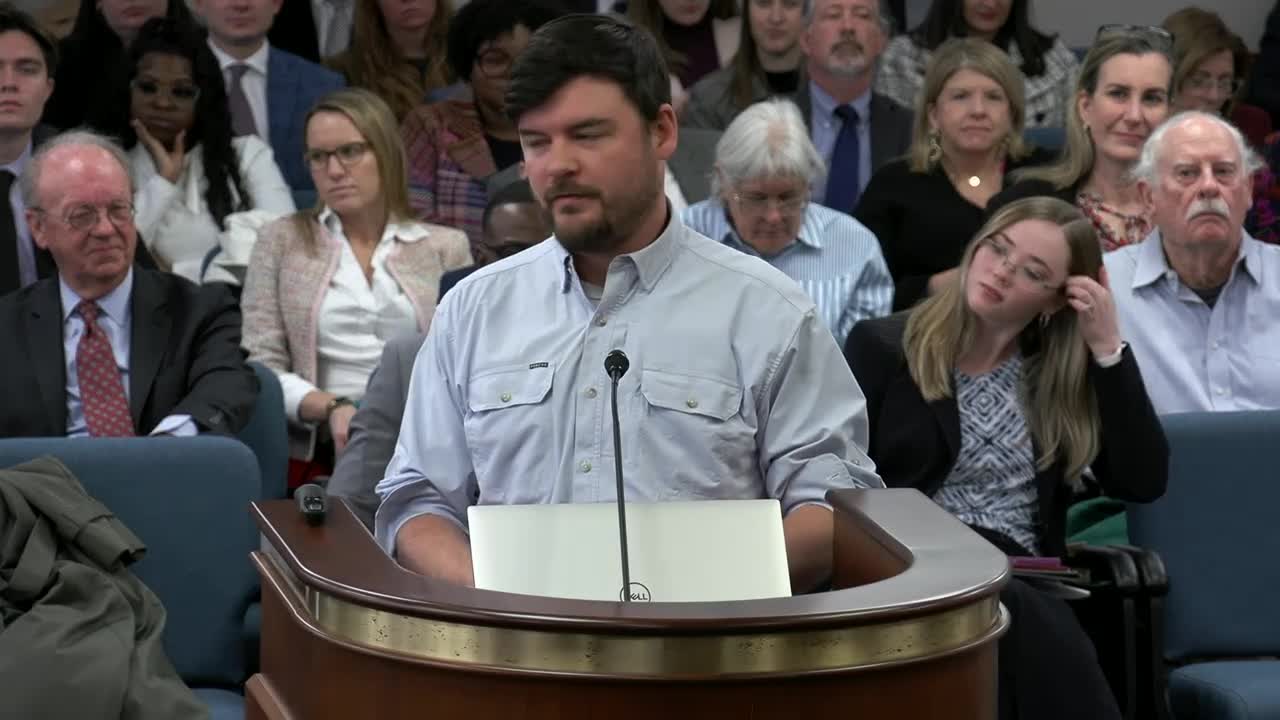
Conservation groups urged the Senate Fish, Game and Forestry briefing to support market-based transferable development rights (TDRs) and concurrency requirements that would steer growth toward infrastructure-ready areas and help preserve farmland and habitat.
Zach Bure, land, water and ocean project manager for Conservation Voters of South Carolina, described TDRs as a voluntary, market-driven tool that allows landowners in designated "sending" zones (for example, farmland or habitat) to sell development rights to developers who then use those rights in designated "receiving" zones to build at higher density. Bure said a local ordinance would define sending and receiving areas and the ratio by which rights are converted.
"This is a market-based approach to conservation," he said. "You're preserving land without a taxpayer burden and you promote sustainable growth and support property owners."
Bure also discussed concurrency as a permissive tool that would require infrastructure to be available or funded concurrently with new development. He described concurrency as a way of ensuring that developers either delay projects, locate where infrastructure exists, or pay to expand capacity so that new development does not overburden water, sewer, traffic or school systems.
During questions, senators pressed for details about who enforces TDRs, whether local governments already have tools such as impact fees, and where concurrency has been tried in South Carolina. Bure said TDRs typically move rights onto deeds of receiving properties and that local governments would be responsible for enforcement; he said proposed state legislation would provide guardrails and encourage local adoption. He identified Lexington County as a jurisdiction that has considered similar approaches but said he would compile additional examples and materials for senators.
Lawmakers and advocates discussed the similarities between TDRs and mitigation banking and stressed the need for state-level guidelines to ensure transparency and compliance if local governments adopt the tools. No formal vote or bill text was taken up in the briefing.