Get Full Government Meeting Transcripts, Videos, & Alerts Forever!
Get email alerts on the County Finance topic
No spam. Unsubscribe anytime.
Marshall County projects healthy reserves but braces for state tax changes
Summary
County officials reported rising fund balances and a larger-than-expected year-end reserve, while warning that pending state legislation — including property-tax reduction proposals and income-tax reforms — could reduce local revenues and force budgeting decisions over the next two to three years.
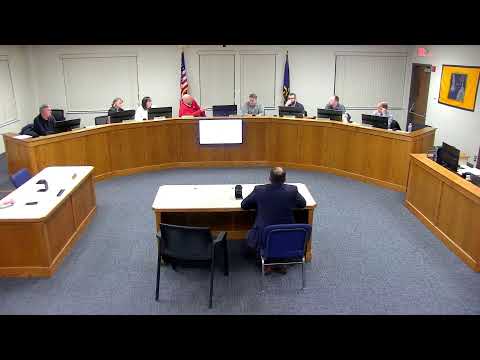
Marshall County officials on the joint work session discussed the county’s fiscal position and several pieces of pending state legislation that could reduce local revenue. County leaders said combined general and rainy-day balances rose in the most recent year, and that the county has room to absorb near-term changes — but warned of revenue losses tied to bills moving through the Indiana General Assembly.
County officials said combined general and rainy-day funds ended the year at about $13,417,000 and that the county closed the year with increased cash balances after conservative departmental spending. Officials emphasized that the county is “in very strong fiscal health” and leaving ample reserves while spending down a separate jail fund as required by statute.
The meeting focused on three pending state measures as drafted at the time of the session. Senate Bill 1 (as described in the meeting) would lower property-tax liabilities under a baseline formula; county presenters estimated that, if enacted as written, all taxing units in the county could lose $7 million–$10 million in annual revenue between 2026 and 2028 depending on enactment details. House Bill 1402 would allow municipalities (and potentially counties) to levy local income taxes under new formulas; presenters said the county’s government share from a hypothetical 1% countywide income tax would be about 40% of the proceeds, with the remaining 60% distributed to other local taxing units (cities, towns, townships and libraries). Participants said proposed 1.2% county shares and a 2.9% cap for all local taxing units were under active discussion in Indianapolis.
Officials also flagged a reported proposal (House Bill 1461 in discussion) tying community-crossings grant eligibility to local adoption of a wheel tax. Presenters warned that the bill’s draft language could make it difficult for counties that decline a wheel tax to keep receiving existing Community Crossings grant funding, which historically has matched local road projects and was described as providing roughly $1.5 million annually in matching grants for the county.
The presenters said the jail fund, which peaked at about $9.6 million in 2021, ran a deficit last year of roughly $1.2 million after reimbursements and interest were accounted for, but that the county nonetheless has funds on hand and projects a multi‑million-dollar balance in 2026 even under conservative scenarios. County staff said they have contacted state legislators to seek clarifying language or special legislation to loosen statutory limits that currently restrict uses of that dedicated jail fund.
Officials repeated that all legislative items were still fluid: bills could be amended, fail in committee, or be changed in conference committee before final enactment. Several county leaders said they favored waiting until the legislature finished (expected in late April) before finalizing local budget choices but asked staff to model the fiscal effects and to meet again after the session to complete a five‑year projection and budgeting timeline.
Ending: County leaders set a follow-up joint session for discussion of five‑year budget projections and local options after the legislative session ends; staff were directed to prepare revenue models for review in May or June so council and commissioners can finalize levy and capital decisions ahead of the July budget process.