Get Full Government Meeting Transcripts, Videos, & Alerts Forever!
Get email alerts on the Electricity Retail Choice topic
No spam. Unsubscribe anytime.
Senate committee debates letting large industrial customers choose third‑party power suppliers; no action taken
Summary
State senators, utility representatives and energy suppliers debated retail choice for large commercial and industrial electricity customers, focusing on stranded costs, obligation to serve and transmission capacity. Witnesses gave contrasting views; the committee took no formal action.
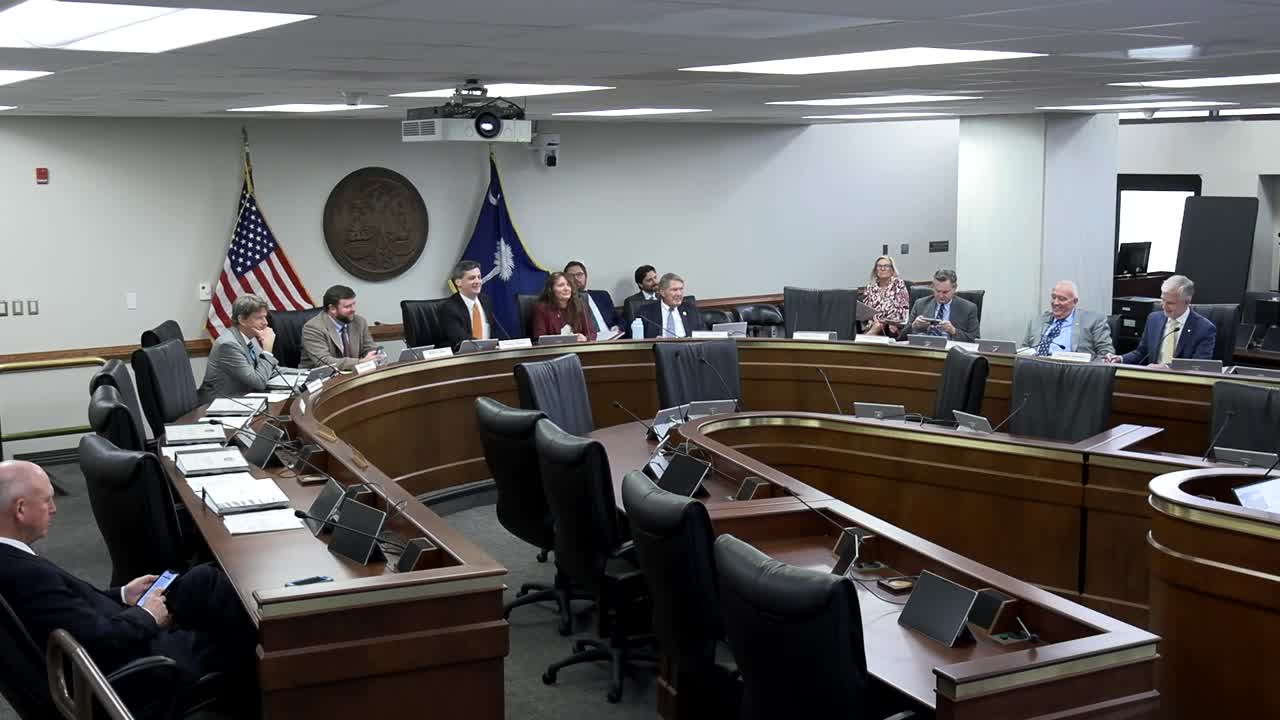
Members of a state Senate committee and energy industry witnesses debated whether to allow large commercial and industrial electricity customers to buy power from third‑party suppliers during a committee hearing; the panel took no formal action.
The issue is urgent to some lawmakers because large users say energy costs affect jobs and investment, while utilities and some senators warned any change could shift costs or risks onto residential ratepayers and the grid. Rob Gibbs, director of government affairs for the Southeast at NRG Energy, told the committee “competition works,” citing examples from other states and urging carefully written enabling legislation.
Gibbs said NRG is “one of the largest third‑party suppliers” and described the firm’s footprint: about 8,000,000 retail customers and roughly 16,000 megawatts of generation across technologies. He told senators that in states with retail competition for large customers, switching rates for commercial and industrial load range from about 62% to 97% and that Ohio research showed large users saved nearly $7 billion since early 2019. Gibbs said stranded‑cost recovery mechanisms exist in other states — for example, a state public service commission (PSC) can authorize surcharges or recoveries aimed at preventing cost shifts to remaining customers — and recommended the legislature define supplier obligations and utility responsibilities in statute.
Senators pressed witnesses on two legal and technical points that dominated the hearing: whether a large customer can contractually “relieve” a utility of its obligation to serve, and how third‑party purchases affect transmission capacity and system planning.
John Frick, a utility representative who spoke for the investor‑owned companies invited to testify, cautioned against moving quickly. “It’s exceedingly complex,” Frick said, warning that adding retail choice without broader market redesign could create unintended consequences for the state’s existing regulatory and planning framework. Frick and other utility representatives said the current system was designed to balance investment, reliability and equitable rate treatment and that many market fixes developed elsewhere required ongoing adjustments after implementation.
Dominion representative Mr. Zantakis told the committee that certain federal transmission rules limit how far a retail customer can displace a host utility’s responsibilities. Explaining FERC’s open access concepts, he said that if a customer secures alternative imports and that supplier cannot deliver, “it always falls back to the host transmission provider,” meaning the local balancing authority will ultimately have obligations under the tariff schedules discussed (witnesses referenced FERC tariff Schedule 2 and Schedule 6).
Senators repeatedly returned to the example of Century Aluminum, widely used in testimony as a hypothetical and historical case. Multiple participants discussed a 200‑megawatt load that a utility had planned to serve; committee members asked whether a third‑party supply that departs in an emergency would leave the utility with unused generation or stranded costs. A Century Aluminum representative present at the hearing said the company had accepted contractual language in its arrangement with Santee Cooper that removed a requirement for Santee Cooper to serve if the third‑party supplier failed; in that instance, the utility charged the company a replacement‑power penalty and the company paid it to restore supply. The witness summarized: the contractual approach can be used to allocate risk, but it may leave a customer exposed to higher emergency charges.
Utility witnesses also warned about transmission interfaces. A Dominion official described a hypothetical in which multiple large customers reserve the same import interface, which could exhaust the ability of a utility to import lower‑cost off‑system power when needed. That, the utilities said, can raise wholesale fuel or energy costs that ultimately affect the broader customer base.
Lawmakers pressed for clarity on several points the hearing did not resolve: whether federal law permits a customer to fully relieve a utility’s obligation to serve in all circumstances; how tariff and transmission upgrade costs would be allocated when new wholesale loads or off‑system purchases require network upgrades; and whether existing stranded‑cost recovery tools used in other states would function as intended in South Carolina’s market structure.
Witnesses on both sides acknowledged those uncertainties and offered follow‑up. Gibbs said some recovery mechanisms, such as California’s indifference adjustment, have been used to protect remaining rate classes; utility witnesses and the committee chair asked for written follow‑up on how federal rules and local tariffs would apply to specific contract structures and to transmission reservation examples.
No bill votes or formal committee directives were taken during the session. Committee members and witnesses agreed the subject is complex and advised careful, incremental consideration rather than immediate statutory change.