Get Full Government Meeting Transcripts, Videos, & Alerts Forever!
Get email alerts on the Tort Reform Joint And Several topic
No spam. Unsubscribe anytime.
Senate subcommittee hears sharp divide on joint-and-several reform and nonparty names on verdict forms in S.244
Summary
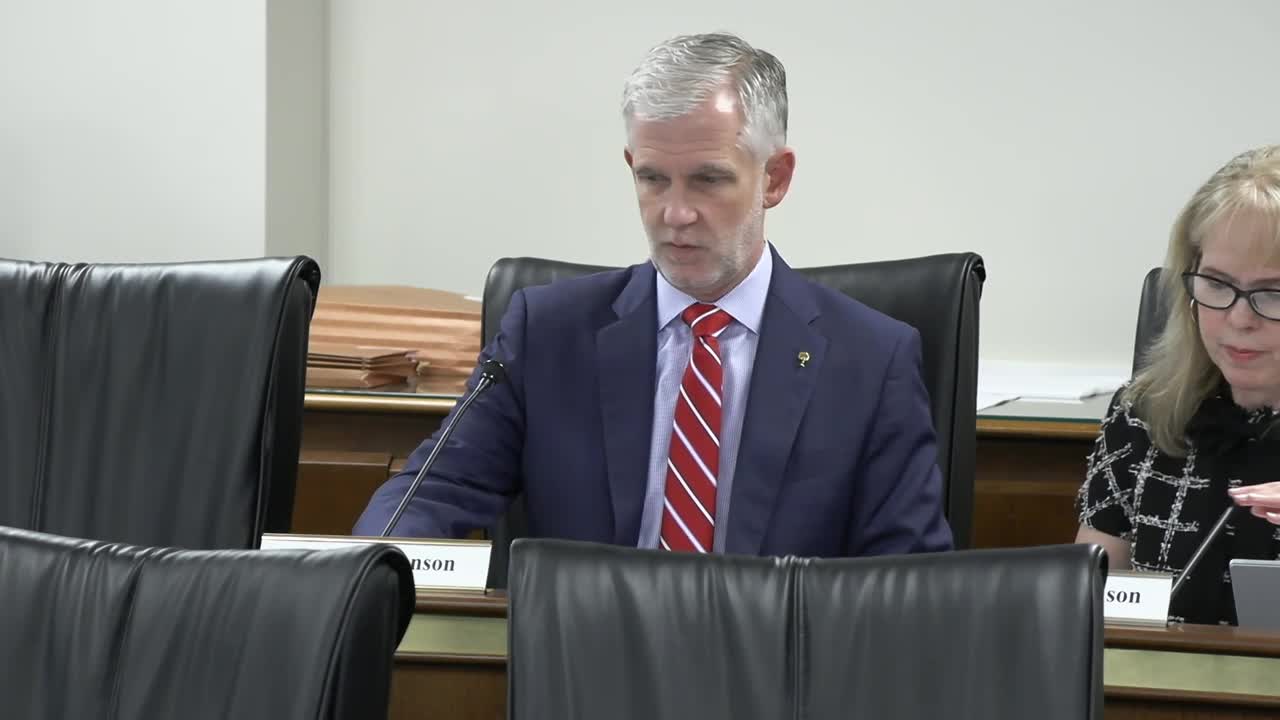
Senate Judiciary Subcommittee members heard competing testimony on provisions of Senate Bill 244 that would change South Carolina's joint-and-several liability rules and allow juries to place unnamed at-fault nonparties on verdict forms.
Senate Judiciary Subcommittee members heard competing testimony on provisions of Senate Bill 244 that would change South Carolina's joint-and-several liability rules and allow juries to place unnamed at-fault nonparties on verdict forms.
Supporters said the changes aim to prevent defendants from being required to pay more than their share of damages and to restore fairness under apportionment rules. Opponents said the proposal would increase litigation, threaten small businesses and strip long-standing procedural protections for defendants.
The bill summary presented to the panel said, "This bill would amend the joint and several liability statutes, repeal the right of contribution, codify dram shop law, and require training for those who serve alcohol." Sharon, a staff presenter, listed the joint-and-several change first and said the measure would also alter related insurance and tort provisions.
Mayor Rickman of Columbia told the committee liquor-liability costs are already hurting local restaurants and nightlife and urged lawmakers to act, saying, "We need reform now." Representatives of business and insurance-reform groups told senators they had seen carriers reduce available coverage and raise premiums; Russ Dubisque of the South Carolina Coalition for Lawsuit Reform said, "Something has to be done."
Defense and plaintiff-side trial lawyers gave sharply different accounts of how the current apportionment statute operates in practice. Jay Thompson, speaking for the South Carolina Defense Trial Attorneys Association, said S.244 "is a good start to fix a number of problems that create injustice in our judicial system" and argued the current statutory scheme can force a defendant to pay damages caused primarily by a nonparty. By contrast, Sydney Lynn, president of the South Carolina Association for Justice, said the proposal "unequivocally puts profits over people," arguing insurers have not provided independent evidence that changing joint-and-several law would lower premiums.
Much of the debate focused on how juries now must allocate 100% of fault among named defendants at trial even when other at-fault parties are not in the case. Witnesses and several senators walked through hypothetical drunk-driving cases and wrongful-death examples to show how settlement allocation, set-offs and the timing of defendants leaving a suit can meaningfully affect final recoveries.
Several senators pressed witnesses for practical fixes. Defense witnesses said courts already can and should police allocation abuse and suggested clearer set-off mechanics; plaintiff lawyers and small-business witnesses warned that allowing nonparty entries on verdict forms would increase trials, invite "trial by ambush," and potentially harm reputations and businesses even without monetary judgments.
The subcommittee did not hold votes or amend the bill during the hearing. Members said they would continue negotiating language on nonparty entries, burden-of-proof questions and apportionment mechanics before returning with potential amendments.
Ending: Senators and witnesses agreed the committee needs further, detailed drafting work on precise procedures (notice to nonparty, discovery timing, jury instructions) before S.244 moves downstream. Several legislators invited adversaries to a follow-up meeting to try to craft targeted changes.