Get Full Government Meeting Transcripts, Videos, & Alerts Forever!
Get email alerts on the Polling Locations Precinct Sizes topic
No spam. Unsubscribe anytime.
Subcommittee carries over bill that would raise precinct threshold and change polling‑place rules
Summary
S 36, which would raise the reporting threshold for precinct size from 1,500 to 3,000 electors and change how polling locations are set and notified, was carried over for amendment after extensive public testimony on access and auditing.
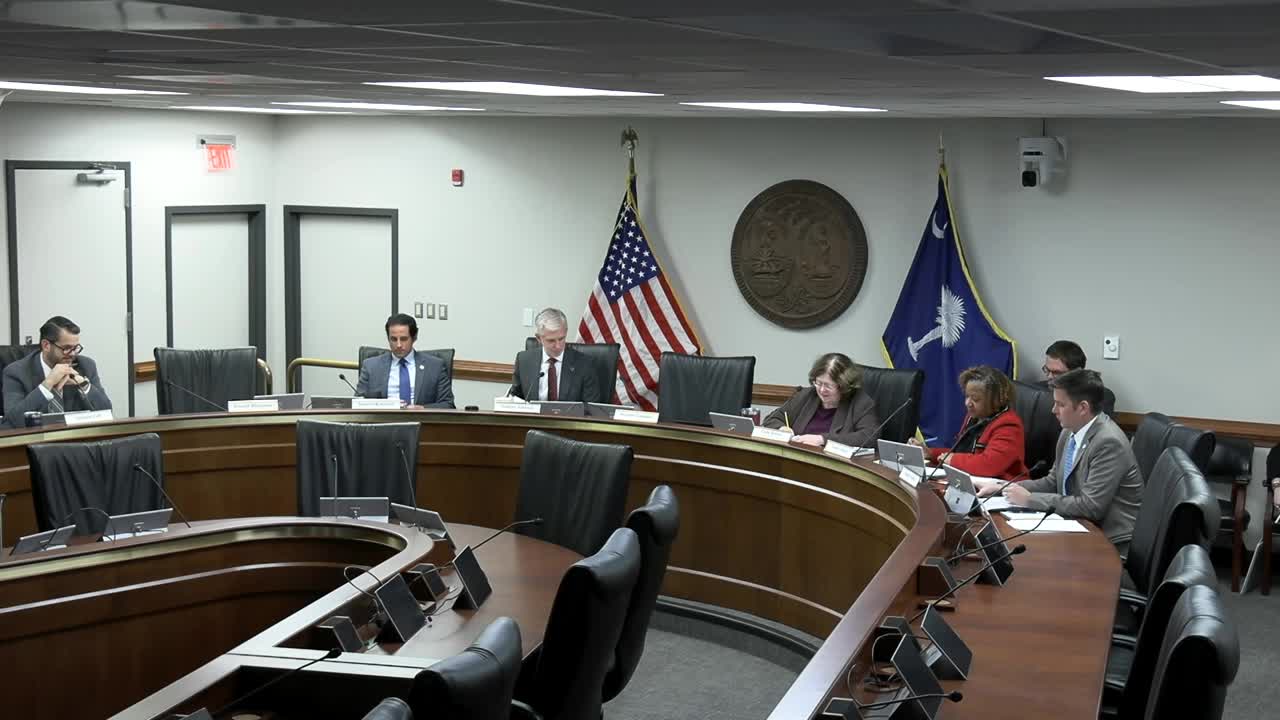
The Senate Judiciary Subcommittee on Election Laws carried over S 36 after hearing extended testimony from election administrators, civic groups and residents about proposed changes to polling‑place rules.
As introduced, the bill would require county boards of registration and elections to establish polling locations using set criteria, increase the threshold that triggers legislative reporting when precincts reach size limits (from 1,500 electors to 3,000), and allow towns with fewer than 3,000 residents to use a single polling place for municipal elections. It would also repeal a code provision tied to dividing voter lists when 750 electors are present at a polling place and add rules for public notice when polling locations change.
Proponents — including Joseph Dabney of the South Carolina Association of Registration and Election Officials and Kent Lassane of the South Carolina Association of Counties — said the bill would give election officials flexibility to consolidate sites where appropriate, address difficulty finding poll workers, and improve operational planning. Dabney said counties often face trouble finding suitable facilities and workers and that consolidating can help ensure ADA accessibility and machine availability.
Opponents and cautious witnesses warned consolidation can reduce accessibility and complicate audits when multiple precincts vote at a single location. Laura Shar, founder of South Carolina Safe Elections, said raising the precinct limit to 3,000 risks longer lines and would make routine hand-count audits more difficult; she urged stronger accountability and timeline requirements for reducing oversized precincts. Heather Hickman of Berkeley County told the subcommittee she waited more than an hour to vote in recent elections and said combining precincts can “lose visibility, we lose accountability, we lose transparency.”
Committee staff noted S 36 conflicts with existing provisions in Title 7 that assign approval authority to county legislative delegations; members asked staff to draft amendment language that would reconcile delegation approval and add more specific voter‑notification timelines (one senator suggested at least 48 hours, with an emergency exception). The chair asked staff to circulate proposed amendments to the subcommittee prior to the next meeting.
The subcommittee carried S 36 over to a future meeting to permit drafting of clarifying amendments.