Get Full Government Meeting Transcripts, Videos, & Alerts Forever!
Get email alerts on the Commission On Higher Education Oversight topic
No spam. Unsubscribe anytime.
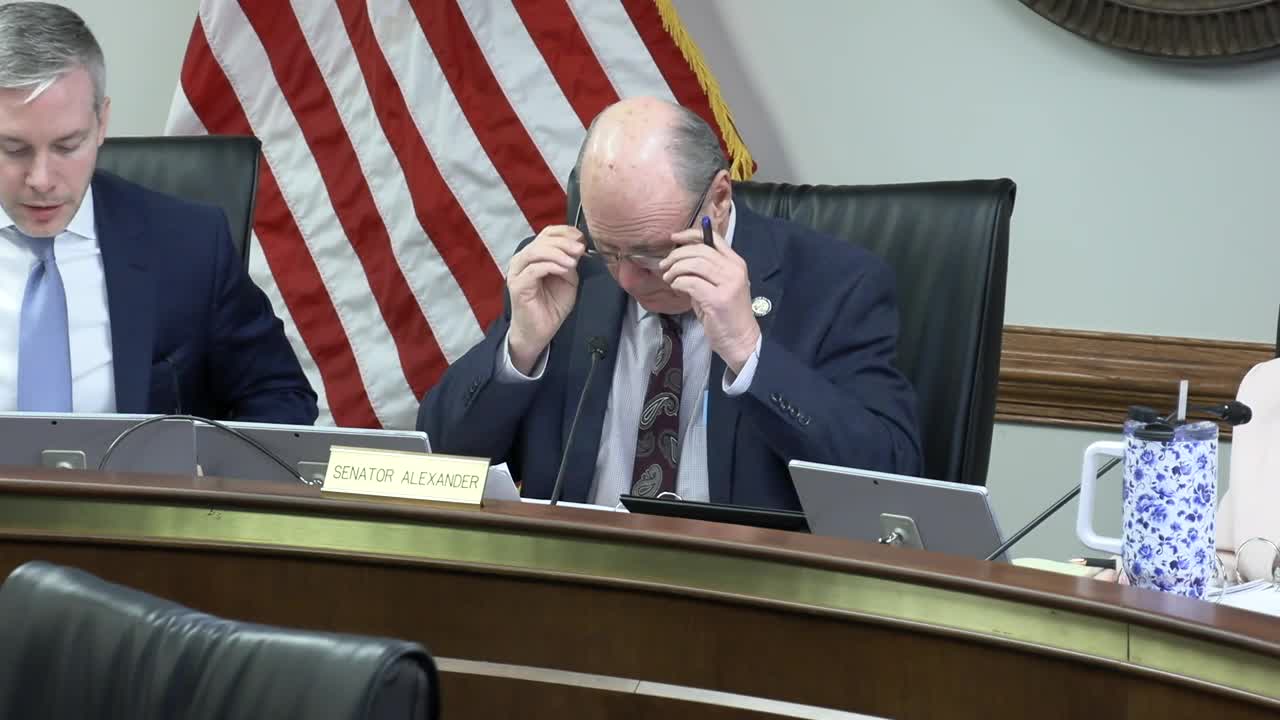
Senate Oversight Committee pauses review of Commission on Higher Education for one year
Summary
The Senate Legislative Oversight Committee voted to pause its review of the South Carolina Commission on Higher Education for one calendar year, citing reforms undertaken after Inspector General and House oversight findings and ongoing implementation by new agency leadership.
The Senate Legislative Oversight Committee voted Thursday morning to pause its active oversight review of the Commission on Higher Education for one calendar year, allowing the agency time to continue implementing changes prompted by earlier reports.
Committee staff recommended the pause after recounting findings from the Office of the Inspector General and a subsequent House Oversight review, and after describing steps the commission has taken to address weaknesses in forecasting, auditing and internal operations. The committee approved the staff recommendation by voice vote; members in the transcript responded “aye” and the chair declared, “Ayes have it.”
The recommendation followed staff summaries of the inspector general’s finding that incomplete audits and a flawed projection model hindered the commission’s ability to forecast lottery scholarship needs, which contributed to the accumulation of more than $152,000,000 in appropriated lottery funds. Staff also cited an Office of the State Auditor (OSA) review that found recordkeeping gaps for certain retired capital assets and some interfund reporting errors for the fiscal year ending June 30, 2023. The committee packet included both the IG report (published Nov. 20, 2023) and a House Oversight study (Oct. 2024).
Staff told senators that the commission has taken several steps in response. Leadership changed: the commission’s president and executive director, Dr. Rusty Munholland, resigned; the commission conducted a nationwide search and hired Dr. Jeffrey Perez as president and executive director effective July 1, 2024. The agency reorganized its offices into four units—academic affairs and licensing, student affairs, information technology and data analysis, and fiscal affairs and operations—and reconstituted commission committees to align with those units.
To improve financial projections and audit coverage, staff reported the commission has contracted an external auditing firm to assist with annual reviews of institutions receiving lottery scholarship funds. Pursuant to Proviso 117.173 of the Fiscal Year 2025 Appropriations Act, staff said the commission now submits its annual lottery fund projections to the Office of Revenue and Fiscal Affairs for verification of methodology.
Oversight staff also described the commission’s public-facing data work: a South Carolina transfer outcomes dashboard is available online with eight‑year tracking of cohorts; staff told the committee the dashboard currently contains data for the 2014 cohort (current through 2022) and that an updated cohort dataset for later years is expected but not yet available. Staff said the commission is working with the National Student Clearinghouse and IPEDS (the Integrated Postsecondary Education Data System) to obtain additional data.
After reviewing the changes already made and ongoing work, staff recommended pausing the oversight review to allow the new leadership time to continue implementing corrective actions. Senator Massey, identified in the packet as chairman of the CHE review subcommittee, concurred with the recommendation in advance of the meeting, and the full committee approved the pause. The committee’s materials indicate the agency would be placed on the Senate oversight review calendar to conclude in 2026; the committee record does not specify an exact reactivation date.
Committee staff said they will remain in regular contact with CHE leadership and will bring any emerging concerns to committee members during the pause. No written vote tally with member names was recorded in the transcript; the approval was taken by voice vote with the chair announcing the result.