Lifetime Citizen Portal Access — AI Briefings, Alerts & Unlimited Follows
Senate subcommittee advances S.287 to restrict unapproved vaping products, citing youth use and enforcement gaps
Loading...
Summary
The South Carolina Senate Medical Affairs subcommittee voted to advance S.287, a bill to regulate electronic nicotine delivery systems, after hearing testimony from law enforcement, educators, local officials and industry representatives.
The South Carolina Senate Medical Affairs subcommittee voted to advance S.287, a bill to regulate electronic nicotine delivery systems, after hearing several hours of testimony from law enforcement, educators, local officials and industry representatives.
Senate President Alexander, who sponsored or supported the measure, told the committee the Senate previously passed similar legislation 45-0 in the prior session and urged lawmakers to act swiftly to protect children.
The bill would create a state process to register manufacturers and require documentation that the U.S. Food and Drug Administration has authorized a product before it may be sold in South Carolina. Supporters said state action is necessary because some products come through international supply chains and federal enforcement is slow or uneven.
“Last year the Senate passed this legislation, similar legislation…45 to 0,” President Alexander said in opening remarks, urging the subcommittee to take up the measure. Law-enforcement and local officials and school personnel described acute local impacts from disposable flavored devices and other small vaping products that can hide in classrooms and backpacks.
Mark Lyles of the Oconee County sheriff’s office told the committee his deputies and school resource officers face “never ending” problems with vapes brought to schools, including cases that led to ambulance calls and seizures. “We have more calls from our schools with kids hitting it at school…I’m having a bunch of ambulance calls, kids going to the hospital, seizures,” Lyles said.
Dr. Erica R. Hersey, a retired educator, cited state and federal survey figures and described classroom disruptions. “According to the South Carolina Department of Alcohol and Drug Abuse Services, 47 percent of high schoolers in South Carolina have used a vape product,” she said, adding that the products’ flavors and designs make them attractive and hard to detect.
Mayor Rickman told the committee his community has seen what he described as a roughly 50 percent increase in vaping in local school systems and urged lawmakers to provide tools for enforcement and retail accountability. Michael Fields, director of the South Carolina Convenience and Petroleum Marketers Association, told senators his members support “clarity” and a level playing field for retailers and called the bill a step toward that clarity.
Industry and public-health witnesses differed on whether the proposed registry would be an effective or lawful tool. Andrew Willem, government relations director for the American Heart Association in South Carolina, warned the committee that laws requiring state registries could face immediate legal challenges and argued the bill may be preempted by federal law governing tobacco products. “By voting to advance this legislation, members of this committee would be exposing South Carolina to legal risk,” Willem told senators, citing the Family Smoking Prevention and Tobacco Control Act’s preemption clause.
Perry O’Rourke of the South Carolina Vapor Association told the committee the bill would shrink the legal market to products already approved by large companies and could drive consumers to illicit channels. He said many adults use a range of nonpod and lower-nicotine products as cigarette-cessation aids and warned the registry could reduce adult access to alternatives.
Committee members asked whether the problem is gaps in state law, enforcement challenges, or slow federal action. Several witnesses said enforcement is hampered by unclear federal–state age discrepancies and by the volume of different products in the market; witnesses also said many products are manufactured abroad and lack reliable testing for contents such as THC or fentanyl.
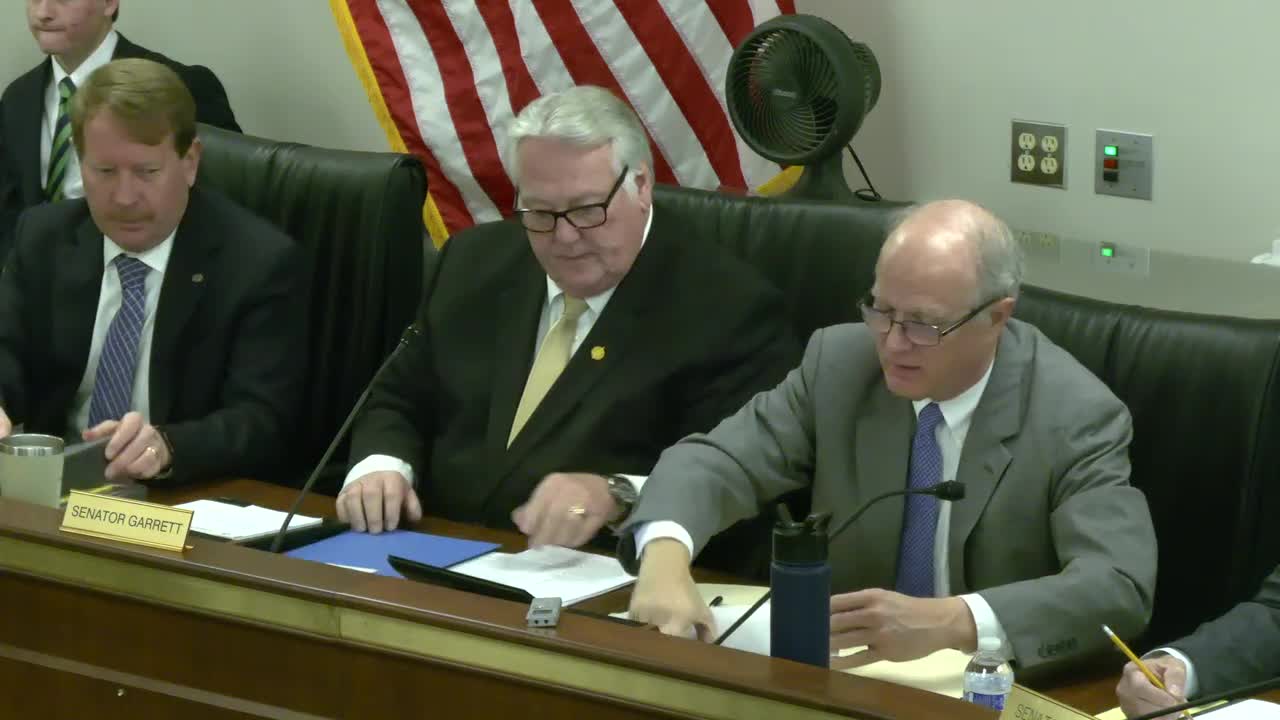
The subcommittee took the bill up out of order to allow Senate President Alexander to participate and, after testimony and questions, a motion was made to advance S.287 to the full committee. The motion passed by voice vote; the transcript records unanimous consent but does not include a roll-call tally.
The full committee will receive S.287 for further consideration, where senators have said they will consider amendments addressing age limits, enforcement authority, and coordination with federal and civil litigation risk.