Get Full Government Meeting Transcripts, Videos, & Alerts Forever!
Get email alerts on the Agriculture Poultry Health topic
No spam. Unsubscribe anytime.
Delmarva Chicken Association: nine avian-influenza detections, four control areas released; biosecurity and business continuity priorities
Summary
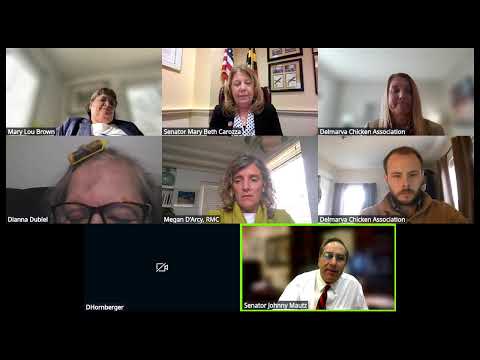
The Delmarva Chicken Association told the Eastern Shore delegation on Feb. 7 there have been nine commercial high-path avian influenza detections across Delmarva (five in Maryland), four control areas have been released and industry officials stressed rapid depopulation, cleaning and biosecurity to restore continuity of business.
The Delmarva Chicken Association (DCA) updated the Eastern Shore delegation Feb. 7 on high-path avian influenza (HPAI) cases and industry response steps, reporting nine commercial detections across Delmarva — five in Maryland — and announcing that four control areas previously under restrictions had been released.
Mary Lou Brown, a Dorchester County farmer and DCA board president, said the region produces billions of pounds of chicken annually and emphasized the industry’s size and local economic importance. Executive Director Holly Porter and DCA staff outlined incident-command coordination among state agriculture departments, the U.S. Department of Agriculture, natural-resources agencies and local emergency-management staff.
DCA said four control-area releases have occurred and that those releases restore the ability for farms inside the 0–10 kilometer control circle to place birds again without additional audits or permits, provided the workstreams for cleaning, depopulation and disinfection are complete. Porter described the unified-command structure that coordinates federal and state response and said, when the response works as intended, releases can occur within weeks of detection: “All 4 of our control areas that have been released so far were within less than 1 month of the detection date,” DCA said.
DCA reiterated biosecurity priorities for growers: restrict farm visitors, maintain house-dedicated footwear and clothing, and keep flocks separated from wild waterfowl. The association told delegates the virus is now circulating in wild birds more visibly than in past years — with waterfowl and other species sometimes dying — and that the higher environmental prevalence increases the need for constant on-farm biosecurity.
DCA also outlined legislative priorities for the 2025 session, including temporary changes to hauling permits to support depopulation and movement needed during outbreaks, science-based climate discussions that consider economic feasibility for farms, careful siting of solar to avoid conversion of prime agricultural land, and a phased approach to PFAS rules that maintains safe, feasible alternatives for agricultural use.
DCA said it is coordinating with state agriculture and natural-resources agencies and that USDA remains a central partner in resourcing response operations. Delegates and senators in the meeting asked about communications to farmers and the public; DCA and farmer representatives said growers are aware of waterfowl risks and that industry and state public information teams are using multiple channels to advise farmers when wild-bird detections occur.
Ending: DCA requested continued legislative attention to permit and policy details as the agency and growers manage ongoing HPAI risks and continuity-of-business needs for the poultry industry.