Lifetime Citizen Portal Access — AI Briefings, Alerts & Unlimited Follows
Senate panel hears Texas School for the Blind and Visually Impaired budget requests and reporting changes
Loading...
Summary
Legislative Budget Board recommended targeted biennial increases for the Texas School for the Blind and Visually Impaired (TSBVI) including staffing, special education related services and transportation; agency asked lawmakers to consider expanded outreach, teacher stipends and a blind‑soccer pitch.
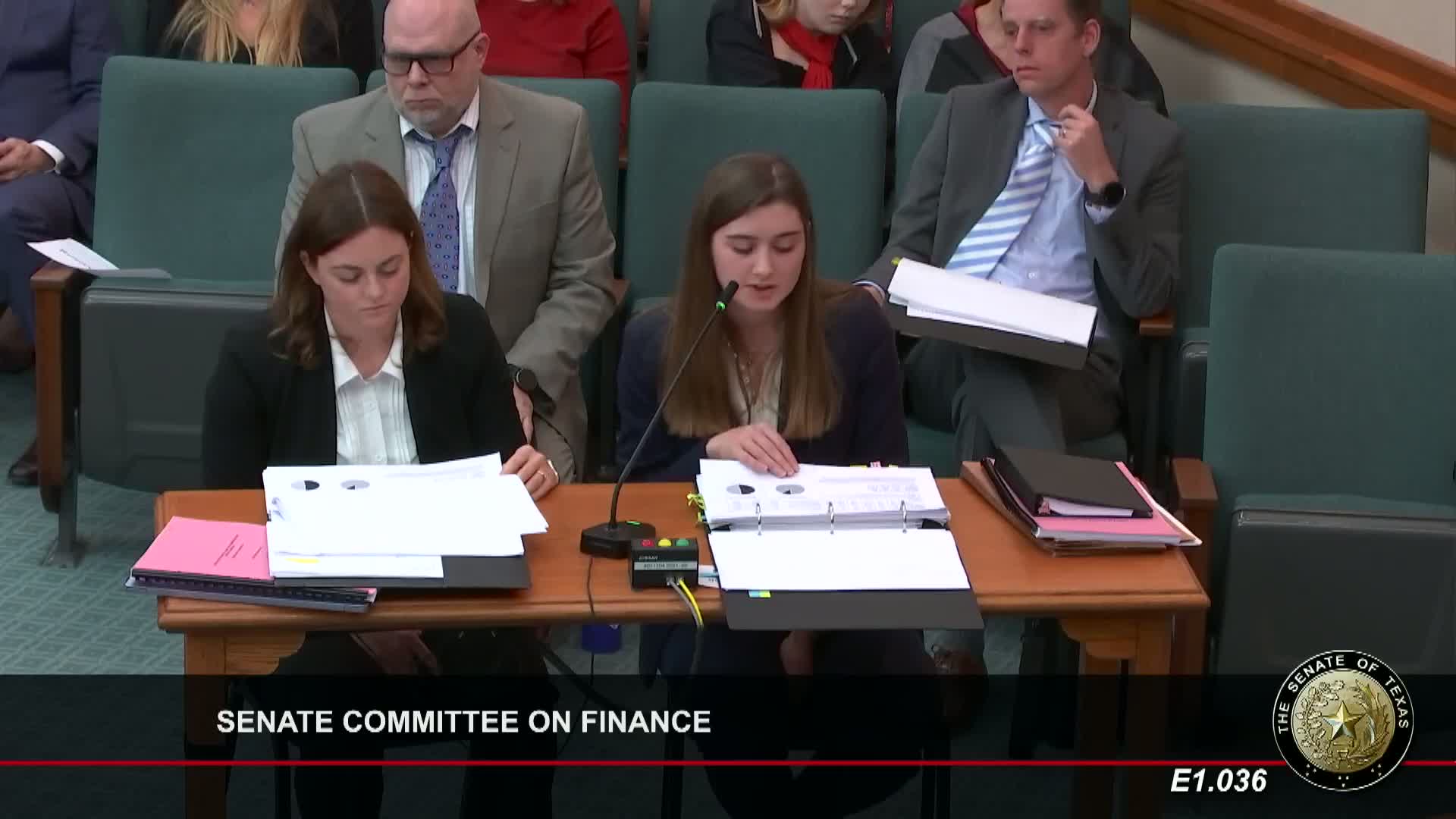
The Senate Finance Committee heard budget testimony from the Legislative Budget Board and the Texas School for the Blind and Visually Impaired on Wednesday. LBB summarized a 2026–27 all‑funds recommendation of about $72.9 million for TSBVI — a roughly 6.6% increase over the 2024–25 base — driven largely by educator salary biannualization, increased general‑revenue support for related services and higher transportation costs tied to residential student homegoing services.
Nut graf: LBB recommended several technical and rider changes and highlighted recurring funding increases that would cover staffing and related services; TSBVI’s own agency requests included salary adjustments, additional outreach and training (including a new teacher mentor program to support a new deaf‑blind certification), campus infrastructure and a small athletic pitch request for blind soccer.
LBB presenter Antonio Najera told the committee recommendations include $900,000 to maintain educator salary increases tied to Austin ISD parity; about $5.7 million in GR increases for related services and central administration that offset a decline in federal reimbursements; and $1.6 million for transportation, including $1 million for charter bus services for weekend homegoing. Najera recommended transferring an agency rider into special provisions so the same contingency language can apply to both TSBVI and the School for the Deaf.
TSBVI Superintendent Emily Coleman described program areas: statewide outreach and training, short‑term programs, and comprehensive residential placements for students with multi‑complex needs. She urged lawmakers to consider expanded outreach funding, support for university teacher‑preparation partnerships, a $2,500 stipend for contracted instructional staff (agency rider change), cybersecurity and technology upgrades, and a small blind‑soccer pitch to expand athletic opportunities for students with visual impairments.
Ending: LBB kept the agency’s capital and exceptional items on the request list but did not include major new capital in the baseline. Committee members did not act on the TSBVI exceptional items during the hearing; the school and the LBB will remain available for follow‑up questions and cost estimates as budget deliberations continue.