Get Full Government Meeting Transcripts, Videos, & Alerts Forever!
Get email alerts on the Downtown Development topic
No spam. Unsubscribe anytime.
Cheyenne holds public hearing on DDA 20-year downtown plan; adoption to follow committee review
Summary
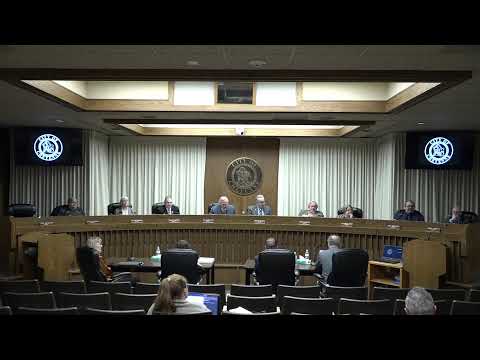
The Cheyenne City Council opened a public hearing Feb. 10 to review the Downtown Development Authority’s plan of development, a consultant-prepared blueprint intended to guide downtown Cheyenne’s development for the next 20 to 25 years.
The Cheyenne City Council opened a public hearing Feb. 10 to review the Downtown Development Authority’s plan of development, a consultant-prepared blueprint intended to guide downtown Cheyenne’s development for the next 20 to 25 years. The plan, prepared by Logan Simpson of Fort Collins and paid for from DDA funds held at Jonah Bank, will be presented to the Public Services Committee on Feb. 18 and return to the council for a third and final reading in two weeks.
Development Director Charles Blumpling told the council the plan was developed over about 18 months with multiple public engagement events, direct outreach to downtown business and property owners, and targeted meetings such as preference studies held at city events. “This plan … is to serve as a blueprint for how the downtown will develop in the future and where they will set their priorities,” Blumpling said, identifying three major sections: an introduction, focus areas and administration/management.
The plan maps an expanded DDA boundary that reaches a block south of Interstate 180 and additional northwest parcels, and includes a matrix of prioritized projects with time frames (immediate, 1–3 years, 3–5 years, 5–7 years). High‑priority items listed in the plan include the pump house/wetlands catalyst project, expanded Seventeenth Street lighting, Reed Avenue corridor enhancements, a Fifteenth Street “railcar experience” pilot and alley‑enhancement pilots. Immediate administrative items include website updates, alley maintenance and a capital improvement grant program; the plan also flags micromobility (scooters) for near‑term work with the city attorney and a request‑for‑proposal process to move toward a single provider.
Council members pressed staff on outreach and implementation details. Councilmember Aldrich asked where sidewalk and façade repair fit in the priority matrix; Blumpling said a capital improvement grant program is included in the administration section and will be detailed in the implementation matrix. Council members also asked whether the DDA has an up‑to‑date email list of property owners who pay the DDA mill levy; Blumpling said the DDA can email its existing listserv but did not confirm it contains every mill‑levy payer. He said staff would check the contact list and follow up.
Several council members and members of the public urged the DDA to treat snow removal and pedestrian safety as immediate implementation items. “Snow removal was one that did rise to the top, especially the inconsistent snow removal … and then issues at the ADA ramps and crossing of streets,” Blumpling said. He said development of a work plan—led by the consultant with DDA staff and identified partners—will identify roles for DDA staff, property owners and other entities on snow management.
Members of the public who spoke at the hearing raised concerns about outreach, pedestrian counts and downtown safety. A downtown property owner who identified herself as Astrid said she had not been contacted by Logan Simpson despite providing contact information and attending meetings; she told council she believes pedestrian traffic downtown has declined and urged the city to collect pedestrian or retail‑sales data to document trends. Glenn Garrett, who has an office downtown, said the DDA board had directed staff to add more emphasis on parking and to address the Hines Building and the large hole on that block, and he asked staff to place the additional language in the public record.
Blumpling told Garrett that the plan’s final draft recognizes the Hines project and the hole as important but did not designate the Hines as a formal catalyst project; he said the consultant drafted the specific language and staff would provide the material and follow up. Blumpling also confirmed the study cost is approximately $108,000 and said development of the work plan is included in the current budget.
The council closed public comment and directed that the public hearing record be forwarded to the Public Services Committee meeting on Feb. 18; Blumpling said the consultant is expected to present at that meeting and that the council will consider final adoption at the next regular meeting, two weeks after Feb. 18.
The hearing did not produce a final vote; the plan remains before the Public Services Committee for further review.