Get Full Government Meeting Transcripts, Videos, & Alerts Forever!
Get email alerts on the Public Works Procurement topic
No spam. Unsubscribe anytime.
Senate Commerce advances three public-works bills raising procurement thresholds
Summary
The Senate Commerce Committee advanced three House bills that raise procurement and bidding dollar thresholds to reflect inflation and ease departmental workload.
The Senate Commerce Committee advanced three House bills that raise dollar thresholds used in public-works procurement and bidding.
Sen. Dave Lent (District 33), who presented the bills, described them as administrative updates to reflect inflation and the escalation of construction costs. “If you don't change these bottom line numbers, eventually you're doing a whole lot of work that normally was meant to be reserved for lower-cost projects,” Lent said, explaining that raising the triggers will reduce workload at the department level and allow larger agencies or institutions to manage more projects locally.
The bills and key changes are:
- House Bill 50: increases the delegation-of-authority threshold from $300,000 to $500,000, allowing larger projects to be managed by entities with their own project managers (for example, Idaho State or Boise State) while preserving departmental oversight and review by the Permanent Building Fund Advisory Council.
- House Bill 52: raises the trigger at which the bidding process moves from informal to a formal competitive bid from $100,000 to $200,000. The sponsor noted the previous change to these figures was in 2005.
- House Bill 56: increases the written competitive-bid threshold from $25,000 to $50,000; the sponsor again said the last time this threshold was adjusted was 2005.
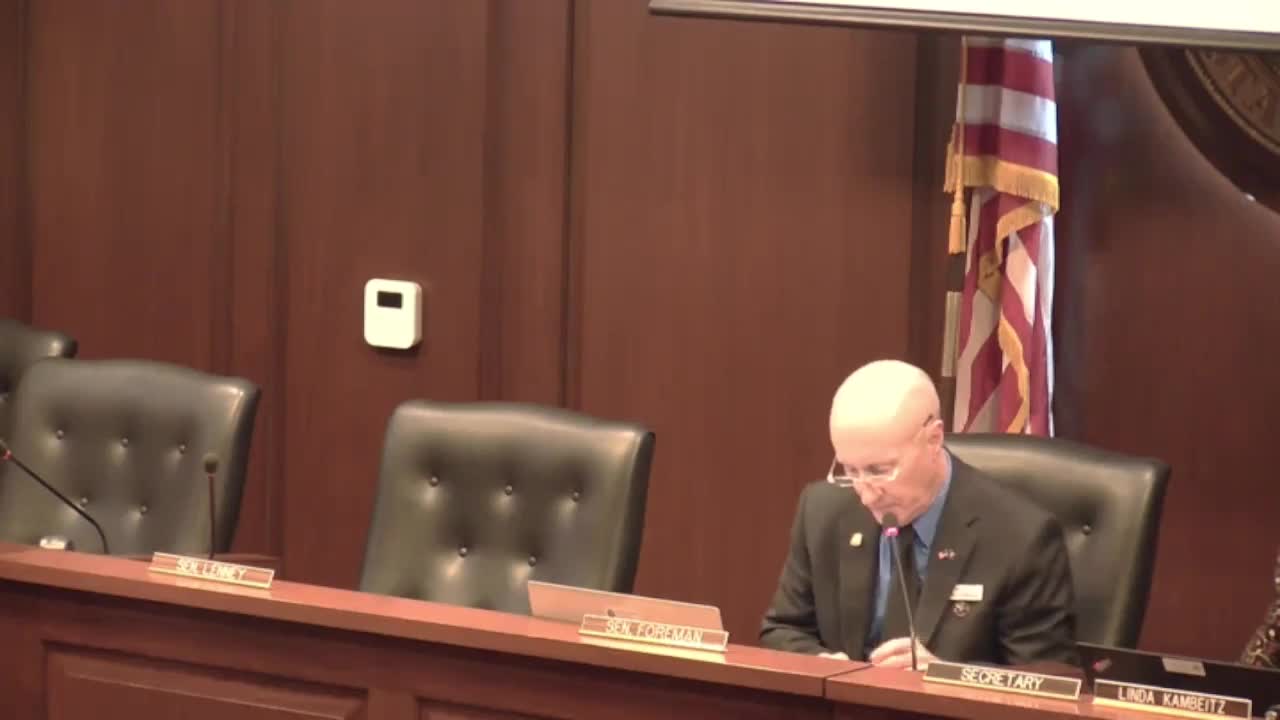
Committee motions and outcomes: Sen. Burt moved that HB50 be sent to the Senate floor with a due-pass recommendation; the motion was seconded and carried by voice vote. Sen. Ward Engelking moved that HB52 be sent to the floor with a due-pass recommendation; the motion was seconded and carried. Sen. Guthrie moved that HB56 be sent to the floor with a due-pass recommendation; the motion was seconded and carried. No outside testimony was offered during the meeting.
Lent and other senators emphasized that oversight remains with the Department of Administration and the Permanent Building Fund Advisory Council despite higher delegation thresholds. Committee members did not present substantive amendments during the meeting; all three bills were advanced to the Senate floor with due-pass recommendations.