Get Full Government Meeting Transcripts, Videos, & Alerts Forever!
Get email alerts on the Quagga Mussels topic
No spam. Unsubscribe anytime.
Idaho agriculture officials outline expanded quagga mussel detections and large-scale 2024 treatment on Mid‑Snake River
Summary
The Idaho State Department of Agriculture briefed the Senate Agriculture Committee on 2024 quagga mussel detections in the Mid‑Snake River, the state'led 2024 treatment (about 63,000 gallons of chelated copper applied over 200 hours at 1 ppm), expanded sampling and lab confirmation, and plans to resume sampling in May'June.
The Idaho State Department of Agriculture (ISDA) told the Senate Agriculture Committee that the agency found limited quagga mussel veligers in the Mid‑Snake River and deployed a larger, more deliberate treatment in 2024 than in 2023.
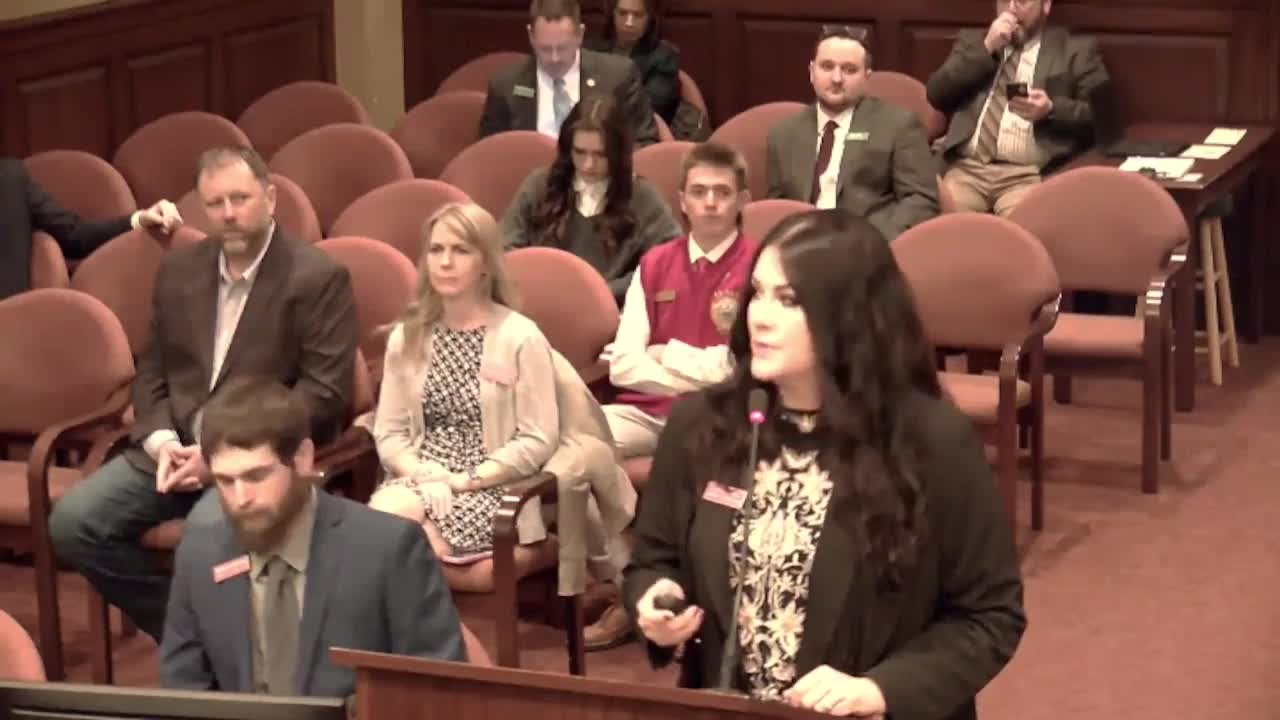
"We are going to marry the best available science and the best data we can with common sense," Director Chanel Tewaal, Idaho State Department of Agriculture, told the committee as she described the agency's response under the state's Invasive Species Act of 2008. Tewaal said Idaho has doubled statewide sampling and increased watercraft inspections by about 50% since the agency briefed lawmakers last year.
Nick Zervflo, bureau chief for ISDA's invasive species program, described the 2024 response in technical detail. After delimiting surveys and multiple lab confirmations (including blinded visual assessments and molecular testing), the agency initiated a coordinated treatment that maintained a target concentration of 1 part per million of a chelated-copper molluscicide (a SePRO Natrix product) for an extended 200-hour treatment block. Zervflo said the 2024 operation applied roughly 63,000 gallons of product across multiple river segments and that the team began monitoring copper and downstream conditions; copper concentrations returned below baseline levels around Nov. 8.
Zervflo said ISDA used an expanded laboratory network and multiple expert reviews to reduce false positives from environmental DNA (eDNA) and to confirm veliger detections. He emphasized that eDNA signals indicate "smoke" but not always "fire," and that visual or molecular confirmation and follow-up sampling are required to determine viability.
Tewaal and Zervflo described logistical complexity: calibrating flow and bathymetry, coordinating with Idaho Power and federal agencies, staging hundreds of 275-gallon applicator totes distributed with help from private partners, and using helicopters and contractors to access remote pools. Tewaal acknowledged fish mortality occurred during treatment and said the agency chose transparency: the agency publicly reported mortality, coordinated with Office of Species Conservation and federal partners, and is monitoring environmental impacts.
Committee members asked about timing for continued monitoring; Zervflo said sampling in the Mid‑Snake typically resumes in May–June, when water temperatures rise into spawning range and veligers are detectable. Tewaal said ISDA's public monitoring dashboard lists sample points, dates and results and is available for public review.
No committee vote was required for the presentation, but members praised the agency's transparency and the professionalism of the response team. ISDA said it will continue sampling and is planning resource and policy options should further detections occur in 2025.