Get Full Government Meeting Transcripts, Videos, & Alerts Forever!
Get email alerts on the Hemp Program topic
No spam. Unsubscribe anytime.
Hemp industry urges tweaks to Idaho program; ISDA outlines strict rules and costs
Summary
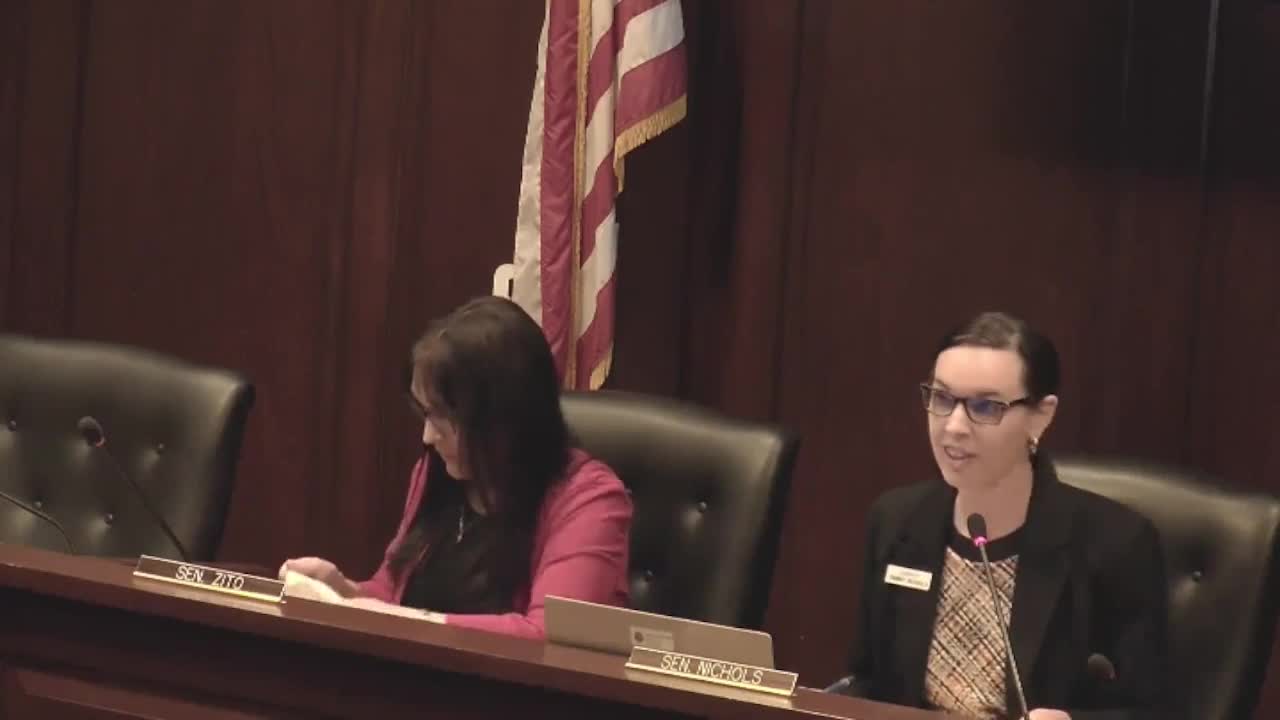
The Senate Agricultural Affairs Committee received an industry and agency briefing on Idaho’s hemp program, where ISDA described strict licensing, testing and fee requirements and farmers and processors urged several operational and policy changes to support fiber and grain production.
The Idaho Senate Agricultural Affairs Committee heard a multi‑part informational presentation on the state's industrial hemp program including the Idaho State Department of Agriculture (ISDA) and private producers and processors who said the sector is expanding but faces regulatory and operational obstacles.
ISDA Director Michelle Tewalt told the committee that House Bill 126 (2021) created Idaho's hemp framework and that the state follows the 2018 federal Farm Bill for on‑farm production while retaining stricter state standards in some areas. "Idaho standard is 0.3%," Tewalt said, adding that "once it leaves a licensed handler's facility, it has to be a 0% THC product." She described the program as "incredibly onerous and very heavy" and stressed that fees were set so the program would largely pay for itself, leading to higher costs than other ISDA programs.
Direct program details: Tewalt listed required elements for producers and handlers: annual licensing with background checks, lot fees, reporting to USDA Farm Service Agency, harvest notification (30 days before harvest) and mandatory THC testing before hemp moves off a farm. She said ISDA does not set lot size — "if you want to have a lot size that is half an acre or 20 acres, it's up to you" — but that fees and testing are charged per lot. On enforcement she said negligent violations are addressed administratively and "we have never had a non negligent violation in the state of Idaho." Tewalt also said the program requires USDA approval of Idaho's plan and approval from stakeholders and the governor for administrative rules.
Industry presentations: Braden Jensen of the Idaho Farm Bureau organized the panel. Tristan Sponseller, owner of Idaho Hemp Processing in Rexburg, described contracting with roughly 90% of acreage in his facility's first processing years. Sponseller urged three specific changes: moving the application deadline from Dec. 31 to March to align contracts and pricing; revising lot‑fee rules that currently split lots by features such as ditches and canals; and tailoring remediation options to fiber and grain rather than CBD‑oriented methods. Sponseller said remediation techniques currently required — for example, shredding in the field — are not always feasible for fiber operations and recommended options such as tracked decortication and post‑processing retesting.
Matthew Mead, founder and CEO of Hempitecture (Jerome), described a growing local market for hemp fiber products and provided production data: Hempitecture converted nearly 1 million pounds of hemp fiber in 2024, 42% of which was grown in Idaho. Mead said his company employs 10 full‑time manufacturing workers (rising to 15 in 2025) and that fiber demand supports local processing and lowers shipping costs. He urged more research and infrastructure support, noting a recent loss of state research funding that halted several university projects his company relied on.
Growers’ perspectives: Growers said the crop can be a viable rotational option with lower water use. Farmer Travis McAfee described early confusion among neighbors and students but said community interest grew when crops reached mature height and were harvested under contract. Organic farmer Tim Corney highlighted hemp grain's nutritional value and said fiber and grain are distinct from CBD/cannabis in cultivation and market structure.
Policy issues flagged: presenters and the director pointed to several recurring friction points — high program fees, per‑lot inspection fees, the 30‑day harvest window, the current Idaho THC standard (0.3% on farm) with retail product required to be 0% THC, and the three‑strike remediation rule. Sponseller and others suggested Idaho consider aligning enforcement thresholds with USDA's 1% standard for purposes of administrative strikes or to implement performance‑based testing for proven genetics.
Ending: Committee members asked questions but took no formal legislative action on the hemp presentation; sponsors and ISDA were asked to bring additional data and clarified operational details when bills or rule changes are proposed.