Get Full Government Meeting Transcripts, Videos, & Alerts Forever!
Get email alerts on the Weather Modification topic
No spam. Unsubscribe anytime.
Senate panel advances cloud‑seeding reporting and bans on unauthorized weather modification
Summary
The Idaho Senate Agricultural Affairs Committee voted to send two related draft resolutions to print: one requiring operators to report cloud‑seeding activity to the Idaho Water Resource Board and another that would ban unauthorized weather modification and solar radiation management while exempting authorized cloud seeding.
The Idaho Senate Agricultural Affairs Committee on Thursday voted to send two related draft resolutions to print that would require public reporting of cloud‑seeding activity and prohibit unauthorized weather‑modification practices.
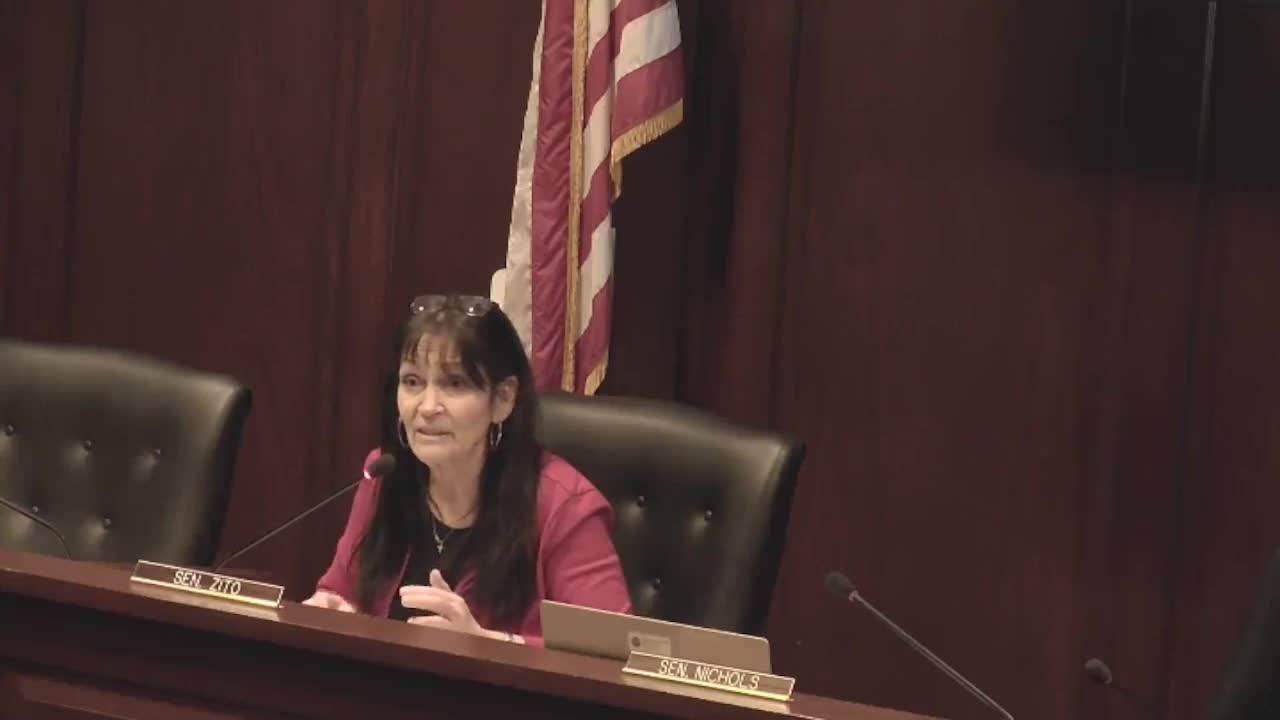
Senator Tammy Nichols, presenting RS 32229C1, told the committee the measure would require "cloud seeding operators, both state run and private, to submit monthly and annual reports" that the Idaho Water Resource Board would publish and present in public meetings so "everyone can see what's happening with seeding." Nichols said the change is intended to "promote transparency and accountability with the public." The committee voted to send RS 32229C1 to print by voice vote.
Nichols also presented RS 32239C1, a separate draft that would make it unlawful for a person to engage in weather modification or solar radiation management in Idaho except for cloud seeding operations authorized by the Idaho Water Resource Board. Nichols told the committee the bill "prevents unauthorized weather modification activities and solar radiation management, which could negatively impact Idaho's agricultural industry, water supplies, and public welfare," and noted the draft removes an "obsolete weather modification taxing district" unused since the 1970s. The committee voted to send RS 32239C1 to print by voice vote.
Why it matters: Both measures are aimed at separating routine, authorized cloud seeding from broader, unregulated weather‑manipulation activities. Proponents framed the changes as preserving water augmentation tools while increasing transparency for taxpayers and stakeholders.
Lawmakers’ questions and concerns: Several senators urged that the proposals return with stronger scientific documentation. Senator Lent asked Nichols to bring "strong scientific foundation" when the bills return. Senator Glynn said he will "vote to print" but voiced reservations, saying the cloud‑seeding reporting bill "comes from a position of mistrust" and "adds a layer of government here that I'm not sure we really need." Senator Blaylock asked why modern reporting was being added, noting that some forms of cloud seeding have been used for decades. Senator Taylor also said he would support printing but echoed calls for more evidence.
Scope and enforcement: Nichols said the reporting bill will specify details such as locations, materials used and environmental effects, and that the Idaho Water Resource Board will publish annual reports. The weather‑modification draft explicitly exempts board‑authorized cloud seeding and grants enforcement authority to law enforcement for unauthorized activities, according to Nichols.
What's next: Both RS 32229C1 and RS 32239C1 were sent to print; committee members asked for additional scientific and programmatic detail before any further action.
Ending: The committee took no final legislative action beyond sending the drafts to print. Committee members and agency representatives signaled they expect follow‑up briefings and data when the bills return for formal consideration.