Get Full Government Meeting Transcripts, Videos, & Alerts Forever!
Get email alerts on the School Choice topic
No spam. Unsubscribe anytime.
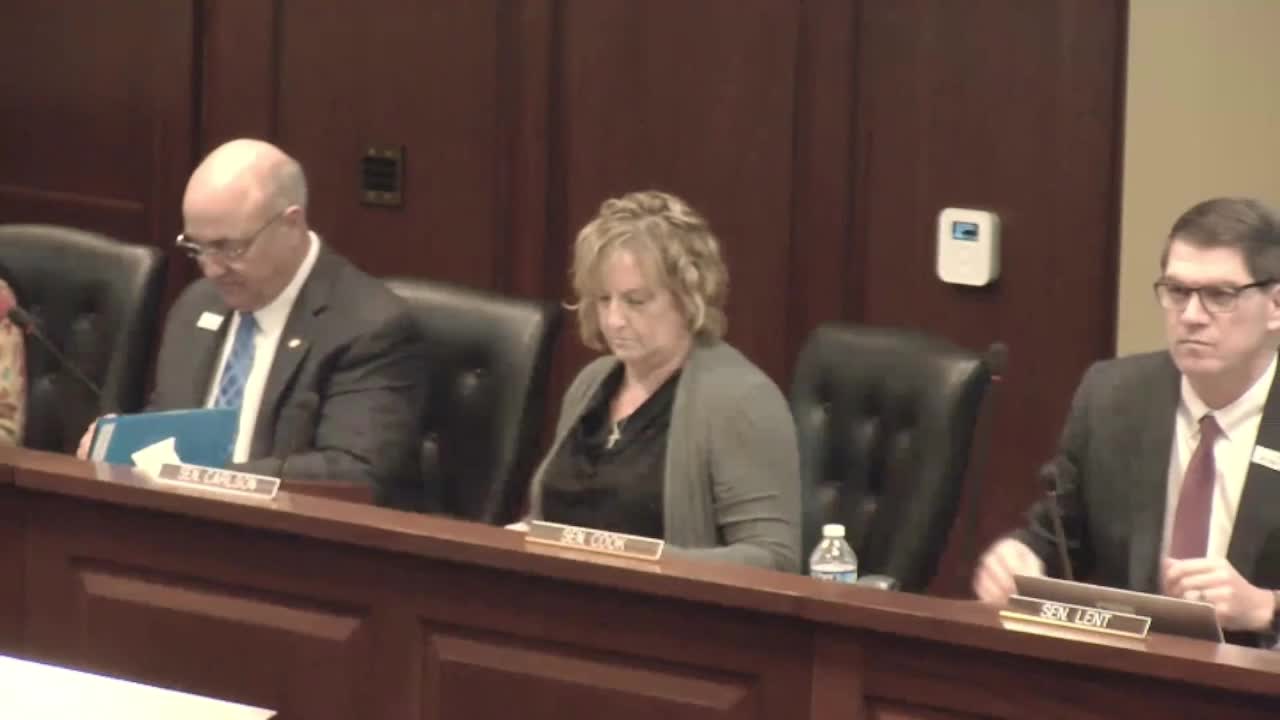
Senate panel hears lengthy testimony on SB1025 school‑choice proposal; committee votes 5‑4 to send bill to Senate floor with no recommendation
Summary
The Senate Education Committee on Wednesday debated SB1025, a proposal to expand Empowering Parents grants to allow certain public funds to go to private and pre‑K providers under accreditation and nondiscrimination rules.
Lede: The Senate Education Committee on Wednesday debated Senate Bill 1025, a school‑choice package that would expand Idaho's Empowering Parents grant to allow certain public funds to follow students to private and pre‑K providers, set a $50 million cap on the program and impose accreditation, nondiscrimination and background‑check requirements for participating schools and staff.
Nut graf: Sponsor Sen. Dave Lent (R‑Idaho Falls) framed SB1025 as an attempt to create a "fair, responsible, accountable and transparent" approach should the state move to expand school choice. The bill would raise grant amounts, prioritize lower‑income families, require participating private schools to meet accreditation and nondiscrimination standards, and includes a five‑year sunset. Dozens of witnesses — including superintendents, finance directors, teachers, homeschool and advocacy groups — testified for and against the measure. After debate and multiple procedural motions, the committee voted 5–4 to send the bill to the full Senate with no recommendation.
Body: Sponsor and scope: Senator Dave Lent opened the presentation by describing SB1025 as a package designed to do several things: expand the Empowering Parents grant to Idaho residents ages 3–18, increase grant amounts (the bill proposes grant values up to $5,000 per student with a family cap that phases up to $15,000 per household), prioritize lower‑income families (75% of funds to families earning under $60,000 AGI), and require participating nonpublic schools to be accredited, accept special‑education students and perform background checks on staff.
Lent told the committee the bill is not intended to "take the whole apple" at once and includes a five‑year sunset and a statewide cap of $50 million per year. He said the bill also includes intent language asking the Legislature to appropriate $30 million to special education.
Public testimony for and against: Testimony was mixed and extensive. Opponents argued SB1025 would be unconstitutional because the Idaho Constitution limits public funding going to religious institutions and because private‑school vouchers in other states have expanded beyond initial caps.
- Stoney Winston, Fruitland superintendent, urged the committee to reject the bill, calling the proposal a diversion of public funds from public schools and noting the state already underfunds special education by tens of millions of dollars.
- Letha Blick, Valley View School District special‑services director, said private schools routinely refuse or expel medically fragile students or students with significant behavioral needs. She presented district cost examples: IDEA funds of about $1.93 million versus projected special‑education spending of $9.49 million in that district, saying the difference is made up from general or levy funds and that private providers do not carry the same obligations.
- Several witnesses including Dr. Joy Jansen (Lake Pend Oreille special services) and others emphasized a large and growing special‑education funding gap, showing increases in students requiring life‑skills and behavioral interventions and new hires to meet needs.
- Proponents and partial supporters urged stronger accountability rather than a flat rejection. Robin Sickman of Decoding Dyslexia Idaho said she supports the bill if parents can access alternatives that better serve students with dyslexia and other learning disabilities. Some advocates said the bill's accreditation and reporting requirements create guardrails other proposals lacked.
Key points of debate: Senators and witnesses discussed constitutional limits on public funding to religious schools (Idaho Constitution, Art. IX), potential for program expansion beyond intended caps (Arizona cited as an example where spending grew substantially), and whether the bill's accreditation and nondiscrimination requirements are sufficient to protect students and taxpayers. Witnesses also warned that allowing private providers to accept only certain students would shift the most expensive students back into public districts without adequate reimbursement.
Procedural motions and committee vote: Committee debate produced several procedural motions. Senator Tom Carlson (motion recorded on the transcript) moved to table the bill; that motion was seconded but did not carry to final disposition. Ultimately Senator Jerry — referred to in the transcript as Senator Woodward — moved to send SB1025 to the full Senate with no recommendation. Senator Burton Shaw seconded the motion. The committee then took a roll‑call vote: Cook (aye), Woodward (aye), Nichols (aye), Carlson (no), Burton Shaw (aye), Zito (no), Ward Engelking (no), Semeroth (aye), Lam (aye). The motion passed 5–4.
Votes at a glance: - Motion: "Send Senate Bill 1025 to the Senate floor with no recommendation." Mover: Senator Woodward; Second: Senator Burton Shaw. Outcome: Approved. Roll call: Cook — aye; Woodward — aye; Nichols — aye; Carlson — no; Burton Shaw — aye; Zito — no; Ward Engelking — no; Semeroth — aye; Lam — aye. Tally: Yes 5, No 4. - Procedural: Approval of committee minutes (01/27/2025 and 01/28/2025) recorded earlier in the hearing; motions to approve were moved and seconded and carried by voice vote.
Ending: Sponsor Lent said he appreciated public testimony and noted the bill contains a five‑year sunset so the Legislature can reassess. The committee will take the bill to the floor for consideration; senators asked for roll‑call votes when the time comes.