Get Full Government Meeting Transcripts, Videos, & Alerts Forever!
Get email alerts on the Endometriosis Biorepository topic
No spam. Unsubscribe anytime.
Connecticut EndoRISE biorepository seeks expanded state support after pilot builds statewide collection
Summary
Researchers and legislators at a February Endometriosis Working Group meeting described a pilot biorepository that has enrolled more than 50 surgical patients and stored more than 2,000 biospecimens, and asked lawmakers to continue and expand state funding to add sites, staff and storage.
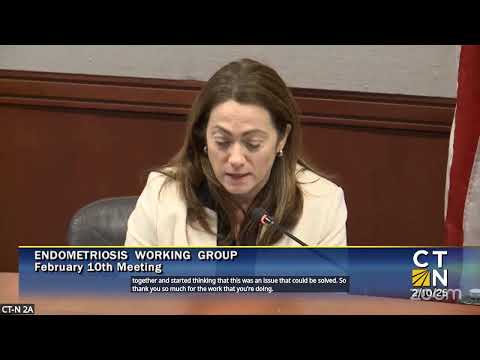
At a February hybrid meeting of the Connecticut Endometriosis Working Group, researchers from the EndoRISE program and invited legislators described progress in building a state-funded endometriosis biorepository and asked for continued and expanded state support to increase sample collection, staffing and storage.
The EndoRISE team, led by Dr. Elise Courtois and co-director Daniel Luciano of UConn Health in partnership with The Jackson Laboratory (JAX), said the pilot program has enrolled more than 50 surgical patients since enrollment opened in April 2024 and has banked “above 2,000” biospecimens including blood, urine, tissue and peritoneal fluid. Dr. Elise Courtois said, “This is the first public state funded biorepository that is focused on endometriosis in the nation.”
The program was created under Public Act 23-67, which directed development of state capacity to collect standardized endometriosis samples and data. Courtois told the working group the repository follows standardized procedures for collection, transportation and long-term storage and uses World Endometriosis Research Foundation (WERF) EPHect-aligned protocols for data and specimen standardization to enable sharing and comparison with other collections.
Why it matters: Endometriosis is a chronic, systemic condition that researchers and clinicians at the meeting said remains underfunded and underresearched. Presenters cited commonly reported figures that diagnosis takes an average of seven to 10 years and typically occurs at about age 27. The EndoRISE team emphasized that well-characterized biospecimens linked to symptom and clinical data are essential for developing noninvasive diagnostics, improved treatments and research into co-occurring conditions.
Program scope and operations: EndoRISE currently enrolls surgical patients so clinicians can collect multiple specimen types at the time of surgery and then follow patients longitudinally at one and two years. The team described a laboratory information management system (LIMS), material transfer and data-transfer agreements, and a scientific review committee to evaluate and approve requests for samples and data to ensure material is used for endometriosis research only.
Presenters said the program aims for geographic and ancestral diversity by expanding to additional hospitals across Connecticut; St. Francis in Hartford has Institutional Review Board approval and Danbury Hospital was identified as an upcoming collection site. The team also said consent forms and surveys have been translated into Spanish and that further language translations are planned to broaden access.
Preliminary findings and research directions: The presenters described early analyses of 79 surgical cases in which about 33 percent of participants had at least one co-occurring immune-related condition. Investigators said they are studying systemic signatures in blood and the interactions among immune cells, lesion innervation and pain to identify subgroups of patients and disease mechanisms; those research projects would request access to the biorepository material on a case-by-case basis.
Funding and next steps: Courtois and Luciano outlined funding sources and needs. State funds currently support the biorepository infrastructure; the presenters said a congressional directed spending award in 2024 provided $495,000 for instrumentation and that the program also seeks federal and industry partnerships to sustain and scale operations. State Representative Jillian Gilchrist told the working group the governor’s proposed 2025 budget had maintained funding for the biorepository and that the Appropriations Committee will review and decide final allocations. Gilchrist said she and legislative colleagues planned to press for continued and increased support.
Discussion and requests: The EndoRISE team asked the working group and lawmakers to support expansion to more collection sites, additional staff to process higher specimen volumes, off-site cold storage capacity, and ongoing public education and provider training. The team also asked for help identifying sustainable funding partners beyond the initial state and congressional awards.
Outlook: Presenters said the pilot established core infrastructure and governance and that expanding collections across Connecticut would improve representation and research utility. No formal votes or budget appropriations were taken during the meeting; presenters and legislators described next steps tied to the state budget process and to grant-seeking efforts.