Get Full Government Meeting Transcripts, Videos, & Alerts Forever!
Get email alerts on the Pet Store Sales Ban topic
No spam. Unsubscribe anytime.
Pet‑store ban draws sharp testimony from rescues, shops and retailers
Summary
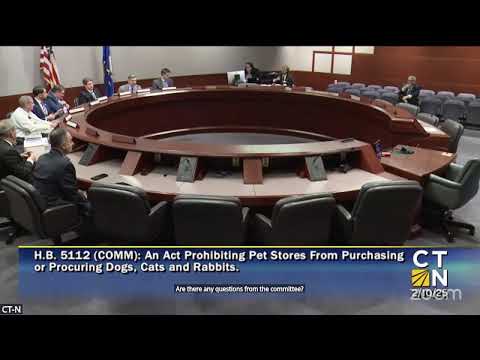
The General Law Committee heard hours of competing testimony on Feb. 10 about HB 5112, which would bar retail pet stores from selling dogs, cats and rabbits.
The General Law Committee heard hours of sharply contested testimony on Feb. 10 over HB 5112, a bill that would prohibit the retail sale of dogs, cats and rabbits in Connecticut pet stores and, proponents say, cut the commercial “puppy‑mill to pet‑store” pipeline.
Animal‑welfare groups and rescues urged the committee to pass the ban. Annie Hornish, Connecticut state director of the Humane Society of the United States, said New York’s new law stopped 60+ pet stores from retailing dogs and cited records showing many Connecticut pet‑store animals come from large out‑of‑state commercial breeders. Rescue leaders described cases in which puppies purchased at retail later required intensive veterinary care or turned out to have breeder records linking them to facilities with documented violations.
"Pet‑store sales create demand for industrial, high‑volume breeding," said Kristin Rochel of Lucky Dog Refuge (Stamford). She and other rescuers said pet‑store customers are often first‑time buyers who would benefit from adoption counseling and post‑adoption support rather than high‑volume retail sales.
Pet‑store owners, trade advocates and the American Kennel Club opposed a ban. Pet‑store witnesses said Connecticut already enforces strict rules: pet stores must source from USDA‑licensed breeders, maintain veterinary records, and display breeder and health information. Pet store owners described repeated breeder visits, weekly veterinary checks, product warranties and customer return policies; industry witnesses said a provincial ban would merely drive consumers to unregulated online sellers, backyard breeders or interstate markets with no consumer protections.
Several lawmakers raised the middle ground: tightening enforcement, stronger sourcing rules, or expanding penalties for deceptive online reseller storefronts rather than a broad ban. Representatives Turco and Ciccarella asked whether a ban would reduce unscrupulous breeders or simply move commerce to less transparent channels; rescues said it would reduce demand and cause fewer litters over time, while store owners warned of lost small‑business jobs and a new unregulated market.
What’s next: Committee members asked for additional data on imports and on inspection capacity, and for model language used in other states. No vote was taken. Supporters and opponents signaled they will continue to negotiate technical language and potential exemptions.
Sources: public testimony by Connecticut Humane Society, Lucky Dog Refuge, Safari Sands Pet Center, All Pets Club, American Kennel Club and multiple individual rescuers and pet‑store owners at the General Law Committee hearing (Feb. 10, 2025).