Get Full Government Meeting Transcripts, Videos, & Alerts Forever!
Get email alerts on the Education topic
No spam. Unsubscribe anytime.
Committee hears $600 million proposal to help replace aging K–12 school buildings
Summary
Representative Murphy presented House Bill 16‑04, a proposal to create a state program to help replace and renovate aging K–12 school buildings using a sliding scale of state funding tied to local property‑tax capacity.
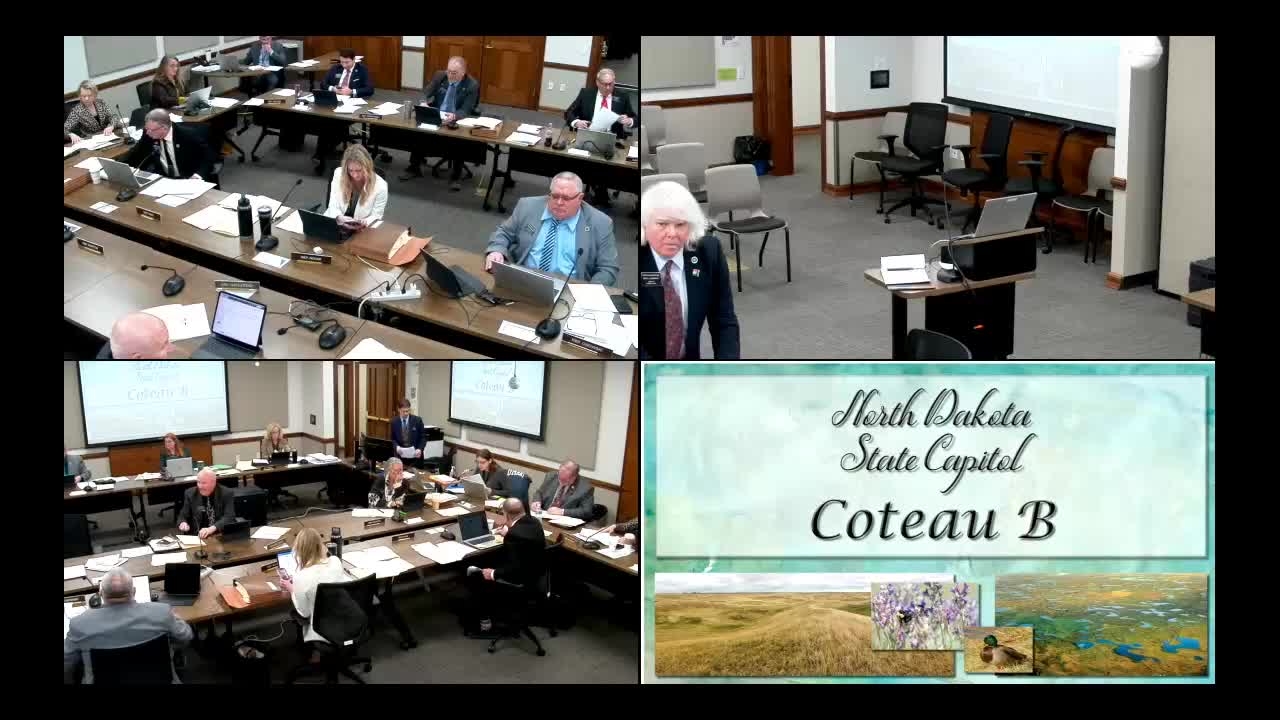
Representative Murphy presented House Bill 16 04 to the House Education Committee as a state‑level approach to replace and renovate aging school buildings, calling it a “North Dakota model” that would use a sliding‑scale state contribution to reduce local tax burdens and standardize designs to achieve construction efficiencies.
Murphy said the proposal aims to address an “impending crisis” in many rural districts where buildings are structurally deteriorating, heating and cooling systems are near end of life and local property‑tax capacity is insufficient to fund replacements. He described a scalable set of state‑approved plans and a construction management model intended to reduce locality cost premiums, and he said projects for which the state funds 40% or more would require use of the state plan to control costs.
Key elements described in testimony and materials: - A sliding funding scale tied to the value of a mill (local property‑tax base) with higher state shares for districts with lower property wealth; Murphy cited counts of districts in each funding bucket (for example, dozens of districts in the highest‑state‑share buckets). - An engineering assessment requirement: a district must demonstrate that renovation costs exceed a threshold (Murphy cited 60% of the cost of new construction) to qualify for replacement rather than repair. - A mandate that districts demonstrate the local share (bond proceeds or building‑fund cash) before state funds are committed; the bill includes incentives for small‑district consolidation for shared new facilities. - Program administration by DPI with a selected architect and construction manager to produce standardized, scalable plans, bid work in packages and manage procurement to drive down labor and material costs.
Supporters: the School Construction Coalition, represented by Valley City Superintendent Josh Johnson and student speaker Carter Hass (Valley City), told the committee many smaller districts are in critical condition and that local referenda frequently fail because the tax impact is too large. Johnson said the bill could act as a form of property‑tax relief and gave a local example: a hypothetical $40 million referendum could raise taxes an estimated $300 per $100,000 of residential value in Valley City.
Opponents and questions: no organized opposition testified in the transcript, but members raised fiscal questions: how standardized plans would be bid and procured, whether districts should plan for future growth, and how the proposal would interact with existing low‑interest revolving loan funds. Representative Schreiberbeck and others asked whether loan programs and direct grants could be combined to stretch available resources; witnesses and the sponsor acknowledged that a single biennial appropriation would likely not cover all needs and that the total need could exceed $600 million.
Process and next steps: committee members discussed details of plan administration, bidding and assessments. Representative Murphy said the bill would work with an architect and construction manager selected under the statute; several superintendents urged quick action and assessments. The committee closed the hearing on House Bill 16 04 at the end of the scheduled testimony; no committee vote on the bill appears in the transcript.