Get Full Government Meeting Transcripts, Videos, & Alerts Forever!
Get email alerts on the Education topic
No spam. Unsubscribe anytime.
House committee hears proposal to fund universal school meals from Legacy Fund earnings
Summary
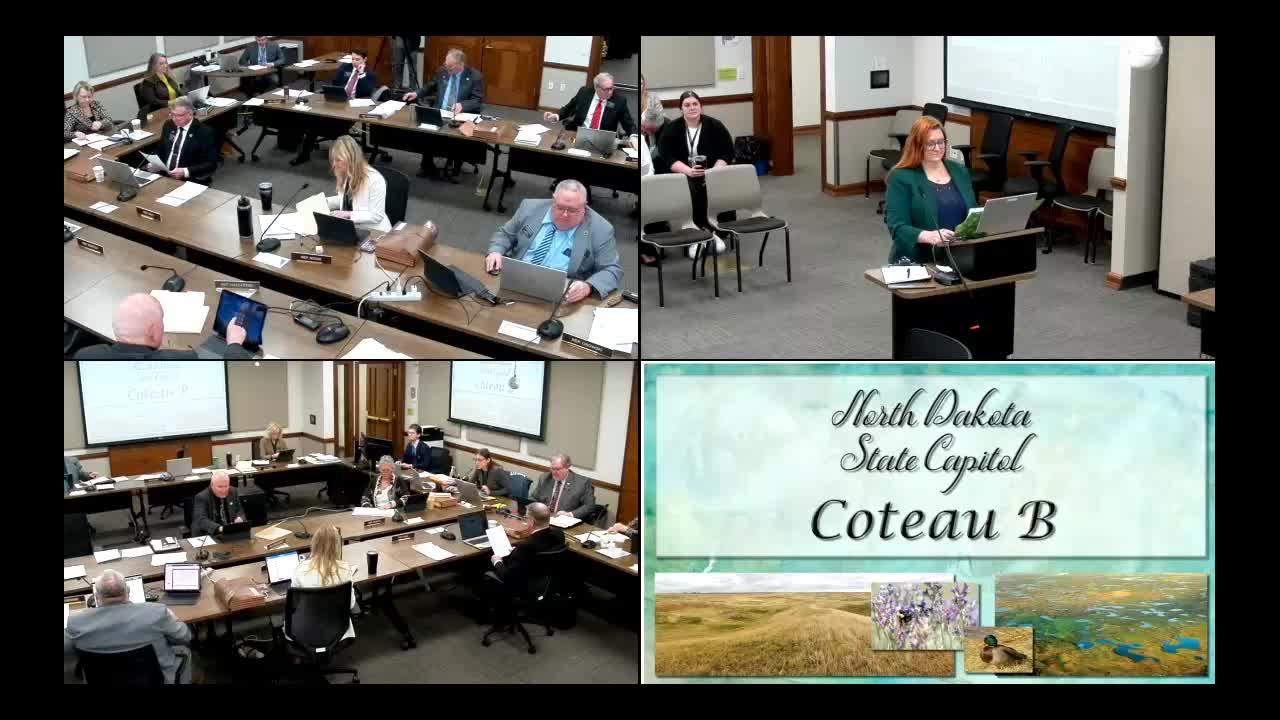
Representative Lori Beth Hager introduced House Bill 15 53 to the House Education Committee, saying it would fund free school lunches for public and nonpublic students using legacy fund earnings rather than general funds.
Representative Lori Beth Hager, chairing her remarks as the sponsor, introduced House Bill 15 53 to the House Education Committee, saying the bill would provide free school lunches for all public and nonpublic school students and that “the source of funding would be the legacy fund earnings rather than general funds.”
The bill proposes using legacy fund earnings to cover roughly $140 million to feed students for two school years, which Hager described as about $70 million per year after capturing existing federal free and reduced reimbursements. Hager told the committee the per‑student cost in the estimate is roughly $5–$6 a day for about 175 school days, and that the proposal first “capture[s] any federal free and reduced lunches” so federal funds are credited before state funding covers remaining need.
Why it matters: proponents said eliminating school‑meal charges reduces hunger, stigma and classroom barriers to learning and would also return household spending into local economies. A wide coalition of education groups, student leaders and public‑health organizations testified in support, citing examples of students missing meals or being impacted by negative lunch balances.
Testimony and concerns: student speakers and school leaders described situations they say arise from unpaid meal balances. Michelle Wagner, child nutrition director for Bismarck Public Schools, told the committee schools sometimes link non‑meal benefits to meal applications and warned that universal free meals could reduce some federal funding unless districts take steps to preserve eligibility for other programs. Wagner said the USDA rules and districts’ use of benefits forms mean local districts “could require all parents to complete some type of benefit form” to protect linked federal revenues and benefits.
DPI analysis: Lynell Johnson of the Department of Public Instruction provided neutral testimony and supplemental figures: of about 39,000 students who currently qualify for free or reduced‑price meals, roughly 25,800 are “streamline certified” (directly enrolled through SNAP, TANF, Medicaid or identification as homeless/foster) and would not need new applications; Johnson said the committee would likely have to reach roughly 15,000 students in outreach if applications were required. DPI staff also told members the fiscal estimate assumes roughly $35 million a year in federal reimbursements that would continue to flow to districts under the proposal.
Supporters: groups and individuals testifying in favor included the North Dakota AFL‑CIO (Landis Larson), the North Dakota Association of Student Councils (student leader Carter Hass), Mandan Middle School Student Council (Addison Rademacher), the North Dakota Council of Educational Leaders (Amy Copas), the Dakota School Boards Association and public‑health advocates such as the American Heart Association. Valley City and other superintendents also asked legislators to consider local examples where facilities or families struggle to keep accounts current.
Process and next steps: the committee scheduled a 35‑minute, time‑certain public‑testimony block and heard many witnesses in support; the hearing was closed at the end of the public testimony period without a committee vote recorded in the transcript. The sponsor said House Bill 15 53 and companion legislation (House Bill 14 75) will be considered together when the committee takes up the bills for a recommendation.