Get Full Government Meeting Transcripts, Videos, & Alerts Forever!
Get email alerts on the Dental Contracts And Arbitration topic
No spam. Unsubscribe anytime.
Senate bill would allow dental offices to jointly negotiate with insurers, shift arbitration to OAH
Summary
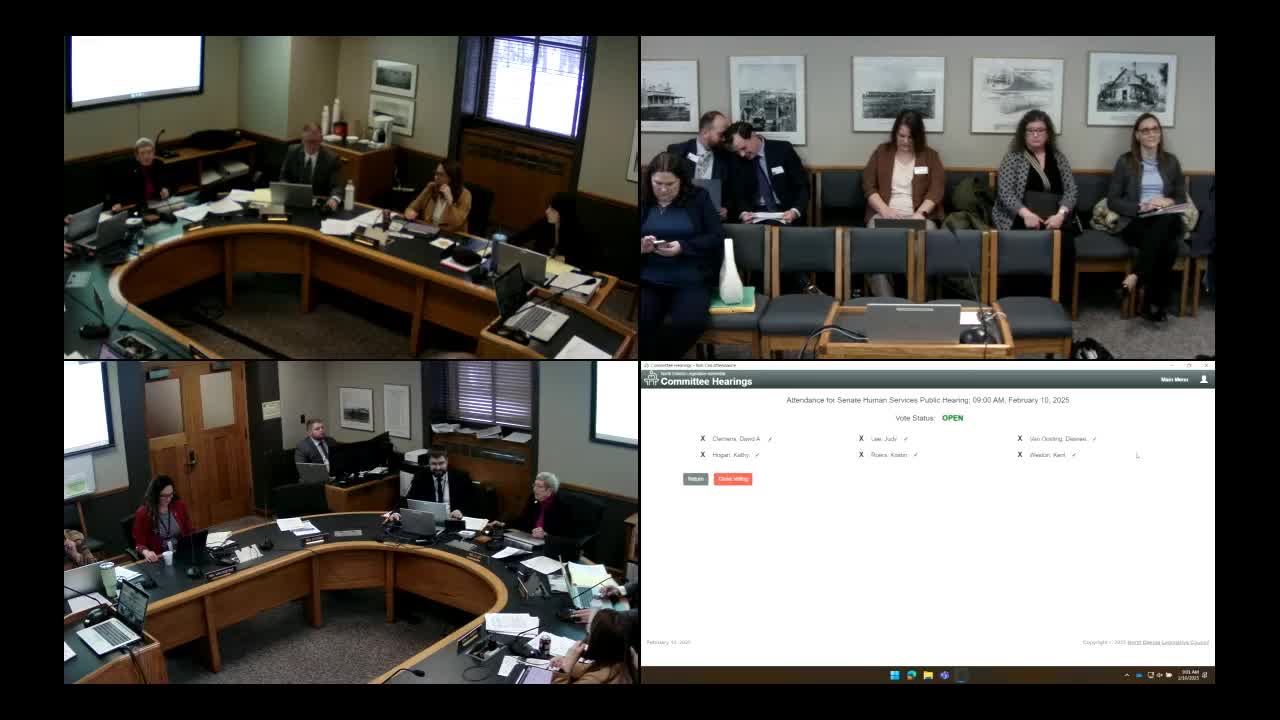
Senate Bill 2,375 would let two or more dental providers in an insurerservice area jointly negotiate contracts with dental insurers and shift arbitration of disputes to the Office of Administrative Hearings, sponsor Sen. Jose Castaneda told the Senate Human Services Committee.
Senate Bill 2,375 would let two or more dental providers in a dental insurerservice area jointly negotiate with the insurer and use the Office of Administrative Hearings (OAH) to arbitrate disputes, sponsor Sen. Jose Castaneda told the Senate Human Services Committee.
The bill, introduced to the Human Services Committee, would move the authority in statute from the Insurance Commissioner to the OAH, and would permit the OAH to accept payment from nongovernmental entities for arbitration services. Castaneda said the change is intended to help small, independent dental practices that receive "take it or leave it" contract offers from carriers and have limited ability to negotiate terms that affect administrative processes such as virtual credit card fees, prior authorization and retroactive denials.
Supporters including the North Dakota Dental Association and practicing dentists said many providers operate as small businesses and often cannot negotiate effectively with carriers that contract on behalf of tens of thousands of covered lives. William Sherwin of the North Dakota Dental Association told the committee that the bill "is not to circumvent antitrust laws. It is to functionally make a negotiation process work" and that the OAHrun by administrative law judges "are positioned to oversee these negotiations in a fair and equitable space."
Castaneda said the bill includes a narrow path to raise fee-related negotiations only if the OAH finds a dental insurer has substantial market power and contract terms pose a threat to quality or availability of care. Under the 1,001 amendment he circulated, section 1 would be placed in the dentist chapter of the Century Code (title 43, chapter 43-28) and section 2 would amend the OAHcompensation provisions so the OAH may bill nonstate entities for services rendered.
Several committee members sought clarity about antitrust risks and whether the arrangement would look like collective bargaining. Castaneda said the bill attempts to avoid antitrust problems by treating each dental office as a juridic person that hires a joint negotiator rather than forming a single conglomerate. The attorney generals antitrust director, Ellen Alm, told the committee she had "a little bit" of concern about breadth of the draft, noting risks such as price fixing if too large a share of providers in a market joined together and suggesting some states limit participation to prevent a provider-side monopoly.
Hope Hogan, director of the Office of Administrative Hearings, testified the OAH could serve as the neutral arbiter contemplated in the bill but said procedural details would need to be worked out, including how fees would be split between parties; Hogan suggested a cost-share between the parties could reduce appearance concerns. David Shibley, executive director of the North Dakota State Board of Dental Examiners, asked that any new dentist-related statutes be placed near existing dentist statutes but kept separate from the boards regulatory chapter to preserve the boards independence over licensees.
Opponents included Dennis Pathroff of the American Council of Life Insurers (ACLI), who warned that allowing negotiation over utilization management criteria, clinical practice guidelines or definitions of medical necessity could impede plansability to manage care and could add administrative burden and costs. Pathroff asked the committee to reject the bill.
Committee members also discussed how arbitration costs would be paid. Castaneda and Sherwin said the amendment would permit the OAH to bill nonstate entities and that the dental side expected to pay for arbitration so there would be "zero fiscal or financial impact to the state." Hogan said the OAH is funded by special funds and must avoid becoming a collection agency.
The committee did not take final action on SB 2,375 during the hearing. The bill generated extended back-and-forth on antitrust limits, the exact scope of negotiable topics, whether the OAH should be asked to adopt implementing rules, and how the process would avoid the appearance of bias if one party pays more of the fees.
The testimony record includes written materials the proponents promised to submit to the clerk; committee members asked that those materials be entered into the official record.
Ending: Supporters said the change is intended to increase in-network access for patients by improving providersability to negotiate contract terms with large carriers; opponents urged caution over antitrust and consumer-protection tradeoffs.