Get Full Government Meeting Transcripts, Videos, & Alerts Forever!
Get email alerts on the K 12 Performance topic
No spam. Unsubscribe anytime.
Spring Hill High credits intensive data culture, weekly monitoring for high graduation and CCR rates
Summary
Spring Hill High School principal Dr. Michael Lofton described the school’s data-driven practices — frequent classroom observations, weekly grade-book monitoring, early Individual Graduation Plans beginning in eighth grade, and targeted triage — as factors behind its strong graduation and college- and career-readiness results.
Spring Hill High School Principal Michael Lofton told the Education Oversight Committee that the Lexington-Richland School District 5 magnet school builds daily practice around data and regular adult oversight to support student outcomes.
Lofton said Spring Hill, an open-enrollment magnet that caps incoming ninth-grade classes and fills seats by lottery, does not use test scores, discipline records or prior paperwork to admit students; “all we look at is that you live in Lexington Richland School District 5,” he said. He described a set of schoolwide systems — weekly department meetings, four formal classroom observations per teacher each year, “celebratory” magnet lessons, and structured student success conferences — that he said let teachers and counselors intervene early.
The approach is meant to identify at-risk students well before senior year. Lofton said counselors begin Individual Graduation Plans (IGPs) in eighth grade; last year Spring Hill recorded a 97.15 percent on-time graduation rate and reported that 94 percent of seniors were college- and career-ready by the end of the year.
Lofton told the committee that administrators maintain weekly monitoring of grade books and run tiered triage meetings: failure lists are reviewed weekly, small-group triage biweekly and large-group triage monthly. Students failing classes are assigned mandatory academic assistance and interventions such as Saturday school or after-school remediation, he said.
Lofton also described Spring Hill’s structure: five career-focused pathways (engineering, entertainment, entrepreneurship, environmental science and exercise science), open enrollment by lottery for district residents, no school-sponsored athletics (students play sports at their zoned schools), and district-provided transportation. He said the student body includes a range of socioeconomic and special-education needs — he cited roughly one-third of students living in poverty and about 29 percent with an IEP or 504 accommodation — and that the school deliberately avoids selective admissions.
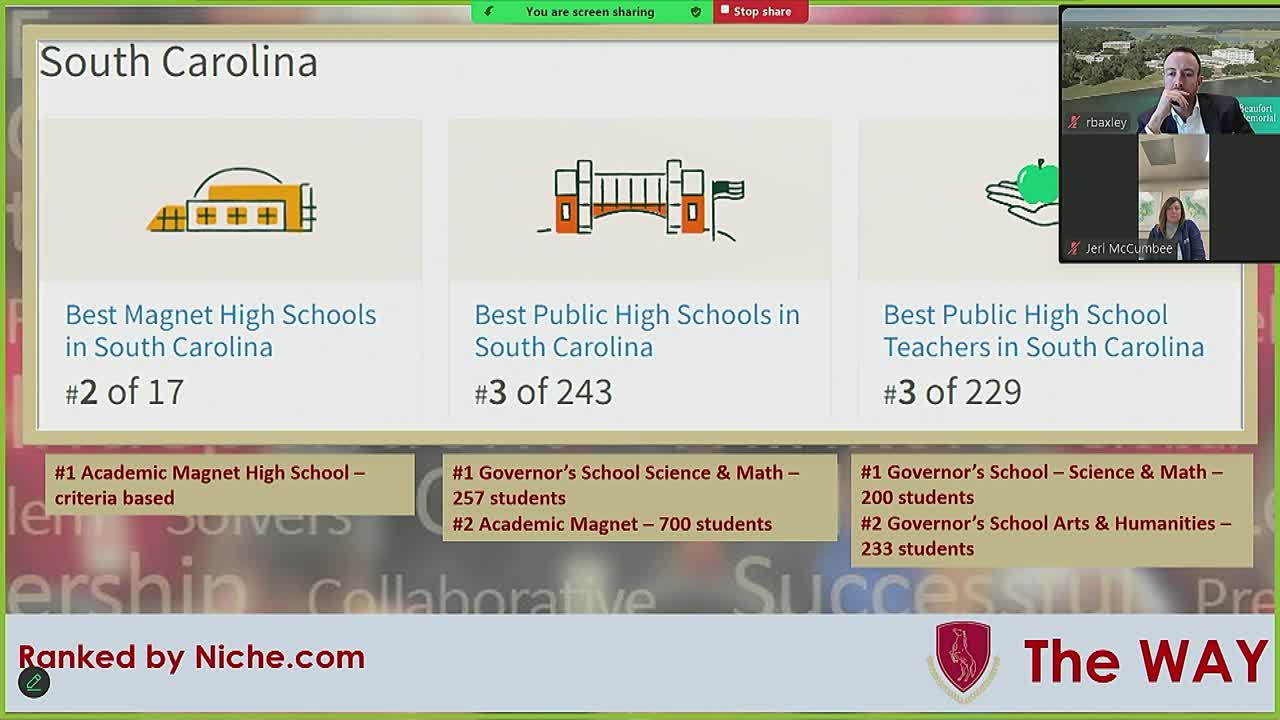
Committee members asked how the district arranged shared shuttle transportation and whether Spring Hill’s model could be exported. Representative Collins asked about transportation; Lofton explained that the school piggybacks on the district’s career-center shuttle model and staggers start and dismissal times to allow zoned buses to feed Spring Hill. Committee members praised the school’s counseling and mentoring emphasis and its teacher retention: Lofton said many faculty have long tenures and the school has teachers ranked nationally on lists cited in public sources he referenced.
Lofton closed by inviting legislators to visit the school and said Spring Hill welcomes observers to see classroom lessons and its “Spring Hill Way” expectations for students and families.
The committee acknowledged the presentation and moved on to additional agenda items.