Get Full Government Meeting Transcripts, Videos, & Alerts Forever!
Get email alerts on the Border Security topic
No spam. Unsubscribe anytime.
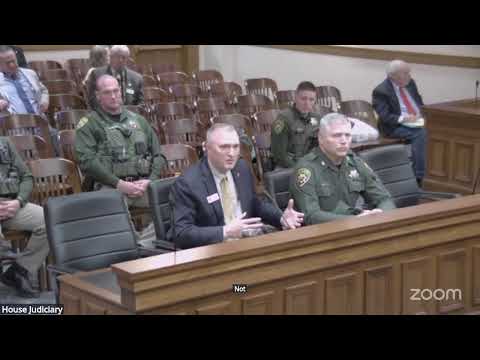
Wyoming troopers brief Judiciary Committee on 10-day Texas deployment, urge investment in equipment and interoperability
Summary
A contingent of Wyoming Highway Patrol personnel briefed the Wyoming House Judiciary Committee on a 10‑day deployment to Eagle Pass and Del Rio, Texas, where they joined Texas Department of Public Safety operations, described as Operation Lone Star, to help with border interdiction and criminal investigations.
A contingent of Wyoming Highway Patrol personnel briefed the Wyoming House Judiciary Committee on a 10‑day deployment to Eagle Pass and Del Rio, Texas, where they joined Texas Department of Public Safety operations, described as Operation Lone Star, to help with border interdiction and criminal investigations.
The troopers said the deployment, paid for through the Wyoming Homeland Security Office using grant funds, provided experience with larger operations and highlighted gaps in equipment and data interoperability back home.
Lieutenant Clint Christiansen, a patrol lieutenant based in Casper, told the committee he spent his assignment working with Texas’ criminal investigative division and that Texas’ use of drones and an integrated TAC (tactical awareness and communications) system allowed teams to see live aerial and drone feeds on smartphones and coordinate assets before arriving on site. “When they would put a drone up … you could click on the drone and watch live feed from the drone,” Christiansen said.
Trooper Ethan Smith of Laramie described daily patrol shifts based out of Eagle Pass and Del Rio and said Wyoming troopers typically rode “shotgun” with Texas troopers to provide an extra officer in the vehicle. “Our troopers here in Wyoming are very well trained,” Smith said. “They were very, very well equipped, and we can learn some of that.”
Trooper Kelly, stationed in Cheyenne, recounted taking part in a large warrant service that included federal and state partners and emphasized that having a second trooper in the car expands tactical options and safety. Kelly also described common smuggling tactics the troopers observed: organizers cutting ranch fences or using ladders, vehicles with rear seats folded down and coated in dust, and the use of locally mounted cameras by landowners to track movement.
Sergeant White, with 27 years on the patrol, described encountering handheld x‑ray devices, heavy use of Connex boxes and concertina wire in staging areas, and frequent pursuits. He said some local landowners had abandoned properties because of repeated trespass and theft; several landowners had signed affidavits consenting to trespass charges to support local enforcement efforts.
Troopers told the committee the Texas operation relied on broad interagency cooperation: Texas DPS, Border Patrol, the National Guard and local agencies used air assets, thermal cameras and brush/night‑vision teams to contain groups before they dispersed. Christiansen said that capability made it possible to capture large groups in one operation rather than chasing dozens of individuals across thick brush.
Committee members asked how Wyoming troopers were authorized to act in Texas. Sergeant White said the troopers signed paperwork that conferred arrest powers for the deployment and that much of the legal and operational coordination was arranged through Texas authorities and supporting federal offices.
Members pressed on what Wyoming should adopt. Troopers and the colonel urged investment in interoperable communications and shared situational‑awareness tools like TAC, more two‑officer patrol coverage where appropriate, and consideration of armored or bullet‑resistant vehicle panels. Christiansen and others said Texas’ bulletproof windshields and paneling allow troopers to remain in their vehicles during high‑risk stops, which changes tactical response options.
Director Darren Westby of the Wyoming Department of Transportation and the colonel of the Wyoming Highway Patrol told legislators they are tracking vacancies and recruitment; Westby said the patrol had reduced vacancies substantially and that the agency will bring staffing requests forward to the Legislature as positions are filled. The colonel said the agency is rolling out new equipment and training and welcomed interim work with lawmakers on funding and interoperability.
No formal legislation or committee votes were taken during the session; lawmakers indicated interest in interim studies and possible budget items to support the patrol’s equipment and communications recommendations.
The committee thanked the troopers and their families for the deployment and asked agency leaders to return with cost estimates and implementation plans during the interim.