Get Full Government Meeting Transcripts, Videos, & Alerts Forever!
Get email alerts on the Agricultural Research Extension topic
No spam. Unsubscribe anytime.
University of Idaho officials highlight research, extension reach and new facilities in JFAC budget hearing
Summary
The University of Idaho’s College of Agricultural and Life Sciences told JFAC it is expanding research capacity, highlighted a new Parma research facility and described extension work addressing rural digital literacy and community needs, while Dean Michael Perella announced his upcoming retirement.
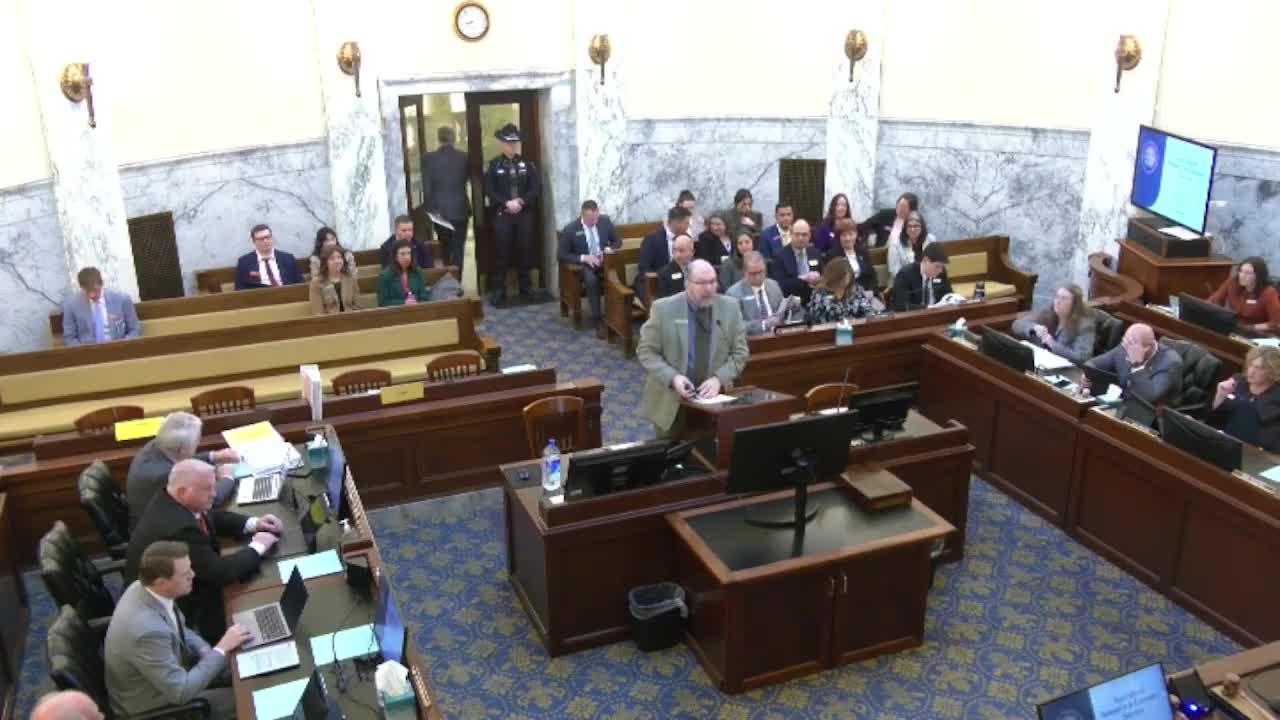
University of Idaho officials told the Joint Finance-Appropriations Committee on Monday that agricultural research and extension remain core pieces of Idaho’s economy and rural services, and described recent capital investments and staffing that they say support statewide agriculture and community outreach.
Kevin Campbell, budget and policy analyst with the Legislative Services Office, summarized the Agricultural Research and Extension Service’s footprint: physical presence in 42 of 44 counties, 10 research and extension centers, access to more than 14,000 acres of research land and roughly 341 full‑time‑equivalent positions. Dean Michael Perella, College of Agricultural and Life Sciences (CALS), made remarks and introduced senior staff.
The nut of the presentation was twofold: infrastructure and programming. Campbell and Perella noted new and renovated facilities — including the Idaho Center for Plant and Soil Health at Parma — and recent appropriations for faculty and maintenance. Perella said the college is leveraging state support to attract external grants and hire early- and mid‑career faculty, and that those investments have helped raise CALS’ national profile.
Perella discussed research priorities including soil health, water use efficiency, breeding and crop improvement, and nutrition. “When you think about molecular techniques and how that is going to be impacting agriculture, it is profound,” he said, and cited the Parma facility as a key new asset for molecular and storage research. He also emphasized a growing focus on nutrition and human health tied to agricultural production.
Extension’s statewide role drew sustained attention. Perella said extension has five program areas — agriculture, natural resources, 4‑H youth development, communities and families — and noted extension’s reach: more than 450,000 face‑to‑face contacts and 75,000 youth in 4‑H during the prior year. Extension staff are also engaged in rural digital‑literacy and adult computer‑literacy programs funded initially with ARPA and supplemented by competitive federal proposals; Perella said the college’s team had secured a competitive Federal Communications Commission (FCC) broadband-related grant application that, if awarded nationally competitive funds, could bring substantial additional resources to the state.
Committee members pressed for clarity about why extension is running adult computer‑literacy efforts. Perella framed these programs as part of extension’s mission to benefit rural communities and close the digital divide, and said the college is coordinating with the Department of Commerce and two‑year schools for broader statewide reach. He noted the ARPA funds that supported initial efforts and said extension planned to pursue federal grant funding to sustain the work.
Lawmakers also asked about personnel and budget composition. Campbell said personnel made up the largest portion of spending for the Service (about 81% in recent years) and that the five‑year base budget had risen by roughly $6.2 million from FY2021 to FY2025; he flagged recent appropriations for new faculty in animal and plant sciences, maintenance funding for the Parma research laboratory and ARPA funds supporting broadband and adult computer literacy.
Perella announced his upcoming retirement effective June and used his closing remarks to thank legislators and highlight the college’s impact on Idaho’s agricultural economy, which he said contributes nearly 20% of the state’s economic output. He credited state investments with lowering faculty turnover and leveraging additional competitive funds for research and extension work around the state.
Committee members requested more detailed metrics and outcome measures for extension programs and expressed interest in reviewing the college’s documentation on saved costs and community impact that Perella referenced. No votes were taken on agricultural research and extension items at the hearing.