Get Full Government Meeting Transcripts, Videos, & Alerts Forever!
Get email alerts on the Eminent Domain Carbon Pipelines topic
No spam. Unsubscribe anytime.
Senate defeats bill to bar eminent domain for carbon dioxide pipelines
Summary
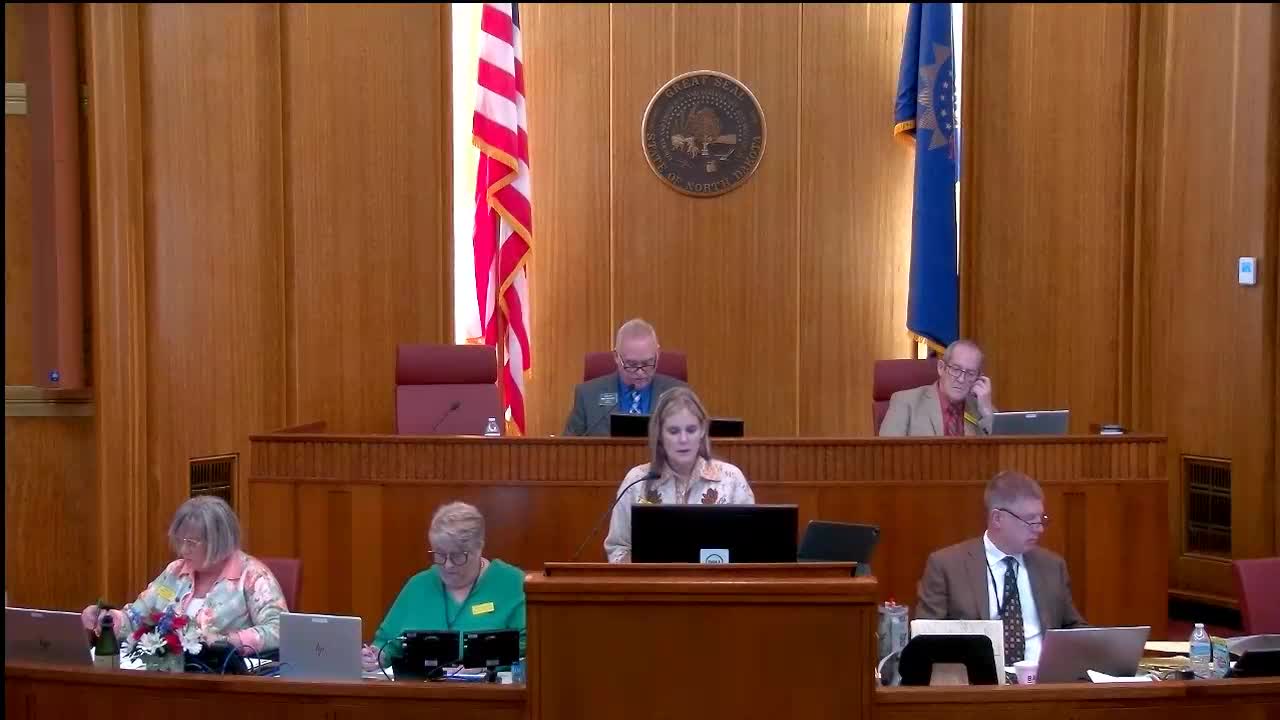
The North Dakota Senate on Feb. 10, 2025, voted 21–26 to reject Senate Bill 2,322, which would have revoked common‑carrier status for carbon dioxide pipelines and repealed North Dakota Century Code section 38‑22‑10; supporters said the change would protect landowners, opponents said it would harm energy and agriculture infrastructure and markets.
The North Dakota Senate voted 21 yeas and 26 nays on Feb. 10, 2025, defeating Senate Bill 2,322, a measure that would have removed common‑carrier status from carbon dioxide pipelines and repealed North Dakota Century Code §38‑22‑10.
The bill’s sponsor, Senator Grama, identified the bill’s aim as protecting private property rights and preventing the use of eminent domain for what she described as “Green New Deal projects.” She told colleagues, “The goal of 2322 is to prevent the use of eminent domain for Green New Deal projects in North Dakota.”
Supporters argued the bill would remove the threat of eminent domain from landowners negotiating with industry. Opponents said the bill would undermine established infrastructure law, hinder development of carbon capture and storage projects and risk economic harm to agriculture and energy sectors that rely on pipeline transport.
Senator Kessel, speaking against the bill, warned of economic consequences for the state’s ethanol and farming sectors, saying the measure “fundamentally alters the framework that has allowed North Dakota to thrive as a leader in energy production and innovation.” Kessel told the chamber that revoking common‑carrier status could “undermine the principle of open access and nondiscriminatory transportation” and restrict markets for low‑carbon fuels that ethanol producers rely on.
Debate covered constitutional and statutory issues. Senators cited North Dakota constitutional provisions on private property and the U.S. Constitution’s due‑process protections. Opponents noted a prior Energy and Natural Resources Committee recommendation of do‑not‑pass (6–1) and raised concerns about blocking multibillion‑dollar projects based on a single landowner’s objection. Supporters described local cases where landowners say they fear coercive negotiation tactics and want stronger statutory protection.
The Senate adopted an amendment by Senator Mather that narrowed the bill’s application to carbon dioxide transportation (removing solar, wind, hydrogen and projects tied to certain federal tax credits). That amendment was adopted on the floor before the final vote.
After the amendment, the Senate took a recorded vote; the clerk announced a final tally of 21 ayes and 26 nays and declared the bill lost.
With the bill defeated in the Senate, no statutory change was enacted on this issue during the Feb. 10 session.