Get Full Government Meeting Transcripts, Videos, & Alerts Forever!
Get email alerts on the Open Public Meetings Act topic
No spam. Unsubscribe anytime.
City attorney briefs planning commission on changes to Utah Open and Public Meetings Act
Summary
Bluffdale’s staff attorney reviewed recent changes to the Utah Open and Public Meetings Act and provided guidance on notice, electronic meetings, minutes and permissible reasons to close sessions.
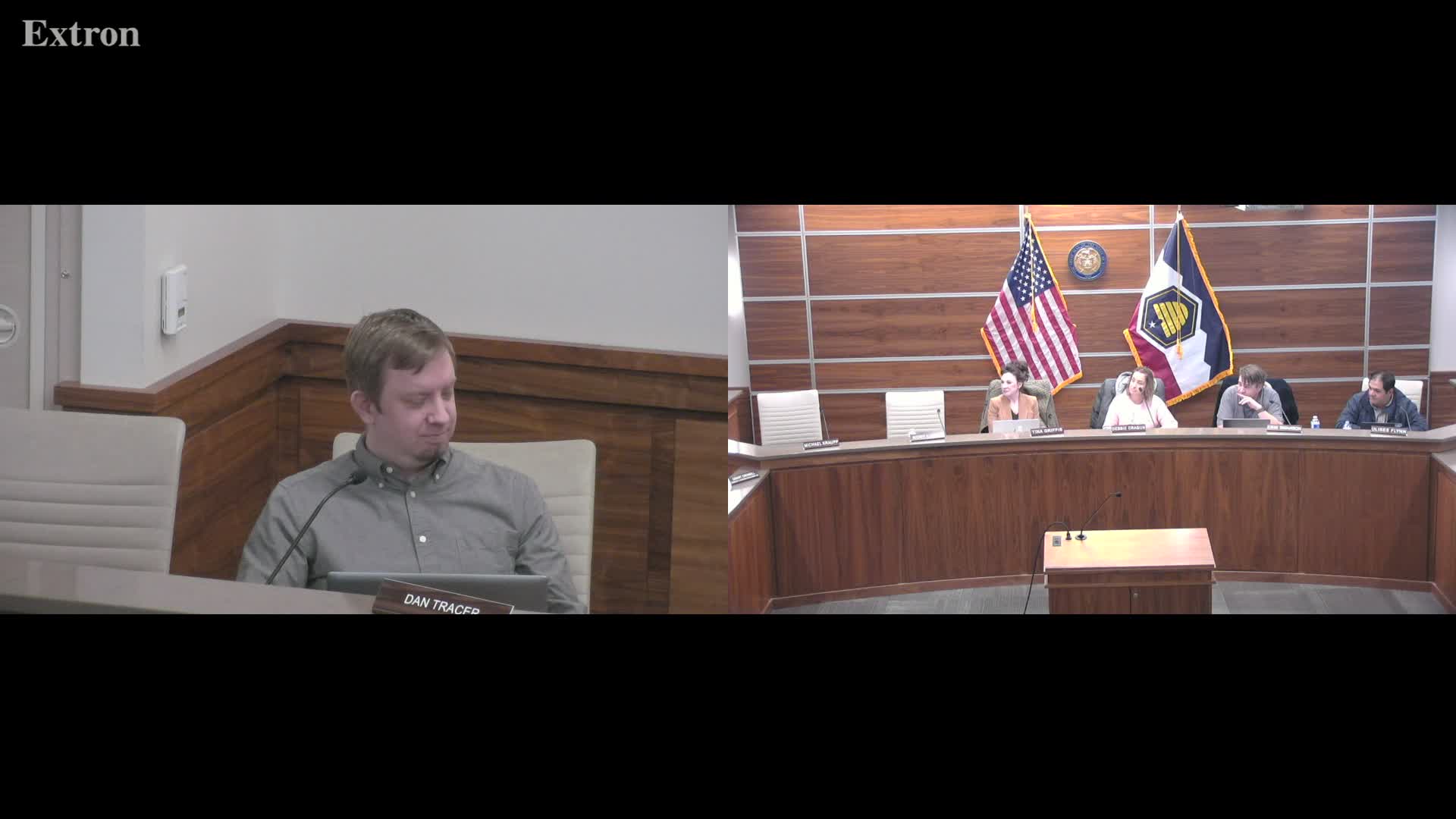
Fred Donaldson, the city’s staff attorney, briefed the Bluffdale City Planning Commission on the Open and Public Meetings Act and on meeting procedures during the Jan. 15 session.
Donaldson summarized a recent change in state law that narrows the definition of a “meeting” and emphasized the law’s preference for openness. He told the commission the definition requires a gathering convened by a person with authority where a quorum is present and the purpose is to receive public comment, deliberate on a matter, or take action. “The law favors openness, and exceptions to holding open meetings will be strictly construed,” Donaldson said.
Key points included a 24-hour notice requirement that must include the agenda, date, time and place; the requirement that minutes be recorded and made available to the public; and that recordings must be complete and unedited. On electronic meetings, Donaldson noted Bluffdale City Code 1.16 0.01 authorizes city public bodies to hold electronic meetings if they follow Open and Public Meetings Act procedures, and explained fully electronic meetings without an anchor location are permitted only in narrow circumstances such as a public health emergency.
Donaldson recommended roll-call methods for public comment and votes in electronic meetings to ensure fair participation and explained reasons a public body may lawfully close a meeting, including to discuss the character or professional competence of an individual, pending or reasonably imminent litigation, or property acquisition considerations. He added that closed meetings themselves must be recorded except in very rare circumstances and that final action, including ordinance or contract approval, must occur openly on the record.
The attorney also reviewed enforcement: violations of the Open and Public Meetings Act can constitute a class B misdemeanor but are usually cured by subsequent open meetings; enforcement may be pursued by the attorney general, county attorney or a private citizen.
Commissioners asked clarifying questions about decorum, texting during meetings and the possibility of law-enforcement removal of disruptive attendees. Donaldson said texting by members during meetings is discouraged and may raise perception issues, though not expressly prohibited by state law; he said police presence at council meetings is intended to preserve decorum and that removal is a possible, but rare, remedy for disruptive behavior.
The training also included an overview of semi-formal meeting procedures that Bluffdale follows (Robert’s Rules of Order as a guide), the chair’s role in recognizing speakers, steps for motions and amendments, and best practices such as restating complex motions before a vote.
No formal action was taken; the session was presented as mandatory annual training for planning commissioners.