Get Full Government Meeting Transcripts, Videos, & Alerts Forever!
Get email alerts on the Juvenile Referrals Chins topic
No spam. Unsubscribe anytime.
Committee narrows juvenile referral language; removes proposed 'custodian' expansion and leans on existing CHINS referral process
Summary
Lawmakers amended a juvenile‑justice bill to remove a proposed change expanding the definition of 'custodian' and clarified that schools and law enforcement may make delinquency referrals; the committee moved the bill forward after adopting the sponsor’s changes.
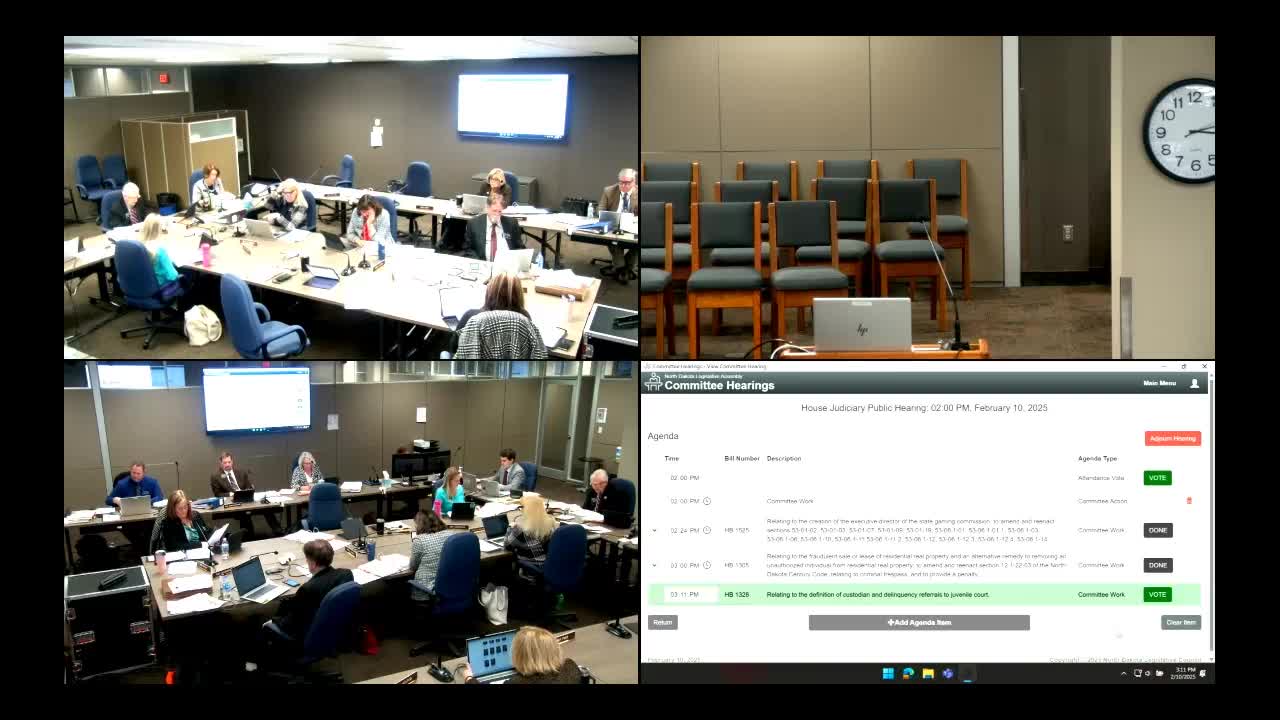
The House Judiciary Committee adopted amendments to House Bill 13208 (transcribed as 13 20 8) intended to clarify how schools and law enforcement refer children to juvenile court and to remove proposed changes to the statutory definition of "custodian."
Committee members said testimony raised concerns about broadening the custodian definition to include many school officials and other actors. The amendment deletes section 1 from the sponsor’s original draft because Chapter 27 (Children in Need of Services) already contains procedures for school officials to refer a child to the CHINS unit. The committee’s amendment relies on existing law — specifically the referral methods in statute 27‑20.305 — and preserves language requiring certain information when schools make CHINS referrals, including special‑education‑related disclosures when the Individuals with Disabilities Education Act may apply.
The amendment also clarifies delinquency referrals to juvenile court by explicitly stating a referral alleging a child has committed a delinquent act may be made by a public or nonpublic school attended by the child or by a law enforcement officer. Committee members said the change was intended to remove ambiguity about whether schools refer directly to juvenile court or whether they refer incidents to law enforcement who then make referrals.
Representative Wolf moved the sponsor’s proposed changes; the committee adopted the amendment by roll call and later voted to give the bill a due‑pass recommendation as amended. Discussion included concerns that routing more referrals to a CHINS unit could increase caseloads and funding needs for that unit, though committee members noted that the statutory CHINS referral process already exists and that the amendment seeks to align the bill with current procedure.
Committee members agreed the change narrows the bill’s scope and reduces the risk of inadvertently expanding custody definitions. The committee carried the bill out with a due‑pass recommendation and the bill sponsor or chair indicated willingness to carry the measure to the floor.