Get Full Government Meeting Transcripts, Videos, & Alerts Forever!
Get email alerts on the Child Adult Care Food Program topic
No spam. Unsubscribe anytime.
State proposes $120,000 grant to reimburse remote travel for child and adult care food program monitors
Summary
The Department of Education proposed a new $120,000 unrestricted general-fund, three-year grant to reimburse travel costs so sponsors can monitor remote child care homes and maintain participation in the Child and Adult Care Food Program in rural Alaska.
The Department of Education presented a proposed three-year Child and Adult Care Food Program (CACFP) monitoring grant in the governor's fiscal 2026 budget: $120,000 in unrestricted general funds to support sponsors by reimbursing travel to remote day care homes.
Director Heather Heineken and other department staff said travel costs have discouraged some sponsors from monitoring remote homes; the grant is intended to reduce the financial barrier and encourage new sponsors or help existing sponsors maintain operations in rural locations. Department witnesses said the program arose from last session's legislative concern about sponsors' ability to travel to remote sites.
Under the proposed grant, to promote sustainability grantees must sponsor a home within three hours of another home they sponsor — a condition intended to avoid unsustainably costly, one-off travel to remote single sites. Committee members described examples from Haines and other rural communities where high travel costs and overnight expenses made monitoring and certification difficult for care providers.
Committee discussion stressed the grant's potential to preserve federal meal reimbursements in remote communities where the administrative cost burden had discouraged sponsorship. Department staff said they will provide further background and operational details as requested by committee members.
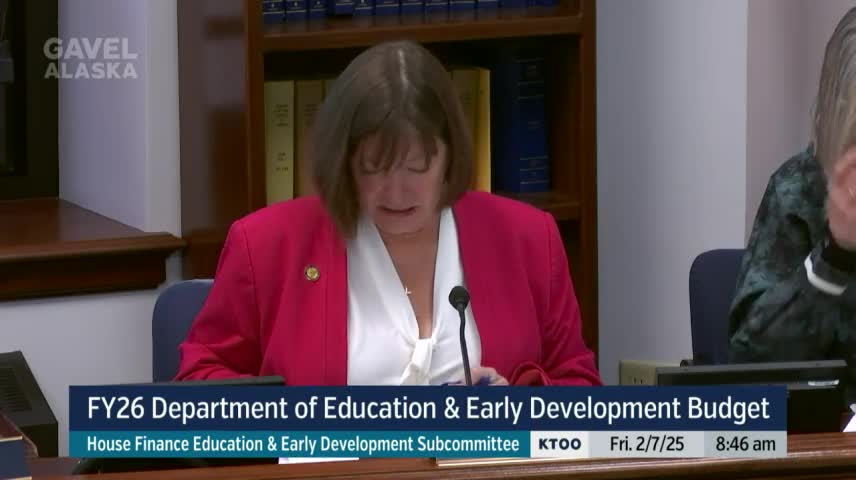
No final decision was made during the Feb. 7 hearing; the grant appeared in the governor's FY26 request as a targeted, one-time initiative to support rural sponsors' travel costs.