Get Full Government Meeting Transcripts, Videos, & Alerts Forever!
Get email alerts on the Housing Student Housing topic
No spam. Unsubscribe anytime.
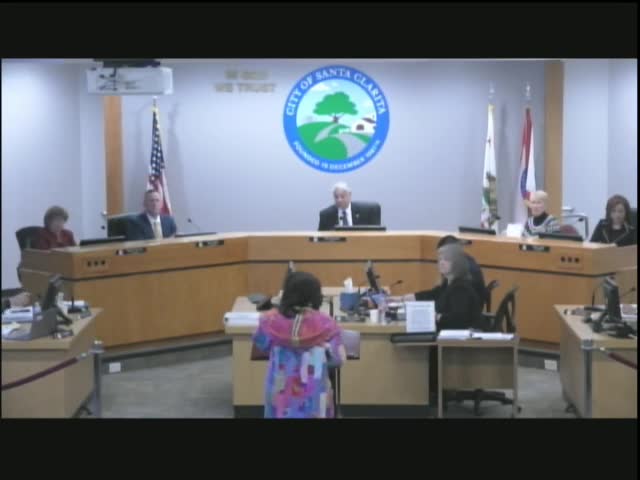
Placerita Canyon residents urge council to review high‑occupancy student housing permits
Summary
Residents of Placerita Canyon urged the Santa Clarita City Council to review administrative high‑occupancy permits they say are being used to convert single‑family homes into crowded student housing for The Master's University.
Residents of Placerita Canyon urged the City Council to agendize review of administrative residential high occupancy permits (RHOPs), saying the permits allow conversion of single‑family homes into high‑occupancy student residences without Planning Commission or City Council review.
"The residents had no idea this threat was possible," said Linda Townsley, a Placerita Canyon resident of more than 32 years, describing the special standards district and the purpose of the Placerita designation to maintain a rural and equestrian way of life.
Townley and other speakers said The Master's University (referred to in the meeting as TMU) and a real estate firm identified in public comment as GCC Real Estate Corporation have bought multiple homes and converted them into student housing with up to "9 to 13 students" per house, according to public commenters. Residents said that increase in occupancy has produced more pedestrian and vehicle traffic, parking shortages, poor street lighting, and risks to emergency access on the neighborhood's single main artery.
Jane Heiber said the conversions have caused gridlock during a recent graduation event and stressed that the community's adopted master plan — she said — designated hillside locations and dormitories for university uses while keeping the canyon neighborhoods residential. "TMU must not be allowed to continue expanding their use of single family homes in order to increase enrollment and adhere to the existing approved master plan," Heiber told the council.
What residents asked the council to do: Speakers asked the council to (1) agendize a review of the RHOP process; (2) consider a moratorium on new or renewal RHOP permits while the process is reviewed; and (3) confirm whether RHOPs require safety inspections, limits on total number per neighborhood, renewal cadence and supervision of teenage occupants.
Council response: At the meeting the council did not take formal action on the request. Councilmembers acknowledged the comments and said staff would be the conduit for follow up; no staff report or action date was announced during the public comment period.
Ending: Residents said they plan to continue to press the council for an agenda item so the community can review permit rules and options.