Get Full Government Meeting Transcripts, Videos, & Alerts Forever!
Get email alerts on the Women History topic
No spam. Unsubscribe anytime.
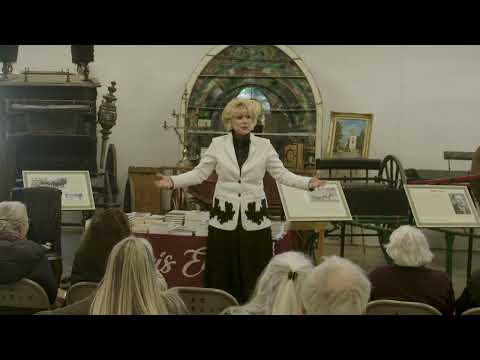
Author Chris Enns spotlights overlooked roles of women on the American frontier
Summary
At a public lecture, author Chris Enns traced how women shaped the American West as entertainers, physicians, suffragists, detectives and business owners, drawing on examples from Deadwood to Ford—s Theatre.
Author Chris Enns, an author and lecturer, recounted stories of women who shaped life on the American frontier during a public lecture, touching on entertainers, sex workers, suffragists, physicians, Pinkerton agents and the widows left after the Battle of the Little Bighorn.
"I have been writing about women of the American frontier for over 30 years," Enns said, and she used the talk to describe a range of figures from Poker Alice, a bordello operator, to Laura Keene, the actress on stage at Ford—s Theatre when President Abraham Lincoln was shot. Enns said the economic role of licensed prostitution in towns such as Deadwood, South Dakota, included fees and fines that were used to fund libraries, hospital wings and fire departments; she noted prostitution in Deadwood began in 1876 and, she said, was not outlawed there until 1980.
Enns described how the West opened different opportunities for women. "When you got out here you could really set your own standard," she said, arguing that smaller populations and local needs allowed women to take on roles not available in the East. She discussed women who pursued medical training and worked as frontier physicians, including Dr. Sophie Herzog, whom Enns called a leading practitioner of treating gunshot wounds, and Dr. Lillian Heath of Rollins, Wyoming, who performed multiple reconstructive operations after a shotgun injury.
The lecture connected cultural and political history. Enns described suffrage developments in the western territories, saying Utah women received the right to vote in February 1869 and Wyoming in November 1869, and she noted that women who licensed establishments could vote in some local elections. She pointed to early suffrage organizing and named Louisa Swain as the first woman to vote in Cheyenne in 1870 and credited regional developments as part of the path toward the Nineteenth Amendment to the U.S. Constitution, which Enns said was ratified in August 1920.
Enns recounted theater and entertainment histories, including Ada Menken and Kate Rockwell, and told the story of Laura Keene—s presence on stage during Lincoln—s assassination: Enns said Keene later asked Mary Todd Lincoln, "Could I hold his head in my lap?" and that Keene was later depicted in contemporary sketches with her garment stained by Lincoln—s blood. Enns also described entertainers whose acts traveled across the West and whose earnings helped build later theatrical enterprises.
The lecture included lesser-known institutional histories: Enns described women who worked for the Pinkerton Detective Agency and related stories of undercover work, naming a female agent she called Kate Warren and crediting women with roles in early investigative operations. Enns also discussed innovations tied to women and the railroads, such as early refrigeration and humane cattle-car ideas she attributed to women inventors and campaigners.
Enns closed with accounts of the seven officers— widows after the Battle of the Little Bighorn and wider reflections on how women on the frontier supported education and community life, including teachers who used local cemeteries as classrooms when resources were scarce. She said she has written dozens of books on these subjects and cited several titles during the talk.
The lecture concluded with a brief question-and-answer period and a note that Enns continues to research and publish on women—s history of the American West.