Get Full Government Meeting Transcripts, Videos, & Alerts Forever!
Get email alerts on the Economic Forecast topic
No spam. Unsubscribe anytime.
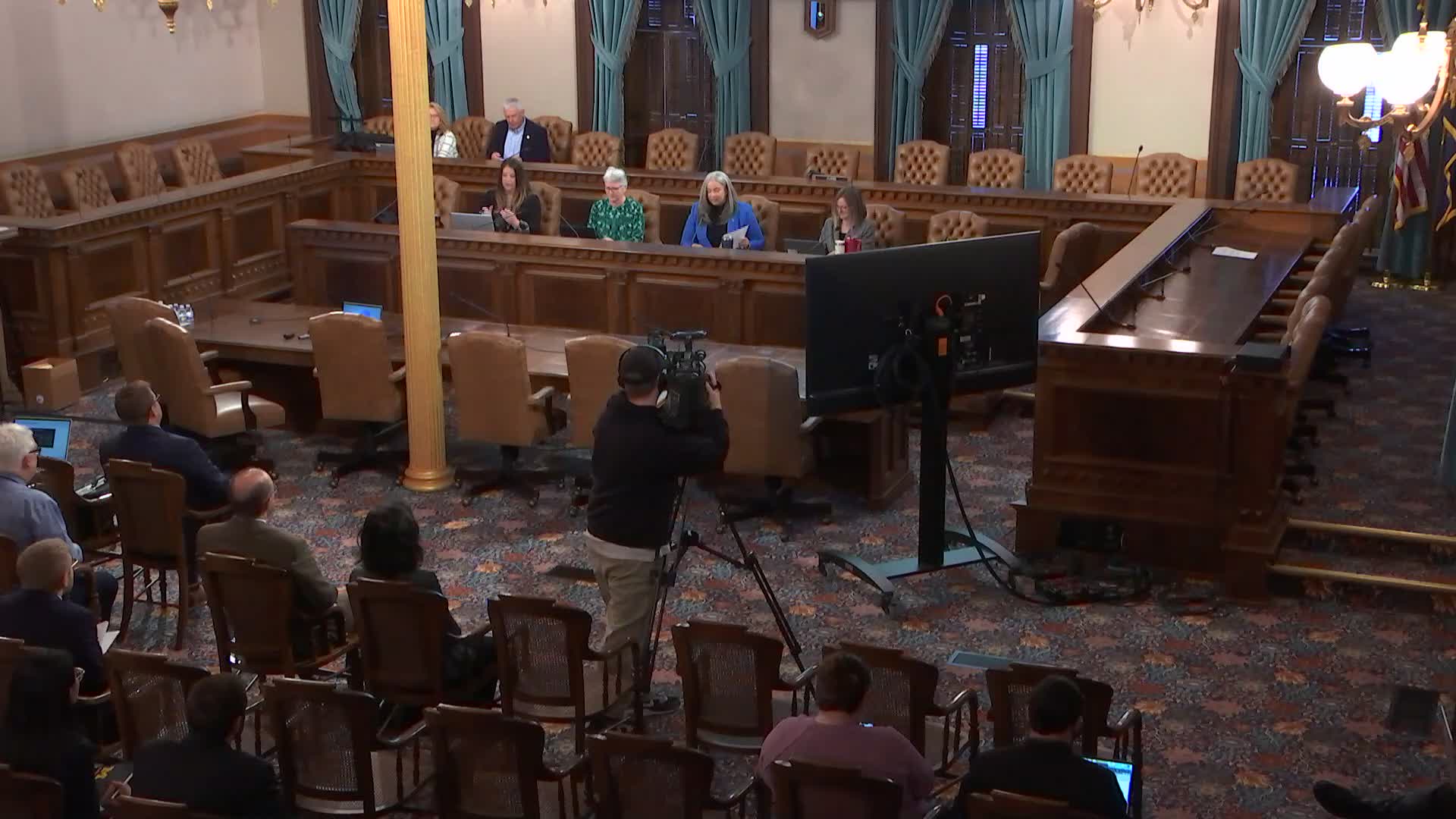
University of Michigan RSQE presents U.S. and Michigan outlook; flags tariffs, targeted tax cuts as near‑term risks
Summary
Researchers from the University of MichiganResearch Seminar in Quantitative Economics (RSQE) told MichiganConsensus Revenue Estimating Conference attendees that the U.S. expansion remains intact but that 2026 policy changes (tariffs and tax cuts) could push headline inflation up temporarily even as core inflation drifts lower.
University of Michigan researchers delivered updated U.S. and Michigan economic forecasts at the Consensus Revenue Estimating Conference, saying momentum remains but that policy changes and tariffs pose the biggest near‑term risks to inflation and growth.
RSQE economist Danil (RSQE U.S. forecasting specialist) said the U.S. economy entered the fourth quarter with solid momentum after 3.1% annualized real GDP growth in Q3 2024 and that partial data point toward a still‑healthy Q4. "The momentum in the economy was actually pretty strong," he said, while noting that core inflation measures have leveled off and are giving the Federal Reserve reason to move cautiously.
Danil told attendees the RSQE baseline assumes the new federal administration will enact targeted tax cuts and that tariffs, if applied, are assumed to begin in 2026 and ramp over time. "We penciled them in to start in 2026," he said, adding that RSQE modeled tariff revenues and targeted corporate tax reductions that together leave the fiscal outlook with substantially larger deficits by the middle of the decade.
RSQE director Gabe Ehrlich presented Michigan's outlook and told the conference that statewide payroll employment has recovered most of the mid‑2024 job losses but that job growth is projected to slow as the state approaches what RSQE judges to be near‑full employment. Ehrlich emphasized large geographic and demographic differences in household incomes across Michigan, noting that 2022 equivalent household incomes ranged from roughly $54,000 in parts of northeast Detroit to about $222,000 in affluent Oakland County suburbs.
On inflation, RSQE showed core consumer measures running above the Fedtarget (core CPI about 3.3%, core PCE about 2.7% recently) but argued that core components tied to housing services and "super‑core" services have room to decline as rental inflation and wage growth moderate. RSQE cautioned that durable‑goods price behavior is uncertain given potential tariffs and tax changes and that some of the near‑term strength in vehicle sales likely reflects pull‑forward ahead of policy changes.
On monetary policy, RSQE continued to expect a gradual easing relative to current short‑term rates, with the terminal federal funds rate in their baseline roughly one percentage point below the then‑current level by mid‑2026. Still, RSQE modeled a modest one‑time uptick in inflation in 2026 if tariffs and tax cuts combine to lift the price level.
For Michigan specifically, Ehrlich projected modest payroll gains over the forecast window, with noncyclical sectors (private education and health services, leisure and hospitality, government and other services) providing most of the job growth. RSQE forecast light vehicle sales around 16.3 million units in 2025 and warned that trade policy remains a significant wild card for the state's auto industry and parts suppliers.
RSQE presenters answered questions from the fiscal agency directors and conference principals before the meeting moved on to institutional forecasts and revenue estimates.