Get Full Government Meeting Transcripts, Videos, & Alerts Forever!
Get email alerts on the Water Supply topic
No spam. Unsubscribe anytime.
Residents urge city help on aging wells, water lines as drought concerns persist
Summary
Public commenters raised concerns about air in private wells and urged the council to prioritize extending piped water to older neighborhoods; staff described petition thresholds and limits on city-initiated water assessments.
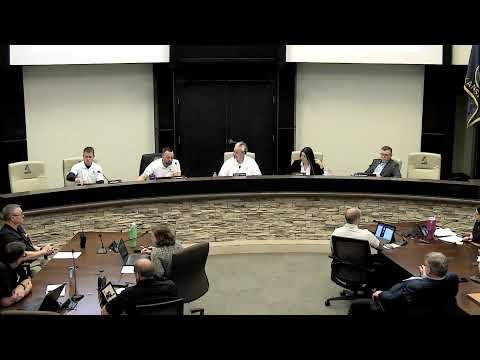
During the Jan. 28 public forum at the Andover City Council meeting, residents urged the council to prioritize extending municipal water lines to older neighborhoods after a recent drought and reports of declining private well performance.
Lynn Gregg, who said she lives on Douglas in the Bicentennial Addition, told the council that last summer’s drought led to air surfacing in her well and a perceived decline in water quality: "I started to get a lot of air in my well coming up out of my well, which indicates to me that my water quality is decreasing." She asked the council to remember the neighborhood when planning water-line extensions.
Council and staff responses clarified the limits of the city’s authority and the process residents can use. Staff said an estimate for water-line extension work was prepared in 2022 but acknowledged costs may have changed. Council members said a petition process is required for resident-initiated water extensions: the city needs a neighborhood petition with a majority (at least 51%) of property owners agreeing to participate for the work to move forward as an assessed improvement. Staff also said state statute allows the city to force special assessments for stormwater or drainage but not for potable water service; therefore the city cannot unilaterally force a water-line assessment.
“You have to have at least 51% of your neighborhood who wants to do that,” a councilmember said during discussion, and staff added: “The city is able through statute to force specials for a stormwater or a drainage assessment, but we are not able to do that for the water.” Staff suggested residents can use a city petition form and the application available on iCompass to collect homeowner signatures.
Speakers emphasized neighborhood outreach — staff suggested the existing petition form and noted that higher participation lowers per-property cost. No formal council action on water-line extensions was taken at the meeting; the remarks were recorded as public comment and guidance about procedural options and limits of city authority.