Get Full Government Meeting Transcripts, Videos, & Alerts Forever!
Get email alerts on the Sextortion topic
No spam. Unsubscribe anytime.
Judiciary committee advances sextortion bill creating felony and civil remedies, directs school education
Summary
Senate Bill 73 would create a felony offense for sextortion, allow civil suits by victims, and require school-based education and resources; the Senate Judiciary Committee reported the bill favorably with an expression of opinion after testimony from survivors, advocates and legal counsel.
Senate Bill 73, a bill that would make sextortion a felony and create civil remedies and school-based education requirements, was reported favorably out of the Senate Judiciary Committee with the committee’s expression of opinion.
Senator Julie Rocky Adams (State Senate District 36) sponsored the bill and introduced witnesses including attorney Sarah Collins and Lady T. Thompson, a human-trafficking expert. Adams told the committee the bill "will strengthen laws by making sextortion a felony" and would provide victims "clear legal remedies to seek justice and recover damages." She said the measure also mandates education in schools and resources for students to contact hotlines, law enforcement or counseling.
Attorney Sarah Collins described a client known as Jane Doe and recounted the case of an individual she identified as Brian Wilson, who Collins said extorted at least 25 women. Collins told the committee that her client was inundated with abusive messages, that local officers were unsure how to assist and that the woman later became suicidal. Collins argued current law prosecutes sextortion under a patchwork of statutes and said a specific crime and civil cause of action are necessary for effective prosecution and victim relief.
Lady T. Thompson, a human-trafficking expert, urged legislators to treat sextortion as a gateway to trafficking that often begins online and escalates into in-person exploitation. Thompson cited federal and nonprofit reporting showing dramatic increases in online exploitation of minors and urged prevention, training for law enforcement and survivor supports.
Members discussed details including whether the required school postings and education should be age‑appropriate, how to treat threats that never are carried out versus completed acts, and the statutory consequences where victims are under age 12. Senator Reid and others asked that materials be suitable for younger students; Senator Adams said she would work with the committee on possible clarifying amendments. Senator Stivers gave a brief explanation of his aye vote and said he supported pursuing the legislation while flagging concerns about materials for younger students.
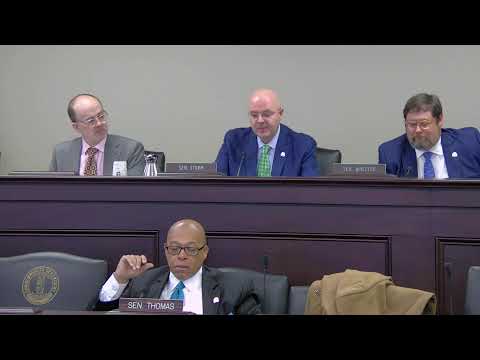
Motion and vote: A motion to report SB 73 favorably was seconded and the clerk recorded aye votes from Senator Carroll, Senator Deneen, Senator Nemez, Senator Reid, Senator Thomas, Vice Chair Wheeler and Chair Storm. The committee reported the bill favorably with expression of opinion.
What the bill would do (as presented): create the crime of sextortion as a felony; provide a civil cause of action allowing victims or their representatives to sue offenders; include sextortion in existing statutory definitions of sex crimes; require local school districts and postsecondary institutions to provide information and resources (including hotlines) and direct principals to notify students; and authorize educational campaigns on sextortion prevention.
Next steps: Sponsors indicated openness to floor amendments to clarify age-appropriate school materials, definitions around threats versus completed acts, and penalty ranges where victims are very young. The bill will proceed to the full Senate for further consideration.