Get Full Government Meeting Transcripts, Videos, & Alerts Forever!
Get email alerts on the Teacher Evaluations topic
No spam. Unsubscribe anytime.
Committee approves bill lengthening observation cycle for tenured teachers, narrows CSIP mandates
Summary
The Budget Review Subcommittee approved House Bill 48, which would change state-level teacher evaluation and school improvement plan requirements, lengthening the required summative observation cycle for tenured teachers and removing CSIP mandates for schools not in the bottom 10%.
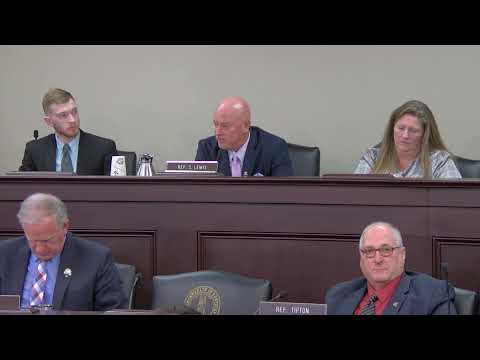
The Budget Review Subcommittee on Primary & Secondary Education & Workforce Development approved House Bill 48 after debate on reducing administrative burdens for schools and teachers.
The bill would change state-level requirements for teacher evaluations and school improvement planning: at the state level, tenured teachers would be required to receive a summative observation once every five years instead of once every three years, and Comprehensive School Improvement Plans (CSIPs) would no longer be required for schools that are not in the bottom 10% of performers (the committee discussed the CSI/TSI designations for the bottom 10%). The committee voted to pass the bill by voice roll call; the chair stated the bill “passes.”
Representative Baker, sponsor of the bill, told the committee that the change is intended to reduce the administrative time principals spend on summative evaluations for experienced teachers: "But this just says, as a state level, we're only gonna require a 10 year teacher to be observed once every 5 years," Baker said, adding that districts and principals would still be able to evaluate teachers more frequently if they choose. Committee staff emphasized that schools identified as comprehensive or targeted support (CSI/TSI, the bottom 10%) would continue to receive extra oversight and supports and would still be required to complete CSIPs.
Supporters described the bill as an attempt to free principals and teachers for classroom work and to reduce duplicative paperwork. Representative Baker told the committee teachers already receive multiple informal observations and that the bill affects only the required statewide summative schedule: "The evaluations take place in every school, and all we're saying is that if you are a tenured teacher... you only have to be observed once every 5 years as opposed to once every 3 years." Committee members and several teachers who participated in the interim review said local professional development and mentoring remain important.
Members pressed for clarifications about how the bill would interact with district practices and federal requirements. A committee participant stated plainly that "The CSIP is a federal requirement," noting the federal overlay on certain school improvement plans. Representative Baker and others said the bill does not remove supports for low-performing schools: "We're not changing the evaluation system with those [CSI/TSI]," a committee speaker said, and added that KDE and the commissioner would continue to provide assistance to identified schools.
The bill also addresses professional development timing and mentor/induction program language. Committee discussion noted that teachers are generally required to complete about 24 hours of professional development per year, with roughly four hours tied to state-mandated trainings and the remainder tied to federal or local requirements. Several committee members said the change aims to consolidate state-mandated professional development on a rotational schedule for tenured teachers; they said federal PD requirements and local PD decisions would remain outside the bill's scope.
Representative Bogdanowski, when explaining his vote, said he supported the bill but voiced frustration with repetitive training requirements: "I only wish that I wouldn't have to do the bloodborne pathogens every year. I know everything I need to know about bloodborne pathogens," he said. Representative Riley described the measure as "a really good first step" toward allowing teachers to focus on instruction.
The committee took a roll call and members recorded their votes; the chair announced the bill passed. Committee leadership thanked participating teachers and staff and noted the item would move forward for further consideration per the legislative process.
The committee also noted several implementation and funding questions remain open: whether districts could consolidate local PD requirements on the same cycle, how local funding (including Title 2 funds) interacts with mandated programs, and how to ensure mentor/induction programs remain available where districts choose to keep them. Multiple members urged follow-up work during the budget and policy process.
After the vote, the committee chair announced weekly office hours and adjourned the meeting.