Get Full Government Meeting Transcripts, Videos, & Alerts Forever!
Get email alerts on the Judicial Training Dv Sa topic
No spam. Unsubscribe anytime.
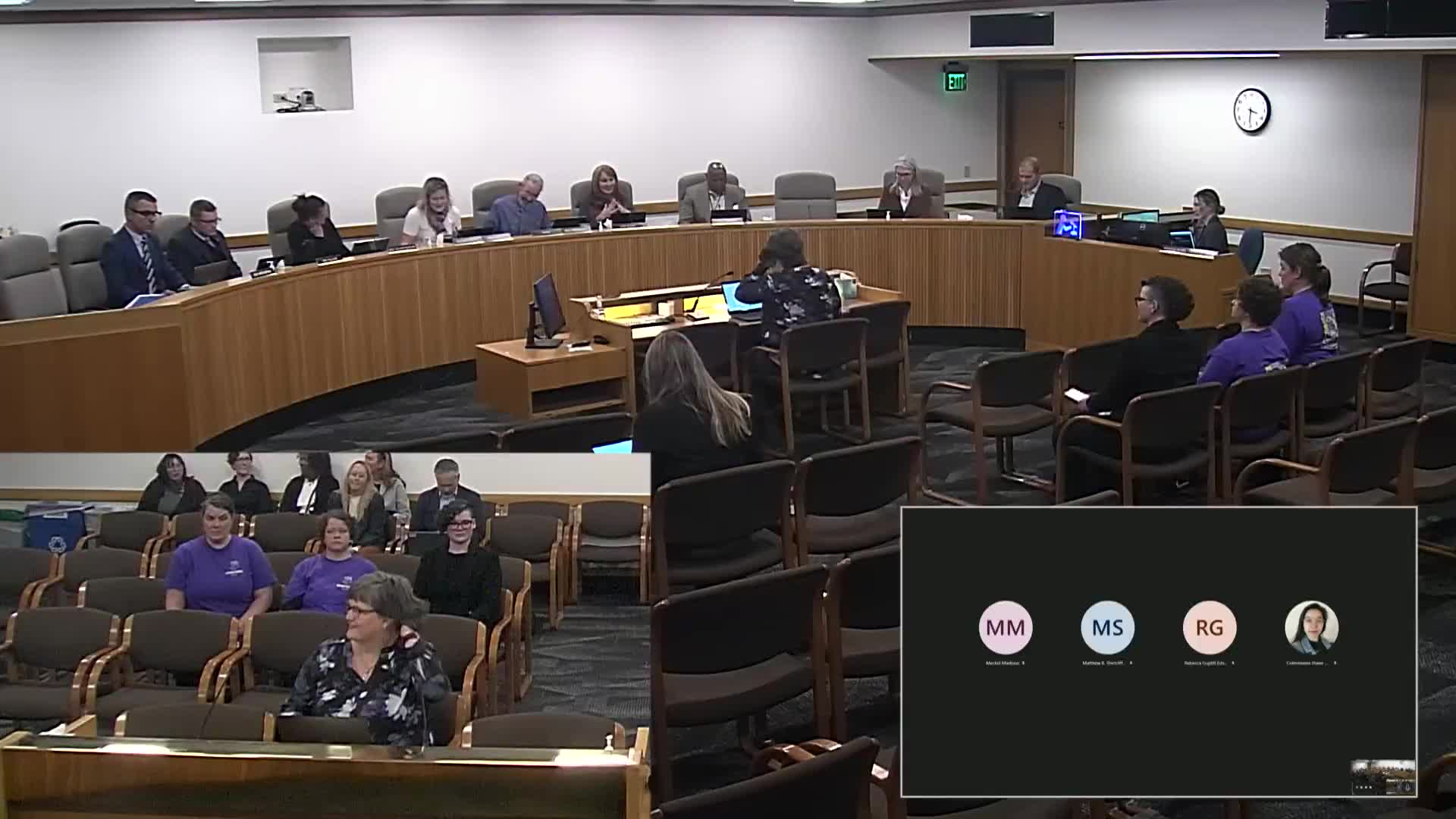
Bill would require judicial training on domestic violence, sexual assault; judges and survivors testify
Summary
Senate Bill 710 would direct the Oregon Judicial Department to study and propose a domestic- and sexual-violence judicial training program; judges, court staff and survivors urged mandatory, trauma-informed and skill-based education during a public hearing.
Senate Bill 710 would direct the Oregon Judicial Department to study options for specialized training for judges on domestic and sexual violence and to submit a report with recommendations to the legislature by Sept. 15, 2026, supporters told the Senate Judiciary Committee.
Multiple witnesses — including judges, Oregon Judicial Department representatives, survivor-advocates and Family Justice Center staff — said trauma-informed, skill-based judicial training is necessary because domestic violence and sexual assault affect cases across criminal, family and juvenile dockets.
Rebecca Guptill, presiding judge of the Washington County Circuit Court, testified that there is no mandated judicial training specific to domestic or sexual violence and that continuing legal education (CLE) requirements are not tailored to judges’ courtroom needs. “It is my opinion that judges would benefit from their own judicial education standards for continuing education rather than the current requirements,” Guptill said. She recommended training that is evidence-based, trauma informed, practical and developed in collaboration with community partners and a judicial advisory committee.
Matt Shirtcliff, presiding judge in Baker County and a former prosecutor, advocated for an advanced course model: a week-long, concentrated training in the first two to three years on the bench and periodic refresher training thereafter. “There’s simply no reason why prosecutors should have that in-depth training and judges not,” Shirtcliff said, adding that implementation will require funding to backfill dockets while judges attend multi-day programs.
Erin Knott, director of government relations and communications for the Oregon Judicial Department, said OJD supports the project in concept but noted the department currently lacks a statewide mechanism and sustained funding to deliver judge-specific continuing education at scale.
Survivors and advocates also testified. Rachel Schutz of the Family Justice Center of Washington County described the “deep and insidious complexities of violence and abuse” and urged passage. Lisa Jones, who identified herself as a survivor, said her family-court experience produced additional harm: she described her child’s later diagnosis of complex PTSD after a court case she said failed to protect them. “Without this education, courts rely on outdated myths, personal biases, and incomplete CPS reports,” Jones said.
Jen Bartholomew of the Voices Survivor Advisory Committee described nearly 25 years of coercive abuse and urged judges to be trained to identify coercive control, trauma responses, and courtroom dynamics in which unrepresented survivors may appear differently than represented litigants.
Why it matters: Supporters said better judicial education would improve courtroom management, credibility assessments, safety planning and overall outcomes for survivors and children in family cases. OJD and witnesses flagged the need to fund and structure training so judges statewide can participate without disrupting court operations.
The committee opened a public hearing, received testimony from multiple panels and did not take immediate action on the bill during the hearing.