Get Full Government Meeting Transcripts, Videos, & Alerts Forever!
Get email alerts on the Victim Services Funding topic
No spam. Unsubscribe anytime.
VOCA cuts threaten Oregon victim services; advocates urge federal fix, seek $21.5 million state support
Summary
Presenters at a joint informational hearing told the Senate and House Judiciary committees that a 42% cut to federal Victims of Crime Act (VOCA) funding is forcing programs to triage services and seek state support, including a $21.5 million request for children's advocacy centers.
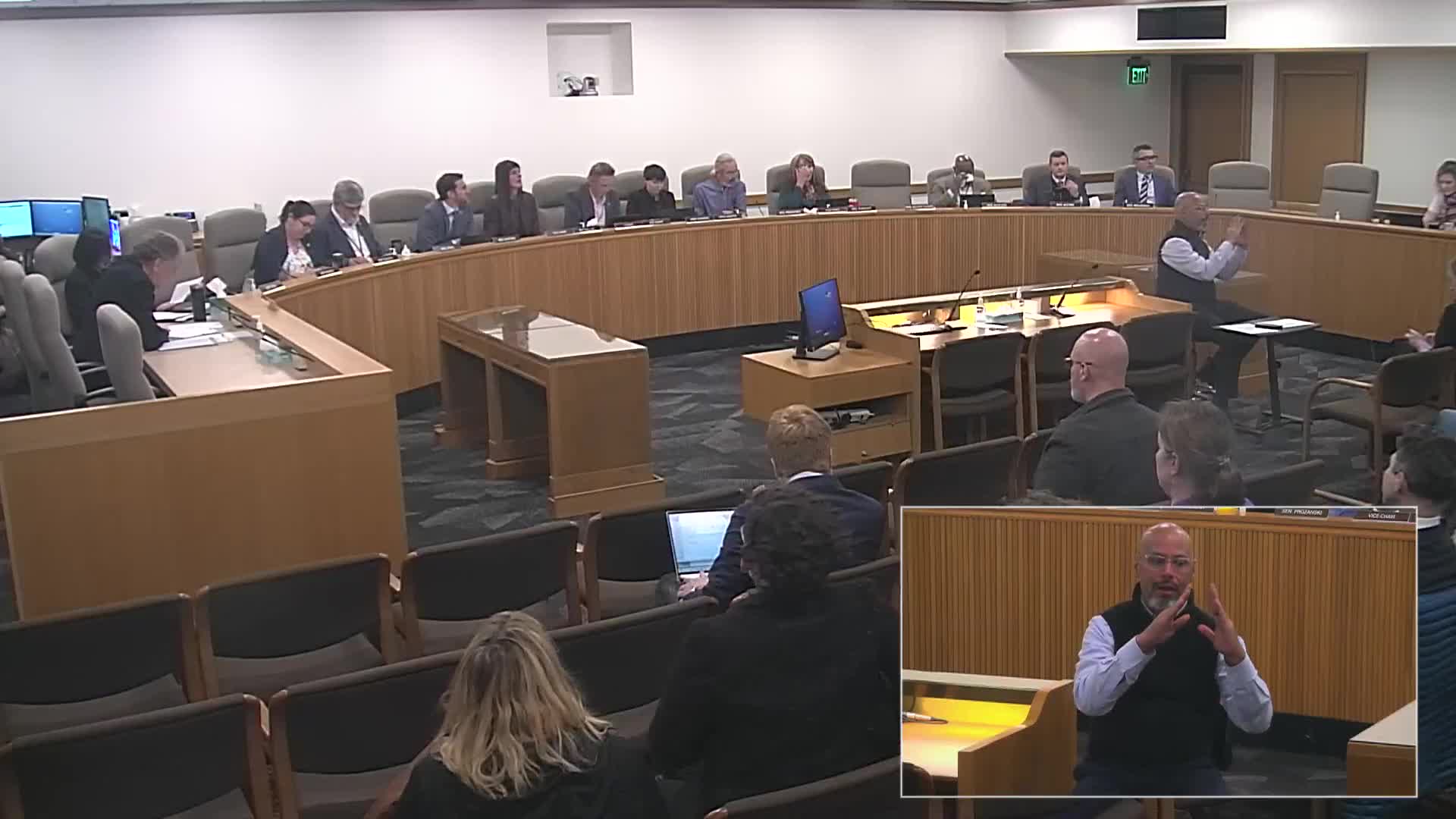
At a joint informational meeting of the Oregon Senate and House Judiciary committees, state and advocacy officials warned that a 42% reduction in federal Victims of Crime Act funding is jeopardizing victim services across the state.
Shannon Savelle, director of the Crime Victims and Survivor Services Division (CVSSD) in the Oregon Department of Justice, told the committees that VOCA (Victims of Crime Act, enacted 1984) became the primary federal funder for domestic and sexual violence and other victim services in Oregon. Savelle said Oregon averaged roughly $22 million per year in formula VOCA grants over the past decade but was notified after the close of the 2024 short legislative session that its 2024 allocation would fall to about $9.9 million — a roughly 42% reduction. “This loss of funding truly eats at the foundational services that Oregon has built over the last decade,” Savelle said.
The funding supports a wide array of programs, Savelle said, including children’s advocacy centers, nonprofit domestic and sexual violence providers, district attorney victim assistance units, tribal programs, human-trafficking services, campus sexual-assault programs and culturally specific supports. She listed common services funded by VOCA grants: crisis response, 24-hour hotlines, on-scene sexual-assault response, medical and court advocacy, and other survivor advocacy services.
Shelly Smith, executive director of Oregon Child Abuse Solutions, told the committees there are 24 children’s advocacy centers (CACs) serving all 36 Oregon counties and that CACs served more than 7,000 children last year. She said CACs rely on a mix of local, state and federal funding, with roughly 27% from the state and about 35% from federal sources including VOCA; some services can be billed to insurance, but not all. Because of the VOCA reductions, Smith said CACs have requested $21,500,000 from the state through House Bill 3196 to preserve baseline services.
Carrie Moran, executive director of the Oregon Coalition Against Domestic and Sexual Violence, told the committees that the Crime Victims Fund at the federal level is funded by penalties, fines and settlements rather than appropriated general tax revenue; she said a drop in deposits to that fund forced Congress to reduce the fund’s statutory obligation cap between fiscal 2023 and 2024, producing roughly a $550 million reduction in obligations nationwide and an approximate 40% cut to state grants. Moran urged support for a federal legislative fix (referred to in testimony as the Crime Victims Fund Stabilization Act) and described efforts in Washington to restore the fund.
Committee members asked when the state learned of the reduction; a committee question was answered that Oregon was notified around March 24, 2024, and that the Emergency Board had provided limited carryover funding to cover some programs that otherwise would have started new grants. Representative Anderson asked why the federal funding fell; Savelle attributed the cut to a depletion of deposits in the federal Crime Victims Fund and said federal corrective steps are being pursued but are not expected to restore funding immediately.
Why it matters: VOCA grants are a principal funding source for front-line survivor services. Committee testimony warned that the cut threatens basic crisis response, advocacy, and forensic services for children and adults and could force programs to triage requests or close services.
Advocates requested a combination of state support and federal action. Smith said HB 3196 would “protect services and cover baseline services to survivors of child abuse and domestic violence.” Moran asked the legislature to adopt a Senate Joint Memorial (SJM 2) urging Congress to enact a stabilization fix for the Crime Victims Fund.
The informational meeting did not include a committee vote on policy; it concluded with the committee moving to the next agenda items.