Get Full Government Meeting Transcripts, Videos, & Alerts Forever!
Get email alerts on the Evidence Destruction Covanta Closure topic
No spam. Unsubscribe anytime.
Sheriffs warn Covanta closure leaves Oregon law enforcement without in-state drug incineration
Summary
Sheriff Nate Sickler said Covanta’s closure will force agencies to store illicit drugs longer, incur travel costs to out-of-state facilities, and consider regional law-enforcement-run incinerators that may need legislative support and DEQ permitting.
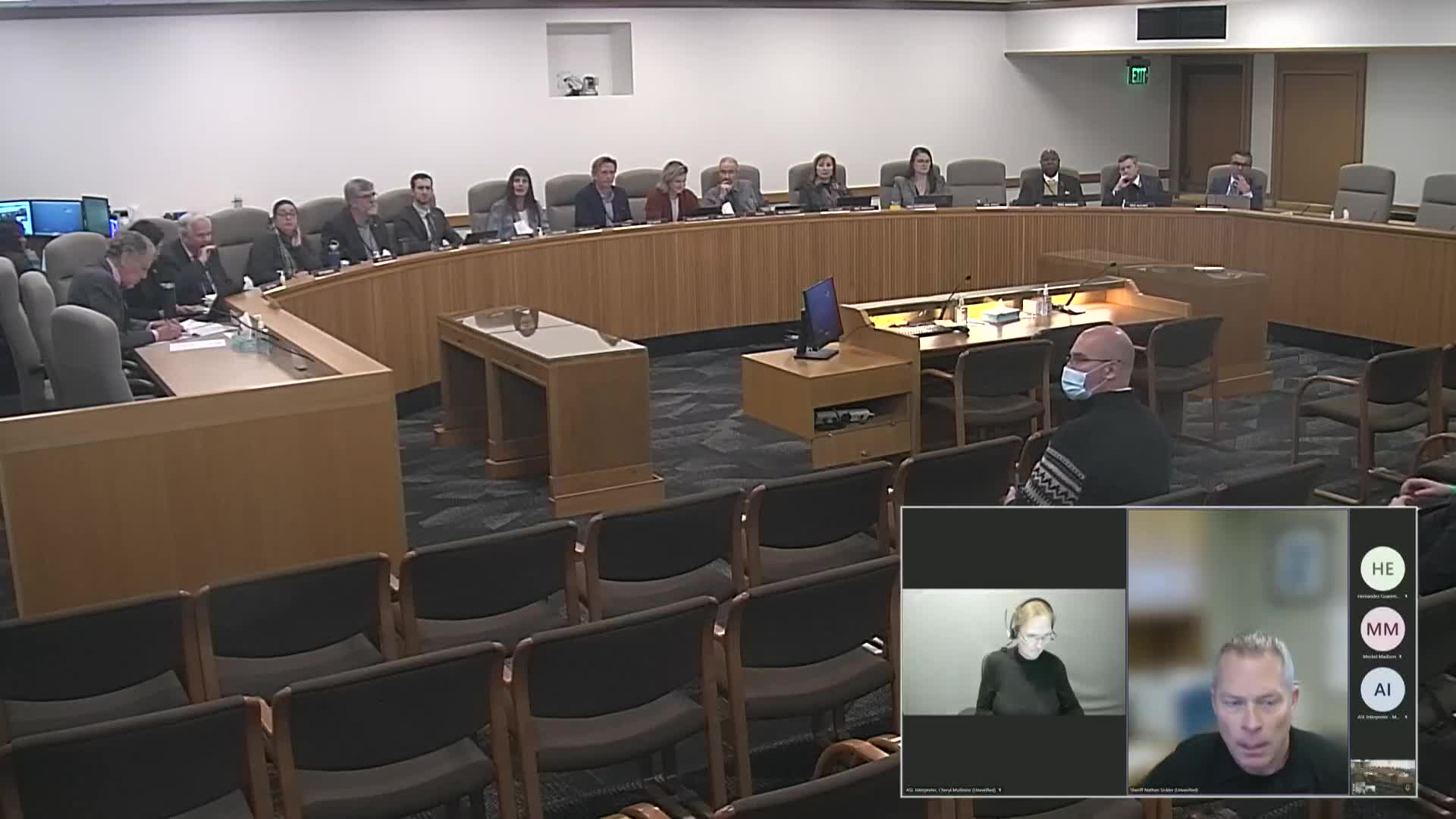
Sheriff Nate Sickler of Jackson County told the joint Judiciary informational hearing that the planned closure of Covanta’s Marion County waste-to-energy facility will leave Oregon law enforcement without an in-state option to incinerate contraband and seized drugs.
“Prior to the end of last year … law enforcement agencies in Oregon would bring contraband, illicit drugs, and evidence from criminal cases that was ordered to be destroyed, by the courts to Covanta to be incinerated,” Sickler said. He said the process “provided a safe and reasonable and effective way to ensure drugs were safely disposed of” and helped prevent items from being diverted after disposal.
Sickler said Covanta stopped accepting new items for destruction on Dec. 31, 2024, creating immediate storage and safety problems for property rooms that must hold fentanyl and methamphetamine evidence longer. He warned that transporting seized drugs to facilities in other states raises legal, cost and staffing complications: an Oregon-certified officer’s arrest powers do not extend across state lines, and long round-trip transports could take two days for Southern Oregon agencies.
Sickler said small regional incinerators operated by law enforcement could be a viable solution but would likely require legislative assistance for funding or rulemaking and DEQ review for permits. He described initial cost estimates for such units at about $200,000 each and said agencies are exploring a regional model with “four to five” shared units. He estimated his office burns about 1,000 pounds of drug-related material annually; a nearby partner, the city of Medford, burns about 2,000 pounds annually.
Sickler also noted alternative destruction methods pose worker-safety, legal and environmental concerns. “You'd have to unpackage and remove the plastic from the drugs, therefore exposing the employees to the ... the materials, the drugs, fentanyl and whatnot,” he said, noting DEA-destructive-protocol considerations and potential environmental compliance issues with non-incineration methods.
Committee members asked about timelines, permitting and bills. A committee member said Marion County filed a legislative request (LC 2753) seeking options related to the Covanta closure. Sickler said in meetings with the Oregon Department of Environmental Quality staff, DEQ advised it could determine permitting needs once vendors supplied specific incinerator specifications.
Ending: Sheriff Sickler urged the legislature to consider funding and rulemaking to support regional incineration options; committee members indicated they were tracking the closure’s cascade effects and related legislative requests.