Get Full Government Meeting Transcripts, Videos, & Alerts Forever!
Get email alerts on the Evidence Destruction Incinerator topic
No spam. Unsubscribe anytime.
Sheriffs warn Covanta closure leaves Oregon law enforcement without safe drug incinerator; regional units cost estimated at ~$200,000 each
Summary
Jackson County Sheriff Nate Sickler told the Judiciary committees that the closure of Covanta's Marion County incinerator has left Oregon without an in-state facility to safely destroy seized illicit drugs and hazardous evidence.
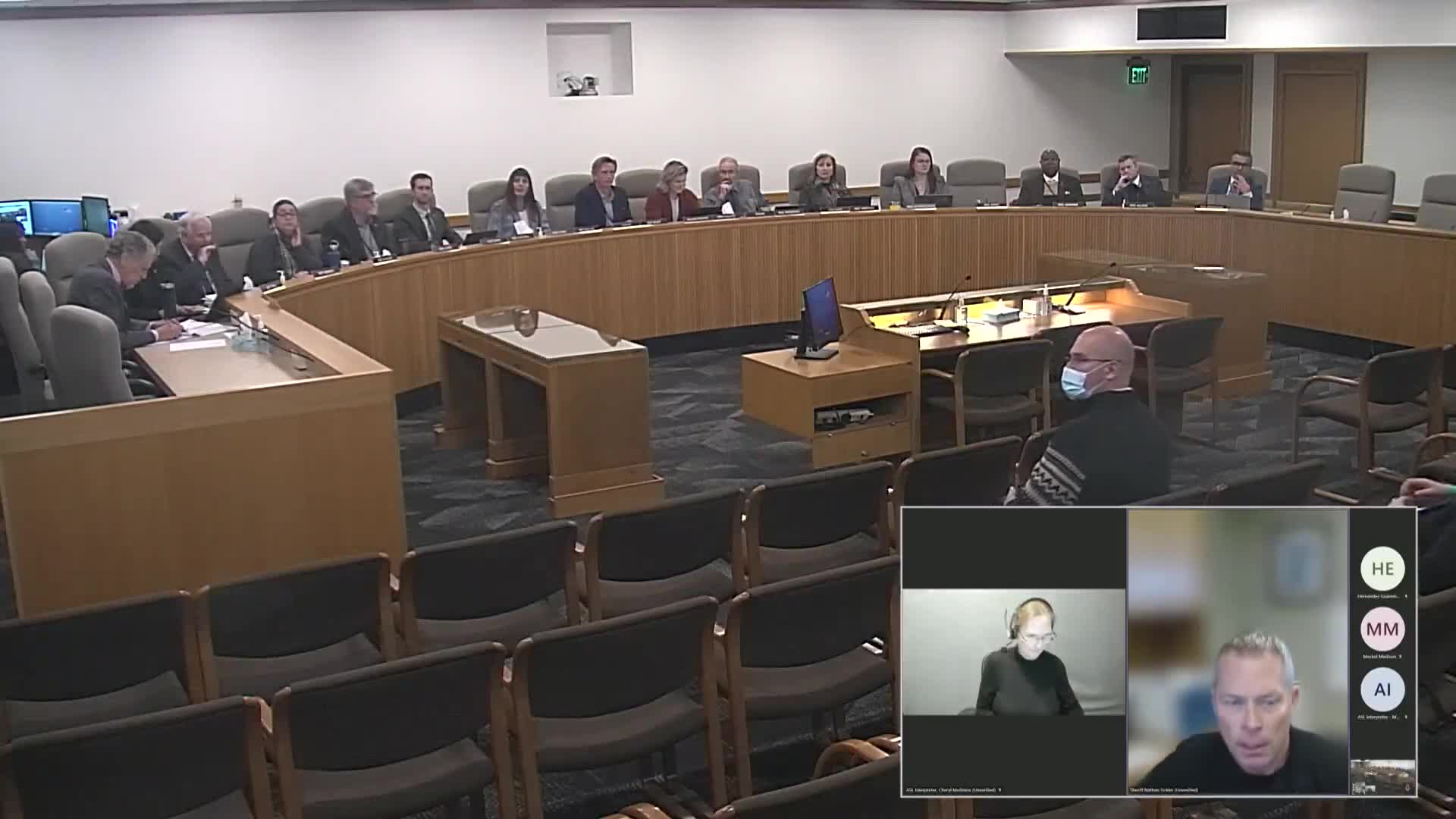
Jackson County Sheriff Nate Sickler told the Senate and House Judiciary committees that the announced closure of Marion County's Covanta waste-to-energy incinerator will leave Oregon law enforcement without an in-state option to safely destroy illicit drugs and other hazardous evidence.
"Covanta... is closing down, and that's gonna create several issues for law enforcement across the state of Oregon," Sickler said, describing the incinerator as the facility that historically handled contraband and court-ordered destruction for many jurisdictions.
Sickler said law enforcement relies on an incineration process to ensure drugs — including methamphetamine and fentanyl — and other evidence cannot be repurposed after disposal. Without Covanta, agencies face longer on-site storage of hazardous items with increased exposure risk for property-room staff, more expensive and complex out-of-state transport, and potential legal and logistical questions about crossing state lines with evidence. He said Covanta stopped accepting items for destruction on Dec. 31, 2024.
The sheriff outlined a regional small-incinerator concept: agencies would share limited-use units sited at host agencies and operate them under state permitting rules. He said initial estimates for purchase and installation were "about 200,000 or $200,000 a piece or so," plus modest site work (concrete pads and hookups). Sickler said his office burns about 1,000 pounds of drug-related material annually; Medford's city agency estimates roughly 2,000 pounds.
Sickler said staff safety, DEA destruction protocols and state environmental permitting (Department of Environmental Quality) are central concerns: some chemical neutralization alternatives require unpackaging and would likely expose employees to hazardous substances. He said the Oregon State Sheriffs Association and the Chiefs of Police Association are engaged on the issue and that legislative funding or rule-making will likely be needed to implement regional incinerators.
Representative Mannix and other legislators noted that discussions were underway with Covanta about potential extensions and replacements, and that Marion County was preparing a request (LC 2753) to address the closure's cascade effects.
Ending: Law enforcement asked the Legislature to consider funding or regulatory help to stand up a regional incineration solution; the committee heard the presentation as informational and will monitor follow-up bills and regulatory consultation with DEQ.