Get Full Government Meeting Transcripts, Videos, & Alerts Forever!
Get email alerts on the Voca Bridge Funding topic
No spam. Unsubscribe anytime.
Oregon lawmakers hear plea to backfill 42% VOCA cut with $21.5 million
Summary
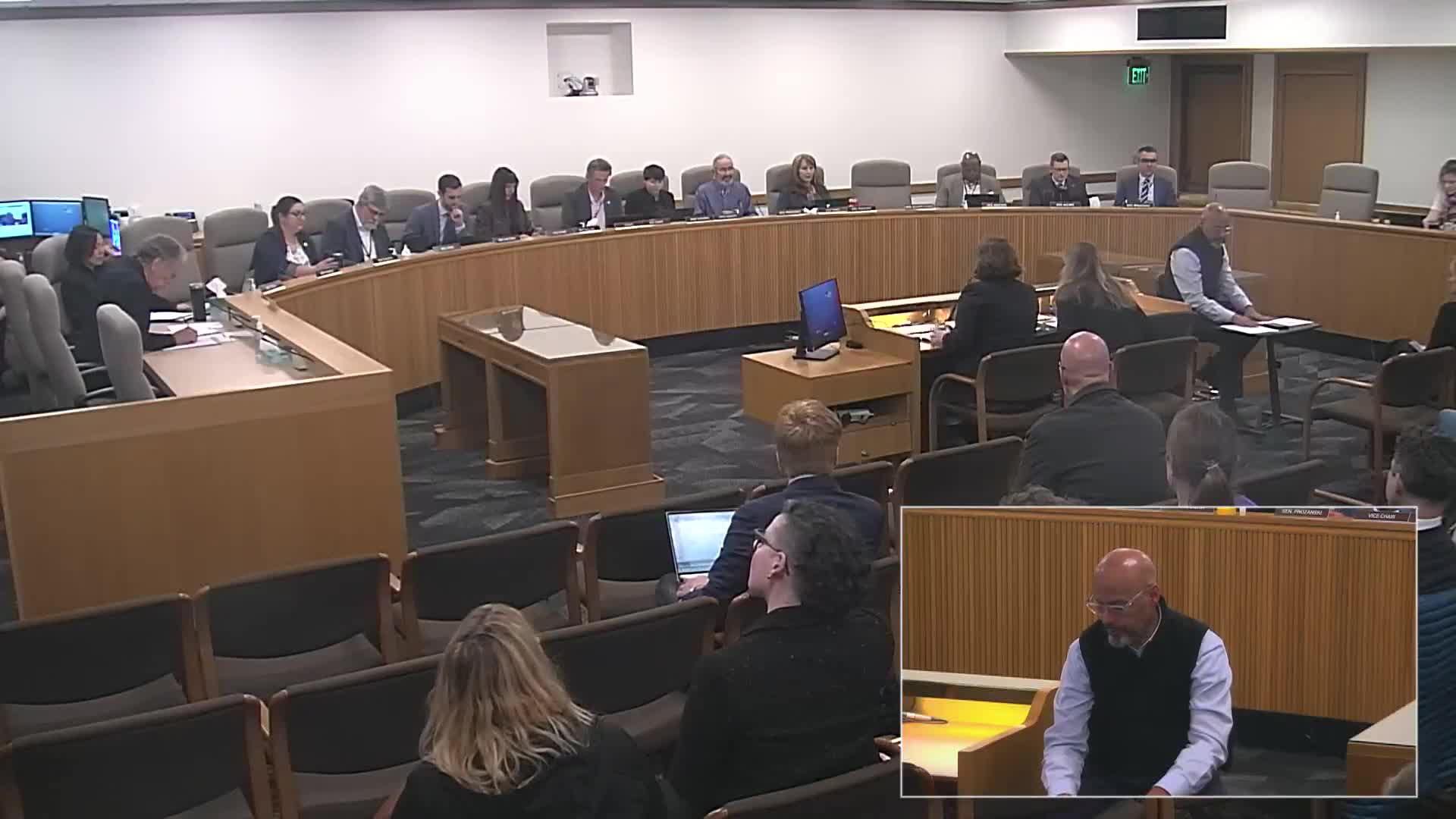
At a joint informational and public hearing, victim-service providers urged the Judiciary committees to pass House Bill 3,196, a request for $21.5 million in one-time state funding to replace a 42% federal VOCA reduction that officials say will cut core services across Oregon.
Chair Kropf opened public testimony on House Bill 3,196 on behalf of the Department of Justice and victim-service partners, saying the bill would appropriate general funds to the DOJ to offset reductions in federal Victims of Crime Act (VOCA) grants.
The bill matters because VOCA has been a primary federal funder for domestic and sexual violence and other victim services; speakers told the committees that a 42% reduction announced in spring 2024 lowered Oregon’s VOCA formula grant to about $9.9 million and threatens programs statewide.
Shannon Savelle, director of the Crime Victims and Survivors Services Division at the Oregon Department of Justice, told the committees, “VOCA stands for Victims of Crime Act. It was passed in 1984, and over the years, it has become the primary federal funder for domestic and sexual violence services and other victim services here in Oregon.” She said the state historically averaged roughly $22 million a year in formula funding but was notified of a 42% cut in 2024.
Representative Anessa Hartman (House District 40), who testified in strong support, described local providers in Clackamas County and urged immediate state action: “House Bill 3,196 is a lifeline that will provide support to backfill the VOCA funding shortfall and ensure victim services remain stable.”
Multiple nonprofit and local providers described how VOCA funds support 24/7 hotlines, emergency shelter, hospital-based medical advocacy, forensic interviews for children, and staff who provide courtroom accompaniment and case management. Dr. Martina Shabram, executive director of Sexual Assault Support Services in Lane County, said VOCA funds “make that possible” and that at her agency VOCA represents about 13% of the budget and nearly 20% of staff FTEs.
Julie Wiesman, executive director of Hope and Safety Alliance, described increased demand: “In the last 30 days…instead of having 2 to 3 new survivors walk in our door each day, it's now 5 or 6.” She and other providers warned that losing VOCA would force layoffs, cut shelter capacity and crisis-line hours, and expand waiting lists for therapy and advocacy.
Speakers also emphasized rural impacts: CASA of Marion County’s Vanessa Nordyke explained CASA volunteers and paid supervision hinge on this funding; Kids First leaders (Sarah Stewart and incoming executive director Patty Perlow) described how VOCA-funded advocates and therapists prevent prolonged trauma for children and support criminal prosecutions.
The presenters asked the committees to approve a one-time $21,500,000 general fund appropriation in HB 3,196 to stabilize services while federal remedies are pursued. Committee members asked questions about the timing of the federal notice (Savelle said it arrived in late March 2024) and whether the loss was a one-time event (Savelle and coalition witnesses said it reflected a depleted federal Crime Victims Fund balance and uncertain federal remedies).
The committee closed the public hearing; no formal vote on the bill was recorded during the session.
Ending: Advocates framed HB 3,196 as a stopgap to preserve 24/7 crisis response, child forensic services, victim advocates in district attorney offices and tribal programs statewide; the bill will move to committee work session for further consideration.