Get Full Government Meeting Transcripts, Videos, & Alerts Forever!
Get email alerts on the Criminal Justice Bills topic
No spam. Unsubscribe anytime.
Defense attorneys preview five criminal-justice bills including discovery timelines and misdemeanor reclassifications
Summary
The Oregon Criminal Defense Lawyers Association previewed five bills — including SB 177 on discovery timelines — aimed at speeding information exchange, narrowing felony charges for some conduct, and changing burdens in juvenile registry hearings, the association told the House Judiciary Committee during an informational hearing.
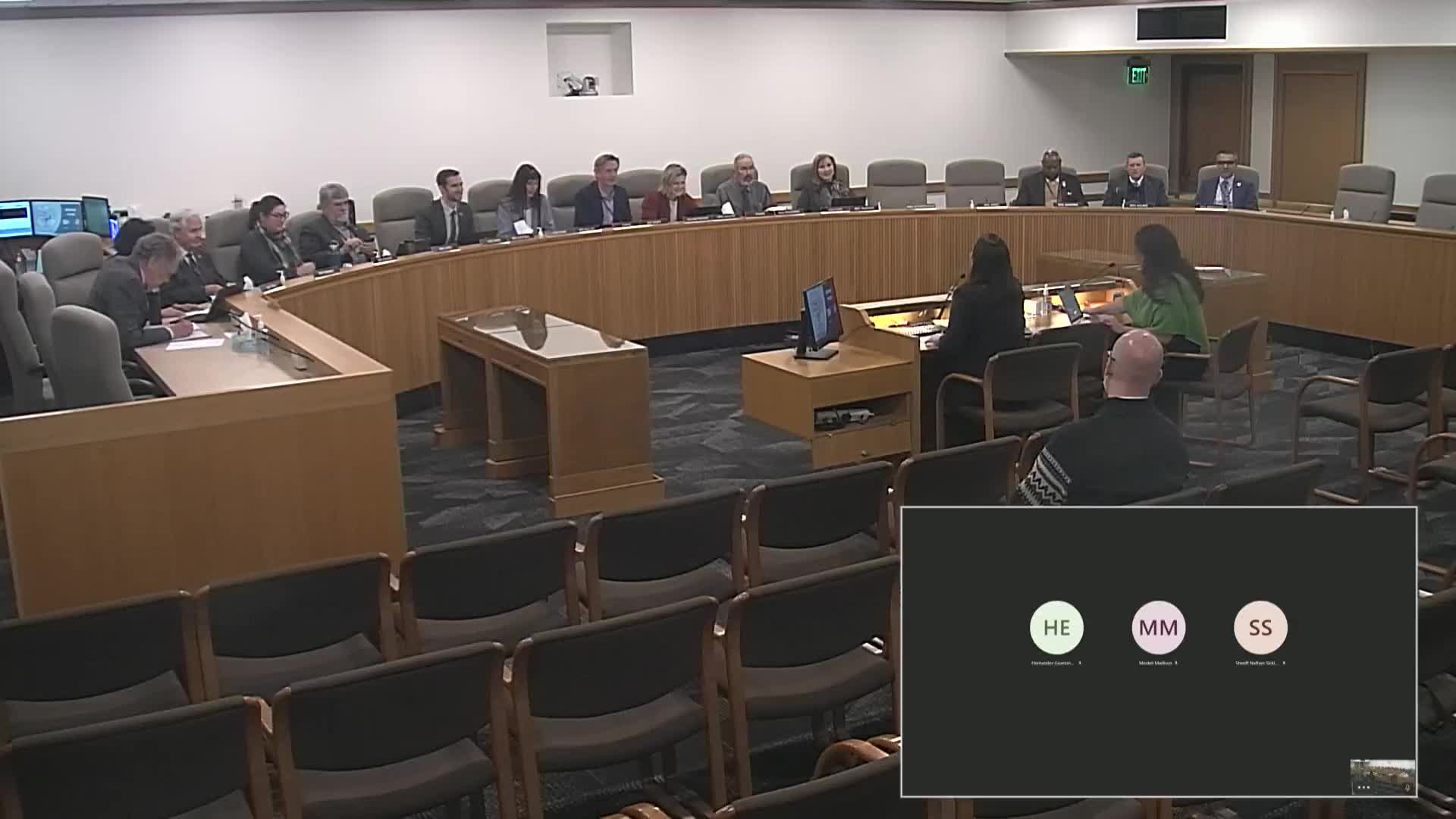
Maylee Browning, legislative director for the Oregon Criminal Defense Lawyers Association, told the House Judiciary Committee that her group is presenting five bills intended to “better utilize the scarce resources of the criminal legal system.”
The package includes SB 177, a discovery bill that would replace the statute’s vague “as soon as practicable” language with specific timelines; HB 2469, a court-procedures bill that would add a mechanism to reconsider pretrial release decisions and allow some misdemeanors to be treated administratively as violations; HB 2640, a crimes-and-violations bill proposing to narrow aggravated harassment and downgrade several low-level misdemeanors to violations; HB 2472, the Fairness for Youth bill shifting the burden of proof in juvenile registry hearings to the state; and HB 2641, a bill aligning Oregon’s evidence and criminal-history rules with federal standards.
“Discovery is the process of exchanging information between the defense and prosecution,” Browning said. She described three components of SB 177: setting a timeline for disclosure of materials in a prosecutor’s possession at first appearance; requiring supplemental materials to be disclosed within 10 days of coming into the state’s possession; and requiring that jail-call recordings be disclosed no later than 30 days before trial, unless good cause is shown, with prosecutors identifying which portions they intend to use.
Browning said the bill would also create a pretrial “check” before a defendant decides to go to trial or accept a plea, and would let either party in a felony case request an interview with a law-enforcement officer “who is material and necessary to the case.”
On HB 2469, Browning said the bill would allow courts to reconsider pretrial detention or release when circumstances change, and would permit courts to treat certain misdemeanors as violations and enter judgment for a violation after a finding of guilt. On HB 2640, she said the proposal would remove an unconstitutional harassment provision that allowed a conviction for “publicly insulting” someone with words or gestures, narrow the aggravated-harassment offense that currently treats spitting on an officer as a C felony, and reclassify several low-level offenses — including driving while suspended and some thefts of basic-needs items — as violations.
Browning summarized HB 2472 as shifting the burden of proof in juvenile registry proceedings so the state must show by clear and convincing evidence that the youth poses a danger to public safety. For HB 2641, she described two changes: replacing Oregon’s Rule 609 on impeachment by prior conviction with the federal Rule 609 balancing test, and adopting a 15-year lookback for counting prior convictions when calculating a defendant’s criminal-history score for sentencing.
“Why 15 years?” one committee member asked. Browning replied that the 15-year period aligns with the U.S. Sentencing Commission’s framework and related studies used in the federal system.
Committee members took the presentation as an overview and indicated more technical hearings and negotiations would follow. Browning and other presenters said the concepts remain under negotiation and that detailed amendments are expected in subsequent committee work.
Ending: The presentation was an informational preview; no bills were debated or voted on during the session. Committee members said they expect further hearings and technical amendments as the proposals move through negotiations and drafting.