Get Full Government Meeting Transcripts, Videos, & Alerts Forever!
Get email alerts on the Special Assessments topic
No spam. Unsubscribe anytime.
Commission approves first reading to levy special assessments for 14 improvement districts
Summary
The Manhattan City Commission on Feb. 4 approved first reading of an ordinance to levy special assessments across 14 public improvement districts after a public hearing in which multiple property owners objected to calculation methods and notification timing.
The Manhattan City Commission on Feb. 4 approved the first reading of an ordinance to levy special assessments across 14 public improvement districts after a public hearing in which multiple property owners objected to assessment methods and notification timing.
City staff provided the presentation and maps for the projects and described repayment options. Rena, a community development staff member, said the projects for the May 2025 bond series include turn-lane work at Candlewood Shopping Center; sewer, street and water improvements in Highlands at Grandmere, Elijah Addition and Henry Addition; a Stagg Hill Golf Course waterline; a sidewalk for Genesis Health Club; and sewer and water extensions in the Stagg Hill business community. Rena said the city will cash-pay an administrative portion and bond the remainder, and noted property owners were notified by letter. She said property owners will receive a second letter after the Feb. 18 second reading giving 30 days to pay off assessments by March 21; unpaid assessments would be bonded in May and amortized over 20 years, and the assessments would appear on the November 2025 tax statements.
“Property owners were notified by letter about the amount and purpose of their assessment, and the notice was published in the Manhattan Mercury,” Rena said.
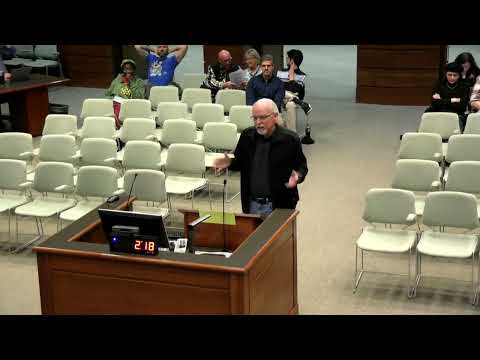
Several residents urged changes to how assessments were calculated and complained about late or confusing notice. Marlo Claussen, who said she lives on Victory Drive, told commissioners the three vacant lots adjacent to her property were each estimated at $5,225.62 per year despite having no road, sewer or water usage. She said the lots had been reduced in size during nearby road work and that using an equal-per-lot share rather than square footage made assessments she called inequitable.
“I am 100% objecting to how these special assessments are calculated and distributed,” Marlo Claussen said.
Alex Van Dyke, who said he lives in Elijah Addition, said buyers were told during sale negotiations to expect assessments “around $4,000,” and that actual assessments now appear more than $1,000 higher. Caleb Anderson Swanson, who said he purchased in the area last month, said he and other younger homeowners budgeted for about $3,600 in special assessments and are surprised by larger bills.
City Attorney Jackson said state statute requires the city to assess every lot that potentially benefits from improvements and allows three commonly used methods for calculating assessments: linear frontage, square footage or equal shares per lot. Jackson told commissioners the developer’s petition established the calculation method used for the districts at issue.
“The statute requires that every lot that potentially benefits from the infrastructure improvements is assessed in an equitable way,” Jackson said.
Commissioners asked staff whether the commission could exclude a single subdivision from the ordinance at first reading or delay action. Staff said the petition and resolution reflect the calculation method and that changing the method would require time to recalculate and legal review; staff also noted statutory timelines for the 30-day pay window and subsequent bond sale. Commissioners discussed possible alternatives—including asking affected owners to sell extra lots so new owners would assume assessments—but did not adopt any exception.
The commission voted 5-0 to approve first reading of the special-assessment ordinance. The mayor called the roll for the vote: Commissioner Opelt — yes; Commissioner Motta — yes; Commissioner Minton — yes; Mayor McCullough — yes; Commissioner Adamczyk — yes.
Next steps and key dates listed by staff: a second reading of the ordinance is scheduled for Feb. 18; property owners who receive the second letter will have 30 days to pay off assessments (payment deadline cited as March 21); staff anticipates a bond sale in mid-May 2025; unpaid assessments will be amortized over 20 years and appear on November 2025 tax statements.
In response to residents’ questions about earlier estimates, staff said petition-based estimates are generally higher than final construction costs; final assessment amounts reflect construction bids plus contingencies and soft costs. Staff also noted that some petitions date to 2016 and 2019 and that a developer, not the city, chose the petition calculation method when the benefit districts were created.
The commission also carried routine consent business earlier in the meeting by a 5-0 roll call ahead of the public hearing.