Get Full Government Meeting Transcripts, Videos, & Alerts Forever!
Get email alerts on the Foreclosure Surplus topic
No spam. Unsubscribe anytime.
Lawmakers hear competing views on bills to implement Tyler decision; Treasury urged to speed surplus claims
Summary
Lawmakers and stakeholders debated Jan. 30 how Oregon should implement the U.S. Supreme Court’s Tyler v. Hennepin County decision and how to manage surplus funds from tax foreclosures.
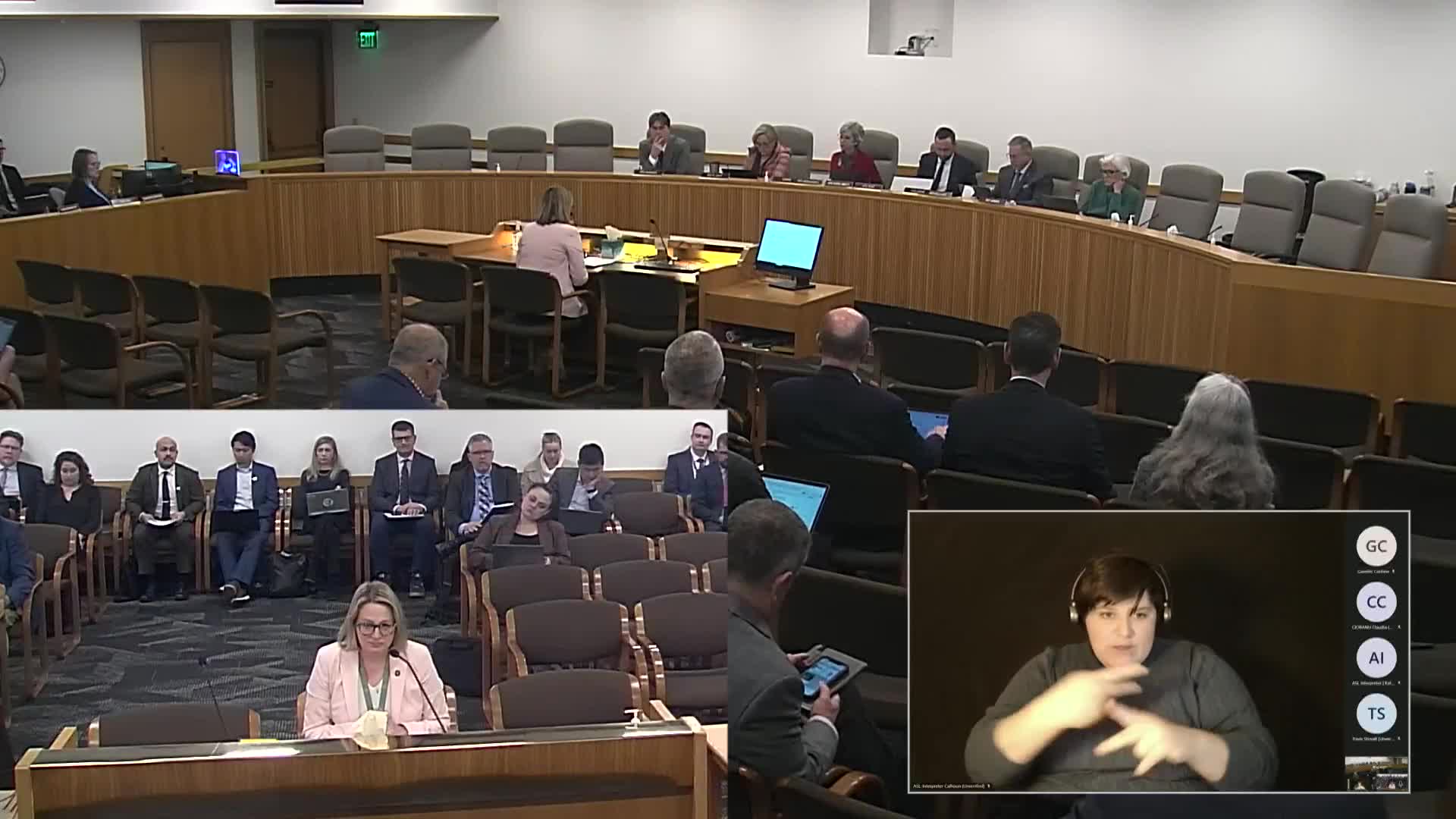
The House Committee on Revenue heard Jan. 30 from a wide range of stakeholders on several bills intended to implement the U.S. Supreme Court’s Tyler v. Hennepin County decision and to create a clear process for handling surplus proceeds from tax foreclosures.
Representative Emerson Levy, sponsor of the principal bill, told the committee the work group he convened focused on two goals: establish a clear process for collecting surplus funds and create a pathway for certain creditor claims, including child support and restitution. “We will have forthcoming amendments but there are two objectives of this work group,” Representative Emerson Levy said.
Multiple witnesses — including Claudia Chobanu, trust property director for the Oregon State Treasury — urged the bills to direct counties to report surplus funds to Treasury on an accelerated schedule rather than once a year. Chobanu told the committee that current reporting under Oregon’s Unclaimed Property Act (annual reporting between Oct. 1 and Nov. 1) could create a roughly 14-month delay between a surplus being realized and Treasury receiving the funds; she proposed counties report within 60–90 days of realizing a surplus so owners can be reunited with funds more quickly.
Jim Manley of the Pacific Legal Foundation and other proponents urged clear, plain-language notice requirements and a disposition process that seeks fair market value. Manley said states that maximize recovery for owners commonly employ real estate agents or agents/auction processes to get market prices and that Treasury’s unclaimed property program is a suitable long-term repository for surplus funds.
County officials and associations warned the bills as drafted would create substantial operational burdens and liabilities for counties. Miles Palacios of the Association of Oregon Counties and Jody Galahon, assistant county counsel for Yamhill County, said counties already send multiple statutory notices during the foreclosure process and that extra notice or an expansive heir-search duty would be costly. “We don’t like taking property. I just want to make that for the record,” Galahon said. She described the existing notice sequence and said many counties go “far above” statutory notice requirements.
Banks and lien holders also raised concerns. Kevin Christiansen of the Oregon Bankers Association said the bill as written treats lien holders differently from owners and heirs and that lien holders should receive the same due-diligence notice and claims opportunity; he warned the current draft could prompt litigation by lien holders seeking to protect priority interests.
Other specifics raised in the hearing: - The Treasury recommended counties provide title reports, copies of notices, and lists of known claimants and lienholders to reduce ambiguity in claims processing. - Stakeholders noted the emergence of private companies obtaining assignments from owners to collect surplus funds; Representative Levy said some assignments have compensation rates of about 50 percent, which he called “usurious.” - AARP and other consumer advocates emphasized protections for older homeowners, citing that about 80 percent of adults over 65 own homes and that tax-foreclosure surplus rules can affect accumulated equity.
The committee closed the public hearing and did not take a vote. Several witnesses urged further amendments to clarify claimant priority, reduce county liability once funds transfer to Treasury, and refine notice and heir-search obligations so small counties are not financially overburdened.